


 Home
Home
Hi, I'd like to ask—Is resin chemically similar to plastic? How does epoxy resin (containing bisphenol A) differ from thermoplastics like polyethylene in molecular bonding? Can natural resins (e.g., shellac) be categorized as plastics, and how do their industrial applications (e.g., coatings vs packaging) differ? Thanks!
Is Resin a Type of Plastic? Comparing Chemical Structures of Epoxy vs Polyethylene
Related Encyclopedia
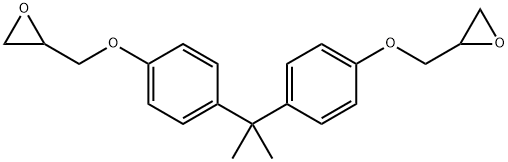
- 1675-54-3
- C21H24O4
- 340.41
- All (3)
- China (0)
- (3)
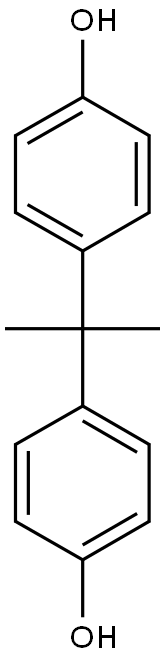
- 25068-38-6
- C15H16O2
- 228.28634
- All (3)
- China (0)
- (3)
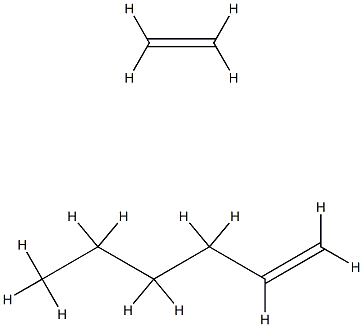
- 25213-02-9
- C8H16
- 112.21264
- All (24)
- China (2)
- (24)
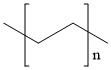
- 9002-88-4
- (C2H4)n
- 28.05316
- All (24)
- China (2)
- (24)
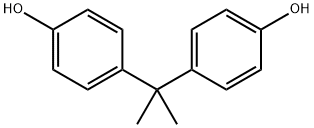
- 80-05-7
- C15H16O2
- 228.29
- All (98)
- China (5)
- (98)
![3-[(E)-4,6-dimethylhept-2-enyl]oxolane-2,5-dione,2-[3-(oxiran-2-ylmethoxy)propoxymethyl]oxirane,4-(oxiran-2-yl)-7-oxabicyclo[4.1.0]heptane](https://chemcloud-1304660855.cos.ap-shanghai.myqcloud.com/compound/bbb16ce2863d42899585d90674283a10.png?imageMogr2/format/webp)
- 52368-54-4
- C30H48O9
- 552.69700
- All (0)
- China (0)
- (0)
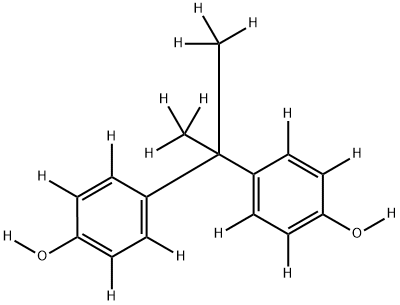
- 96210-87-6
- C15H16O2
- 228.29
- All (0)
- China (0)
- (0)
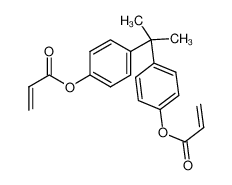
- 4491-03-6
- C21H20O4
- 336.38100
- All (0)
- China (0)
- (0)
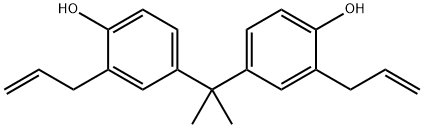
- 1745-89-7
- C21H24O2
- 308.41
- All (1)
- China (0)
- (1)

- 37353-75-6
- C21H28O4
- 344.44
- All (3)
- China (3)
- (3)
Related Products More >

- 9002-86-2
- CNY Request For Quotation
- 63231-66-3
- CNY Request For Quotation
- CNY Request For Quotation
- CNY Request For Quotation
- CNY Request For Quotation
- 465-42-11
- CNY Request For Quotation
- 465-42-10
- CNY Request For Quotation
- 465-42-9
- CNY Request For Quotation


Epoxy resin containing bisphenol A differs from thermoplastics like polyethylene in their molecular bonding. When epoxy resin cures, it forms cross-links—strong covalent bonds that connect polymer chains into a rigid, three-dimensional network. This structure doesn’t soften when heated, making it a thermosetting material. In contrast, polyethylene is a thermoplastic with linear or branched polymer chains held together by weak intermolecular forces. These forces are easily overcome by heat, allowing the chains to slide past each other, so the material can be melted and reshaped repeatedly.
Natural resins like shellac are not classified as plastics. Plastics are typically synthetic polymers designed to be molded into various shapes, while natural resins are organic substances produced by plants or insects, with simpler molecular structures. Their industrial uses vary: shellac is often used in coatings, varnishes, or food glazes, as it forms a protective, glossy film. Plastics, such as polyethylene, are widely used in packaging because of their flexibility and moldability, making them perfect for items like bags or bottles. Shellac’s ability to dissolve in alcohol makes it suitable for wood finishes or candy coatings, unlike plastics, which provide durability for long-term applications.
Natural resins, such as shellac, are derived from plant secretions and are fundamentally different from synthetic plastics. Shellac is a natural polymer used primarily in coatings and finishes due to its adhesive properties and ability to create a glossy surface. While it shares some characteristics with plastics, such as forming a solid material upon drying, shellac is not classified as a plastic. Its industrial applications are largely limited to protective coatings and decorative finishes, whereas plastics like polyethylene are used extensively in packaging and consumer products.
The differences in molecular bonding between epoxy resin and polyethylene are significant. Epoxy resin's cross-linked structure provides high strength and chemical resistance, making it ideal for applications where durability and protection are critical. Polyethylene's linear or branched structure, however, offers flexibility and ease of processing, which is advantageous in applications requiring moldability and recyclability. The choice between using a resin or plastic depends on the specific requirements of the application, including factors like chemical resistance, mechanical strength, and processing methods. For example, epoxy resin is preferred in high-performance coatings and adhesives, while polyethylene is widely used in packaging and consumer goods due to its cost-effectiveness and versatility.
Biodegradable alternatives, such as those made from cornstarch, work differently. Their molecular bonds break down when exposed to microbes, turning into natural compounds like CO2 and water. This makes them useful for single-use items, reducing long-term waste, though they require specific conditions to decompose effectively.
Comparing these materials shows how molecular design affects function. Traditional polymers resist breakdown, suiting durable products, while biodegradable ones trade longevity for environmental compatibility. Exploring these differences helps in choosing the right material for each purpose, balancing practicality with sustainability.
The molecular bonding in epoxy resin differs significantly from thermoplastics. Epoxy's cross-linked structure results from a chemical reaction between epoxy groups and hardeners, creating permanent bonds that prevent the material from softening under heat. This makes epoxy ideal for applications requiring high durability and chemical resistance, such as in aerospace composites or electronic circuit boards. Polyethylene, on the other hand, maintains its flexibility and recyclability due to its linear, non-cross-linked chains. The absence of cross-links allows polyethylene to be melted and reformed repeatedly, making it suitable for mass-produced items like plastic bags and containers. The difference in bonding also affects their thermal properties: epoxy resists high temperatures but cannot be reshaped, while polyethylene softens when heated but can be easily recycled.
Natural resins, such as shellac, present a unique case. Shellac is a thermoplastic natural polymer secreted by lac insects and has been used for centuries as a coating material. Unlike synthetic resins, shellac is biodegradable and derives its plasticity from its natural composition. It hardens upon solvent evaporation but can be remelted with heat, similar to thermoplastics. However, its industrial applications are limited compared to synthetic plastics. Shellac is primarily used in high-end wood finishes, food glazes, and pharmaceutical coatings due to its glossy appearance and non-toxic properties. In contrast, synthetic plastics like polyethylene dominate packaging and consumer goods because of their scalability, durability, and lower cost. Natural resins like shellac are generally unsuitable for heavy-duty applications due to their weaker mechanical properties and higher cost.
Industrial applications further highlight these differences. Epoxy resin is valued for its structural integrity and resistance to chemicals and heat, making it essential in aerospace, automotive, and electronics industries. Polyethylene's flexibility and recyclability make it the material of choice for packaging, pipes, and plastic products. Shellac, while useful in specialty coatings and artisanal products, cannot compete with synthetic plastics in large-scale manufacturing. The choice of material depends on the required balance of properties, cost, and environmental considerations.