


 Home
Home
Many people wonder if taking collagen can actually improve the quality of their sleep. With so many supplements promising health benefits, it’s confusing to know what really works. Can collagen support better sleep by calming the body or helping muscles and joints relax? Are there particular types or times to take it for sleep benefits? How exactly does it interact with our body’s natural sleep processes, and is there any practical way to notice its effects in everyday life?
Does Collagen Help You Sleep? Exploring Its Effects on Rest
Related Encyclopedia
- 9007-34-5
- 0
- All (14)
- China (1)
- (14)
- 9064-67-9
- C4H6N2O3R2.(C7H9N2O2R)n
- 0
- All (14)
- China (1)
- (14)
- 92113-31-0
- CO(NH2)2,Fe+++
- 0
- All (3)
- China (0)
- (3)
- 66451-70-5
- C13H14N2O3
- 246.26200
- All (0)
- China (0)
- (0)
- 56-40-6
- C2H5NO2
- 75.07
- All (308)
- China (62)
- (308)
- 144703-90-2
- C106H174N32O37
- 2488.71
- All (0)
- China (0)
- (0)
- 51163-51-0
- C13H17N3O4
- 279.29200
- All (0)
- China (0)
- (0)
- 14313-00-9
- C2H7NO6S
- 173.14500
- All (0)
- China (0)
- (0)
- 1352614-79-9
- C4H8N4O2
- 144.13200
- All (0)
- China (0)
- (0)
- 19794-45-7
- C2H3NO2T2
- 79.08280
- All (0)
- China (0)
- (0)
Related Products More >

- CNY Request For Quotation
- CNY Request For Quotation
- CNY Request For Quotation
- 107-43-7
- CNY Request For Quotation
- 107-43-7
- CNY Request For Quotation
- 14281-83-5
- CNY 9.0000
- 25kg
- 56-40-6
- CNY 10.0000
- 25kg
- 999-29-1
- Request For Quotation
- 25kg/Drum


This interplay between glycine and sleep hinges on neurochemical balance. The brain requires a shift from excitatory to inhibitory activity to initiate sleep, and glycine contributes to this shift by calming neural pathways in regions like the brainstem, which regulates arousal. Unlike substances that induce drowsiness through heavy sedation, glycine supports a natural transition, potentially enhancing the quality of deep sleep stages where bodily repair occurs. This makes collagen a relevant consideration for those with mild sleep disruptions, especially if their diet lacks glycine sources such as bone broth or certain meats, as supplementation can help replenish this amino acid.
In everyday use, collagen’s impact on sleep is neither universal nor dramatic. For individuals with sufficient glycine intake, adding collagen may yield little change, as the body already has the resources to support neural calm. However, those with deficiencies or high stress—both of which deplete glycine—might notice subtle improvements, such as easier relaxation before bed. This variability underscores that collagen is not a cure for sleep disorders but a nutrient that can complement broader sleep hygiene practices, like consistent schedules or reduced evening screen time.
Beyond individual experience, this link highlights how nutrients often serve multiple roles across bodily systems. Collagen, primarily associated with physical structure, also feeds into neurological processes, illustrating the interconnectedness of nutrition and brain function. In the wellness industry, this has led to collagen being featured in nighttime supplements, paired with ingredients like tryptophan to amplify calming effects, while in nutritional science, it reinforces the idea that dietary choices shape not just physical health but also neurological balance. Recognizing this duality deepens our understanding of how the body uses proteins in diverse, often unexpected ways.
In practical terms, supplementing with collagen can contribute to improved sleep quality in multiple ways. For example, the structural support collagen provides to connective tissues helps reduce joint discomfort, which is a common factor disrupting sleep in adults. Additionally, glycine derived from collagen may help lower core body temperature before bedtime, facilitating the body’s natural sleep onset mechanisms. Athletes or individuals with mild joint stiffness often report feeling more comfortable during sleep after regular collagen intake, highlighting the compound’s dual influence on both physiological comfort and neurochemical signaling.
From a broader physiological standpoint, collagen’s impact on sleep exemplifies the interconnectedness of musculoskeletal health and nervous system regulation. Unlike direct sedatives, collagen operates subtly, reinforcing bodily systems that indirectly support rest. Incorporating collagen into an evening routine or as part of a balanced diet can provide a measurable, yet gentle, contribution to overall sleep hygiene. Its effects are cumulative and context-dependent, often interacting with lifestyle factors such as physical activity, diet, and sleep environment.
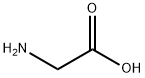
Glycine acts as an inhibitory neurotransmitter in the central nervous system. When it comes to sleep, the body needs to transition from a state of high neural activity during wakefulness to a relaxed state conducive to sleep. The inhibitory action of glycine helps to dampen excessive neural firing, making it easier to fall asleep and stay asleep. For example, individuals with anxiety - related sleep disturbances may find that the glycine in collagen helps calm their overactive minds.
It's important to distinguish collagen from other sleep - enhancing substances like lavender oil. Lavender oil is thought to work through its aromatic compounds that interact with the olfactory system to induce relaxation. Collagen, through glycine, directly affects neural activity. A common misunderstanding is that taking collagen will guarantee a perfect night's sleep every time. In reality, while glycine can support sleep, factors such as sleep environment, daily stress levels, and overall health also significantly impact sleep quality, so collagen should be considered as one part of a comprehensive sleep - improvement strategy.