


 Home
Home
Type 3 collagen is a specific kind of protein found in the body, but many people aren’t sure what makes it different from other types. Where exactly is it located, and what jobs does it do to keep our bodies working properly? How does it interact with other components to support our health? Does it play a role in conditions that affect connective tissues? What happens if there’s not enough of it in the body?
What is Type 3 Collagen and Its Role in the Body?
Related Encyclopedia
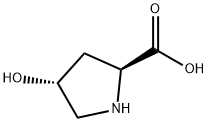
- 51-35-4
- C5H9NO3
- 131.13
- All (84)
- China (23)
- (84)
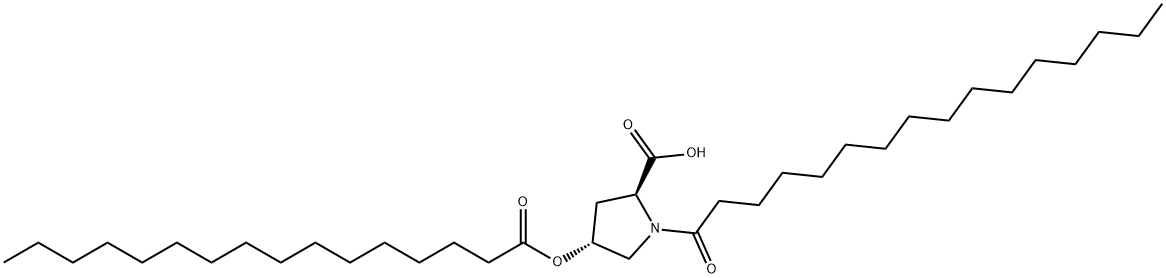
- 41672-81-5
- C37H69NO5
- 607.95
- All (1)
- China (0)
- (1)
- 147028-80-6
- C5H9NO3
- 131.13000
- All (84)
- China (23)
- (84)
- 29795-82-2
- C5H9NO2
- 115.13000
- All (19)
- China (0)
- (19)
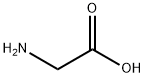
- 56-40-6
- C2H5NO2
- 75.07
- All (308)
- China (62)
- (308)
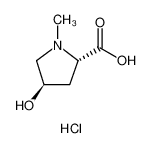
- 89771-43-7
- C6H12ClNO3
- 181.61700
- All (0)
- China (0)
- (0)
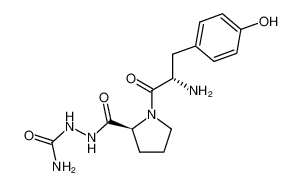
- 284038-41-1
- C15H21N5O4
- 335.35800
- All (0)
- China (0)
- (0)
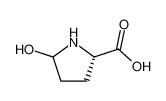
- 104111-00-4
- C5H9NO3
- 131.13000
- All (0)
- China (0)
- (0)
- 286375-02-8
- C53H78N12O16S4
- 1267.52000
- All (0)
- China (0)
- (0)
- 264146-55-6
- C58H92N16O16S4
- 1397.71000
- All (0)
- China (0)
- (0)
Related Products More >

- 147-85-5
- CNY Request For Quotation
- 147-85-4
- CNY Request For Quotation
- 147-85-3
- CNY Request For Quotation
- CNY Request For Quotation
- CNY Request For Quotation
- CNY Request For Quotation
- 107-43-7
- CNY Request For Quotation
- 107-43-7
- CNY Request For Quotation


Think of your skin—when you move, it stretches and bounces back. Type 3 collagen is part of what makes that possible. It’s also in areas like your intestines and the tissue around your organs, giving them a bit of give while still providing support.
You might hear about it in talks about healing, too. When your body repairs a wound, Type 3 collagen often shows up early on to help form the new tissue, making sure the area heals properly and stays strong enough as it mends. It’s not as tough as some other collagens, but its flexibility is what makes it so useful in these everyday, moving parts of your body.
Beyond its structural role, type 3 collagen interacts with cellular receptors like DDR1 and integrins, modulating signaling pathways that influence cell adhesion, migration, and wound healing. In regenerative medicine, its presence in early-stage wound matrices accelerates tissue repair by promoting fibroblast proliferation and angiogenesis. The ratio of type 3 to type 1 collagen is a biomarker for tissue fibrosis; elevated type 3 levels indicate immature scar formation, while its depletion correlates with aging and chronic diseases like liver cirrhosis. Industries leverage its properties in biomaterials, such as scaffolds for tissue engineering, where its fine fibrillar network supports cell infiltration and ECM deposition.
The evolutionary conservation of type 3 collagen highlights its fundamental role across species, from zebrafish to humans, suggesting its indispensability in developmental biology. In dermatology, its reduction is linked to skin aging and impaired elasticity, driving demand for collagen-boosting therapies. Meanwhile, food science exploits hydrolyzed type 3 collagen peptides for functional foods aimed at joint and skin health. Its interdisciplinary significance bridges gaps between molecular biology, clinical diagnostics, and biomanufacturing, illustrating how a single protein can influence diverse domains from cellular mechanics to industrial applications.
Physiologically, type 3 collagen supports tissue repair and regeneration, particularly during early wound healing, where it forms a provisional matrix alongside type 1 collagen before being gradually replaced. In vascular systems, it maintains artery elasticity, preventing stiffness associated with hypertension or atherosclerosis. Engineering-wise, its biocompatibility and mechanical properties make it valuable in tissue scaffolds for regenerative medicine, ensuring compatibility with soft-tissue environments.
Misconceptions often arise regarding its overlap with type 1 collagen; while both are fibrillar, type 3’s distinct distribution and dynamic role in early-stage repair highlight its non-redundancy. Clinically, deficiencies in type 3 collagen are linked to conditions like Ehlers-Danlos syndrome type IV (vascular type), where fragile blood vessels and organ rupture occur due to impaired collagen synthesis. Understanding these nuances is critical for developing targeted therapies and biomaterials that mimic the native properties of type 3 collagen, ensuring functional fidelity in medical and engineering applications.
Predominantly expressed in tissues requiring both resilience and stretch, Type 3 collagen is abundant in the dermis of skin, where it forms a meshwork alongside Type 1 collagen to support elasticity during movement. It is also a key component of blood vessel walls, contributing to their ability to expand and contract with blood flow, and in the intestinal submucosa, where it cushions and stabilizes the organ’s structure during peristalsis. In fetal development, it is highly expressed in developing connective tissues, gradually being replaced by Type 1 collagen in many areas as the body matures, though it remains prominent in regions needing ongoing flexibility.
A critical role of Type 3 collagen lies in wound healing: during the proliferative phase, fibroblasts synthesize it to form granulation tissue, a temporary matrix that bridges damaged areas. This early-stage scaffold supports angiogenesis and cell migration, later being remodeled into Type 1 collagen to reinforce the healed tissue. For example, in skin wounds, its presence ensures the regenerating tissue retains enough pliability to avoid contracture while providing a framework for stronger fibers to follow. In vascular repair, it prevents excessive stiffness in newly formed blood vessels, maintaining their ability to regulate blood pressure.
Unlike Type 1 collagen, which forms thick, parallel fibrils in tendons or bones, Type 3 collagen assembles into thinner, branching networks, a property that underpins its function in organs like the spleen and lymph nodes, where its reticular fibers create a porous framework for immune cell trafficking. Mutations affecting its synthesis can lead to conditions like Ehlers-Danlos syndrome, where weakened connective tissues exhibit increased elasticity and fragility, highlighting its importance in maintaining structural balance across dynamic tissues.