


 Home
Home
You’ve probably seen PEG-40 Hydrogenated Castor Oil listed on your shampoo, lotion, or makeup products and wondered what it actually is. Is it safe to use on your skin or hair? Does it have any side effects, or is it just a fancy chemical name for something simple? People often ask if it’s natural, if it’s the same as castor oil, or why it’s included in so many personal care products. So what exactly does PEG-40 Hydrogenated Castor Oil do, and why do manufacturers put it in everyday items?
What Is PEG-40 Hydrogenated Castor Oil and How Is It Used?
Related Encyclopedia
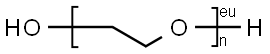
- 25322-68-3
- (C2H4O)nH2O
- 0
- All (65)
- China (33)
- (65)
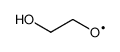
- 28287-76-5
- C2H5O2
- 61.05990
- All (65)
- China (33)
- (65)

- 1192130-70-3
- C20H40O4
- 344.52900
- All (0)
- China (0)
- (0)

- 9004-81-3
- (C2H4O)nC12H24O2
- 0
- All (10)
- China (1)
- (10)

- 9004-96-0
- (C2H4O)nC18H34O2
- 0
- All (18)
- China (8)
- (18)

- 106-11-6
- C22H44O4
- 372.58
- All (9)
- China (9)
- (9)
- 859308-25-1
- C2H9NO5S
- 159.16200
- All (0)
- China (0)
- (0)
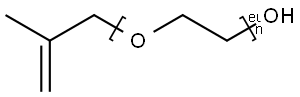
- 31497-33-3
- (C2H4O)nC4H8O
- 0
- All (0)
- China (0)
- (0)
- 1216424-91-7
- C6H16O3
- 136.18900
- All (0)
- China (0)
- (0)

- 9005-00-9
- C20H42O2
- 314.54628
- All (0)
- China (0)
- (0)
Related Products More >

- 3380-34-5 Trichloro-2-hydroxydiphenylether Factory Supply Cosmetic ingredients
- CNY Request For Quotation
- 25322-68-3
- Request For Quotation
- 9004-96-0
- Request For Quotation
- 50
- 9004-96-0
- Request For Quotation
- 200kg
- 61788-85-0
- USD 1.0000
- 200kg
- 117786-94-4
- Request For Quotation
- 25g
- 117786-94-4
- Request For Quotation
- 5g


A key attribute of PEG-40 hydrogenated castor oil is its versatility in formulation chemistry. It functions as an emulsifier, solubilizer, and mild conditioning agent, widely used in cosmetics, pharmaceuticals, and personal care products. For instance, in skincare formulations, it helps disperse fragrances or essential oils into water-based solutions, preventing separation. Its mildness makes it suitable for sensitive skin applications, such as facial cleansers or baby shampoos, where irritation must be minimized.
The mechanism behind its effectiveness lies in its ability to form micelles in solution. When added to a system, the hydrophobic tails embed themselves into oil droplets, while the hydrophilic PEG chains extend into the aqueous phase, creating stable colloidal dispersions. This property is leveraged in topical medications to improve the delivery of poorly soluble active ingredients. In hair conditioners, it enhances slip and detangling by coating strands with a thin lubricating film.
Beyond personal care, PEG-40 hydrogenated castor oil finds use in industrial applications like agrochemicals, where it aids in the even distribution of pesticides. Its compatibility with a broad pH range and electrolyte tolerance further broadens its utility. The balance between lipophilicity and hydrophilicity can be fine-tuned by adjusting the degree of ethoxylation, allowing formulators to tailor its performance for specific needs.
In practical applications, PEG-40 Hydrogenated Castor Oil is widely used in personal care and cosmetic products. It helps create smooth, homogeneous textures in lotions, creams, shampoos, and makeup removers. Beyond cosmetics, it can function as a solubilizing agent, helping to dissolve fragrances, essential oils, or hydrophobic active compounds into aqueous solutions. Its ability to lower surface tension also supports foaming and spreading properties, which is beneficial in both industrial cleaning products and pharmaceutical formulations. Because it is relatively mild, it is generally compatible with sensitive skin and hair applications, though concentrations and product context are carefully managed.
From a chemical perspective, its nonionic nature reduces reactivity with charged molecules, making it more stable in diverse pH environments compared to ionic surfactants. This property allows it to maintain consistent performance across formulations and contributes to its widespread adoption in industrial and domestic contexts. The inclusion of PEG-40 Hydrogenated Castor Oil in everyday products enhances usability, ensures uniformity of active ingredients, and prevents separation that could compromise efficacy or aesthetic appeal. Its role may seem subtle, but it underpins the performance and stability of many formulations encountered in daily life.
In pharmaceutical formulations, this compound serves as an emulsifying agent in topical creams and oral suspensions, where its ability to disperse active ingredients uniformly is critical for ensuring consistent dosing and bioavailability. Unlike some ionic surfactants, it exhibits low irritation potential, making it suitable for sensitive skin applications—a key advantage over harsher alternatives that might cause redness or discomfort. Its stability across a range of pH levels further expands its utility in formulations where pH varies, such as in certain cosmetic or medicinal products.
Within the cosmetic industry, PEG 40 hydrogenated castor oil functions as a solubilizer for fragrances and essential oils, helping to integrate these lipophilic components into aqueous-based products like lotions and shampoos without causing separation. It also acts as a viscosity modifier, adjusting the thickness of formulations to improve texture and spreadability. Compared to higher molecular weight PEG derivatives, its shorter chain length imparts a lighter, less greasy feel, which is often preferred in leave-on products where sensory attributes are important to consumer acceptance.
A common misconception is that the PEG component in this compound poses significant health risks, but in the context of its typical use concentrations, it is generally recognized as safe for topical and oral applications by regulatory bodies. Another misunderstanding is conflating it with castor oil itself, which is unmodified and has different properties—for example, castor oil is more viscous and less soluble in water, making it unsuitable for the same emulsification roles. Proper differentiation between these substances is essential for selecting the right ingredient in formulation development.