


 Home
Home
Are you new to working with epoxy resin and wondering where to start? How do you mix it correctly without making a sticky mess, and what surfaces or projects work best for beginners? Is it safe to handle at home, and what tools do you actually need? Can you create simple crafts, like coasters or jewelry, without having a lab or special skills? Basically, what’s the easiest way to use epoxy resin for someone who has never tried it before?
How to Use Epoxy Resin for Beginners: A Simple Step-by-Step Guide
Related Encyclopedia
- 63428-84-2
- 0
- All (16)
- China (1)
- (16)
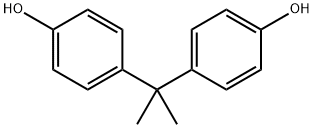
- 80-05-7
- C15H16O2
- 228.29
- All (98)
- China (5)
- (98)
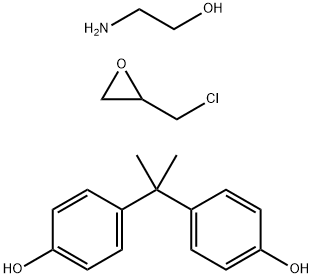
- 38891-59-7
- C20H28ClNO4
- 381.9
- All (2)
- China (0)
- (2)
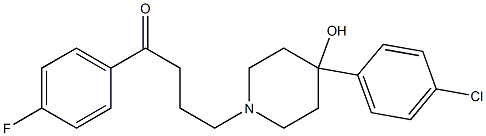
- 61788-97-4
- C21H23ClFNO2
- 375.8642232
- All (1)
- China (0)
- (1)
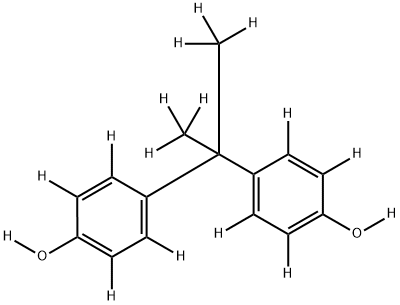
- 96210-87-6
- C15H16O2
- 228.29
- All (0)
- China (0)
- (0)
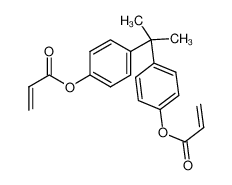
- 4491-03-6
- C21H20O4
- 336.38100
- All (0)
- China (0)
- (0)
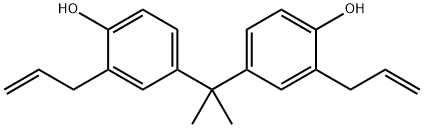
- 1745-89-7
- C21H24O2
- 308.41
- All (1)
- China (0)
- (1)

- 37353-75-6
- C21H28O4
- 344.44
- All (3)
- China (3)
- (3)
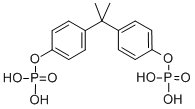
- 181028-79-5
- C15H18O8P2
- 388.25
- All (2)
- China (0)
- (2)
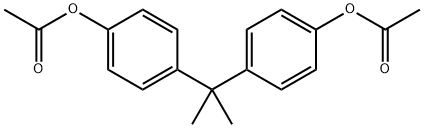
- 10192-62-8
- C19H20O4
- 312.36
- All (1)
- China (0)
- (1)
Related Products More >

- 9003-55-8
- CNY Request For Quotation
- CNY Request For Quotation
- CNY Request For Quotation
- CNY Request For Quotation


From a practical perspective, beginners can approach epoxy resin use by starting with small-scale projects like tabletop coatings, decorative items, or simple molds. The mixture must be handled carefully, as its viscosity, curing time, and exothermic reaction vary depending on the formulation and ambient conditions. The physical process involves the gradual solidification of the liquid as polymer chains interlink, producing a glossy and highly resistant surface. Colorants, additives, and fillers can be incorporated to achieve aesthetic or functional modifications, which highlights the material's adaptability. Even at home, safety precautions—such as gloves, ventilation, and protective surfaces—are essential to manage potential skin contact and fumes.
Epoxy resin’s significance extends beyond crafts. In industry, it serves as a structural adhesive, a protective coating, or an encapsulant for electronics due to its insulating and durable properties. In medical and scientific contexts, its inert and stable characteristics make it valuable for sample preservation and biomedical devices. For beginners, mastering epoxy resin use not only opens up creative possibilities but also provides a foundation for understanding its broader interdisciplinary applications. Experimenting with basic projects demonstrates the interplay of chemistry and material science in a tangible, hands-on way, offering insights into how this synthetic polymer integrates into both everyday and specialized settings.
The mechanism hinges on precise measurement and thorough mixing of the two components. Inadequate ratios or incomplete blending can result in a tacky, improperly cured material. For beginners, understanding exothermic heat generation is critical; excessive heat from large pours can cause cracking or rapid curing. To manage this, work in thin layers, use a heat gun to remove air bubbles, and ensure workspace ventilation to minimize fume exposure.
In practice, these principles apply to projects like creating glossy tabletops or embedding objects in jewelry. For example, when coating a wooden surface, the resin’s self-leveling nature allows it to spread evenly, while its adhesion prevents peeling over time. Similarly, in art, layers can be built up to encapsulate flowers or pigments, with each pour bonding seamlessly to the previous once the surface is lightly sanded. Mastering these fundamentals enables reliable, professional outcomes.
The key distinction between epoxy resin and other adhesives or coatings, such as polyester resin or polyurethane, lies in both its chemical makeup and performance. Unlike polyester resin, which relies on styrene for cross-linking and tends to be more brittle with lower chemical resistance, epoxy forms a denser cross-linked structure, offering superior adhesion to a wide range of surfaces—including wood, metal, and concrete—and better resistance to water, chemicals, and temperature fluctuations. Polyurethane, while flexible, often lacks the same level of structural strength and long-term stability that epoxy provides, making epoxy preferable for applications requiring both bonding and durability.
For beginners, a common misconception is that "more hardener leads to faster curing," but this oversimplifies the chemistry. The resin and hardener must be mixed in precise ratios specified by the manufacturer—deviating from this ratio disrupts the cross-linking process. Too much hardener results in a brittle, under-cured product that may remain tacky; too little leaves the resin soft and prone to degradation. Another misunderstanding is underestimating the importance of surface preparation: epoxy adheres best to clean, dry, and slightly roughened surfaces, as contaminants or moisture can prevent proper bonding, leading to delamination over time.
In professional fields, from aerospace engineering to marine construction, epoxy’s properties make it indispensable. In aerospace, it is used to bond composite materials in aircraft structures, leveraging its high strength-to-weight ratio to reduce overall weight without compromising integrity. In marine settings, it serves as a coating for hulls, protecting against saltwater corrosion due to its impermeable cross-linked structure. Even in art restoration, its ability to fill gaps without shrinking makes it valuable for repairing delicate artifacts—all applications that rely on the same fundamental chemistry beginners must grasp.