


 Home
Home
Hi, I'd like to ask—does polyethylene release carcinogenic chemicals? Are there scientific studies linking long-term exposure to polyethylene with cancer? What are the safety standards for polyethylene products in contact with food or the human body? How can I minimize cancer risk from polyethylene exposure? Are there any specific types of polyethylene that are considered riskier? Thanks!
Does Long-Term Exposure to Polyethylene Increase Cancer Risk?
Related Encyclopedia
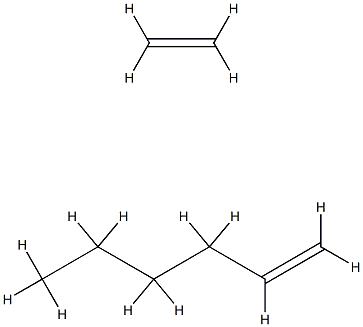
- 25213-02-9
- C8H16
- 112.21264
- All (24)
- China (2)
- (24)
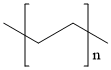
- 9002-88-4
- (C2H4)n
- 28.05316
- All (24)
- China (2)
- (24)
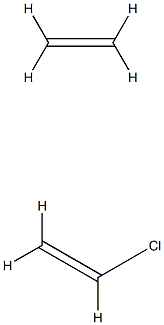
- 63231-66-3
- C4H7Cl
- 90.55138
- All (3)
- China (3)
- (3)
- 68131-73-7
- C12H5N7O12
- 0
- All (2)
- China (0)
- (2)
- 68441-17-8
- C51H102O21Si2
- 0
- All (29)
- China (28)
- (29)
- 64754-90-1
- 0
- All (3)
- China (3)
- (3)
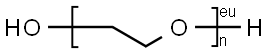
- 25322-68-3
- (C2H4O)nH2O
- 0
- All (65)
- China (33)
- (65)
- 28287-76-5
- C2H5O2
- 61.05990
- All (65)
- China (33)
- (65)
- 25038-59-9
- C10H12O6
- 228.19868
- All (3)
- China (0)
- (3)

- 1192130-70-3
- C20H40O4
- 344.52900
- All (0)
- China (0)
- (0)
Related Products More >

- 63231-66-3
- CNY Request For Quotation
- 9002-88-4
- Request For Quotation
- 25322-68-3
- Request For Quotation
- USD 20.0000
- 25kg
- USD 15.0000
- 25kg
- 9004-96-0
- Request For Quotation
- 50


Long-term exposure to PE hasn’t been linked to cancer in studies. The International Agency for Research on Cancer classifies ethylene, the PE monomer, as not carcinogenic to humans. PE’s stable structure reduces risks, and research on PE products like medical devices shows no significant cancer associations.
Safety standards for PE in food and medical uses are strict. The FDA requires testing for total migration (≤10mg/inch²), heavy metals, and monomer residues. The EU has similar regulations, and medical-grade PE must meet biocompatibility standards. To minimize risks, use PE for cold foods, choose food-grade products, limit oil contact, and recycle properly. No specific PE type (HDPE, LDPE) is riskier; safety depends on additives. Avoid products like PVC (recycling code 3), which may contain harmful plasticizers. PE remains safe when used within guidelines, supported by extensive research and regulations.
Scientific research on PE and cancer is limited. The IARC hasn’t classified PE as a carcinogen, and studies on workers in PE production show no clear cancer links. Still, emerging research on microplastics (MPs) shows PE-derived MPs can accumulate in human tissues. While this may cause inflammation, direct evidence linking PE to cancer remains absent. Most studies stress proper use minimizes risks.
To reduce risks, avoid heating PE containers, use food-grade products, limit single-use plastics, and choose PE items with fewer additives. Types like HDPE, LDPE, and LLDPE aren’t inherently riskier, but cross-linked or ultra-high-molecular-weight PE degrades less. Always check product certifications to minimize exposure to problematic additives.
In the context of international trade, countries have established regulatory frameworks to ensure the safety of polyethylene products. In the United States, the Food and Drug Administration (FDA) has specific guidelines for food-contact materials, and polyethylene is generally recognized as safe for use in food packaging when it complies with these specifications. Similar regulatory measures are in place in other countries to safeguard public health. These standards are crucial for maintaining the integrity and safety of polyethylene products in contact with food or the human body.
To minimize potential health risks associated with polyethylene exposure, it is advisable to adhere to proper handling and disposal practices. For example, avoid subjecting polyethylene products to high temperatures, as this can lead to the release of harmful substances. Additionally, consumers should ensure that any polyethylene products they use are sourced from reputable manufacturers and meet the relevant safety standards. When it comes to specific types of polyethylene, both low-density polyethylene (LDPE) and high-density polyethylene (HDPE) are commonly used and considered safe for their intended applications. However, it is always prudent to follow any specific guidelines or precautions provided by the manufacturer. In the realm of international trade, compliance with these standards is not only a matter of public health but also a crucial aspect of maintaining market trust and ensuring the smooth flow of goods across borders.
Scientific studies examining the potential health effects of long-term polyethylene exposure have not found conclusive evidence linking it directly to cancer in humans. Most research focuses on additives used during the manufacturing process rather than the polymer itself. For example, some polyethylene products may contain plasticizers, stabilizers, or UV inhibitors, which could theoretically leach into food or the environment under certain conditions. However, modern production standards strictly regulate these additives to ensure compliance with safety limits. A 2021 review in Environmental Health Perspectives noted that while microplastics—tiny fragments of degraded plastic—have been detected in human tissues, the health implications remain unclear, and no direct causal relationship with cancer has been established. The primary concern with polyethylene is not the polymer base but potential contamination from manufacturing residues or environmental degradation.
Safety standards for polyethylene products, especially those in contact with food or the human body, are strictly enforced. In the United States, the FDA requires that all food-contact materials, including polyethylene, meet specific migration limits for chemicals to ensure they do not pose a risk to human health. Similarly, the European Union’s Regulation (EC) No. 1935/2004 mandates that materials in contact with food must be safe and not release substances in quantities that could harm consumers. Medical-grade polyethylene, used in implants and surgical devices, must adhere to even stricter biocompatibility standards, such as those outlined in ISO 10993, which evaluates cytotoxicity, genotoxicity, and carcinogenic potential. These regulations ensure that high-quality polyethylene products are safe for their intended applications.
To minimize potential risks from polyethylene exposure, consumers should avoid exposing plastic containers to excessive heat, such as microwaving non-microwave-safe dishes, as high temperatures can degrade the material and increase the likelihood of chemical leaching. Reusing single-use plastic items or exposing them to UV light for prolonged periods can also accelerate breakdown. Opting for food-grade or medical-grade polyethylene products certified by regulatory agencies reduces the risk of contamination. Additionally, reducing reliance on single-use plastics helps limit environmental pollution and potential microplastic ingestion, which remains an area of ongoing research.