


 Home
Home
We all know rubber is used in things like car tires and sneakers, but not all rubber comes from trees. Some of it is made in labs and factories. So how exactly do people make synthetic rubber? What chemicals are involved in the process, and how do they turn into something stretchy and durable? Why do we even need synthetic rubber when natural rubber exists?
How Is Synthetic Rubber Made and What Is It Used For?
Related Encyclopedia
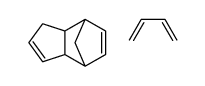
- 49603-39-6
- C14H18
- 186.29300
- All (0)
- China (0)
- (0)
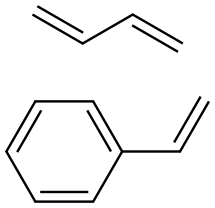
- 9003-55-8
- (C8H8.C4H6)x
- 158.24
- All (5)
- China (1)
- (5)
- 122973-06-2
- C6H5NO+
- 108.11800
- All (38)
- China (36)
- (38)
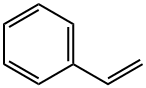
- 100-42-5
- C8H8
- 104.15
- All (38)
- China (36)
- (38)
- 79637-11-9
- C8H8
- 104.15000
- All (38)
- China (36)
- (38)

- 51252-84-7
- C3H4O2
- 72.06270
- All (0)
- China (0)
- (0)
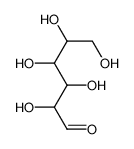
- 25191-16-6
- C6H12O6
- 180.15600
- All (0)
- China (0)
- (0)
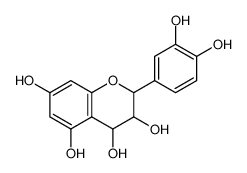
- 27015-21-0
- C15H14O7
- 306.26700
- All (0)
- China (0)
- (0)
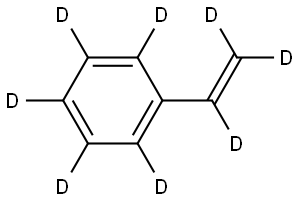
- 19361-62-7
- C8D8
- 112.2
- All (0)
- China (0)
- (0)
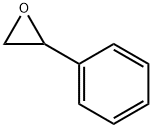
- 96-09-3
- C8H8O
- 120.15
- All (0)
- China (0)
- (0)
Related Products More >

- CNY Request For Quotation
- CNY Request For Quotation
- CNY Request For Quotation
- CNY Request For Quotation
- CNY Request For Quotation


This man-made rubber is super useful. It's used in things like car tires, shoe soles, rubber bands, and even waterproof clothing. One reason we make synthetic rubber is because it can handle heat and rough use better than natural rubber. Plus, it’s easier to make in large amounts when needed.
So, even if it sounds a bit “chemical,” synthetic rubber is all around us—quietly helping make our daily lives more comfortable and durable. Cool, right?
The production typically involves step-growth or chain-growth polymerization, where monomers like styrene, butadiene, or isoprene are chemically bonded to form long polymer chains. For instance, styrene-butadiene rubber (SBR), one of the most common types, is created through emulsion polymerization, combining styrene and butadiene under controlled conditions. Catalysts and additives are introduced to tailor properties such as tensile strength or weather resistance. This customization allows synthetic rubber to outperform natural rubber in specific applications, such as tire manufacturing, where SBR’s resistance to heat and wear is critical.
In practice, synthetic rubber’s adaptability is evident in everyday products. Car tires, conveyor belts, and medical gloves all rely on its unique properties. For example, nitrile rubber, resistant to oils and fuels, is used in fuel hoses, while silicone rubber’s biocompatibility makes it ideal for medical implants. The ability to fine-tune its composition ensures synthetic rubber meets diverse industrial demands, bridging gaps where natural rubber falls short. Its development underscores the intersection of chemistry and engineering, solving real-world challenges through material innovation.
Key attributes of synthetic rubber vary by type but often include resistance to heat, oil, chemicals, or extreme temperatures, along with customizable elasticity and durability. SBR, for example, offers good abrasion resistance, making it ideal for tire treads, where it outperforms natural rubber in withstanding road friction. Neoprene, on the other hand, resists oils and weathering, finding use in gaskets and wetsuits. These properties stem from the polymer’s structure: cross-linking between chains enhances strength, while chain length affects flexibility.
In practice, synthetic rubber’s versatility addresses gaps left by natural rubber. During World War II, shortages spurred its mass production, ensuring supplies for tires and machinery. Today, it’s integral to automotive parts, footwear, and industrial hoses, where specific performance needs—like heat resistance in engine belts—drive its selection. By tailoring monomers and production conditions, manufacturers create rubbers suited to diverse environments, from deep-sea equipment to space shuttles, proving its role as a cornerstone of modern materials science.
From a molecular standpoint, the elasticity of synthetic rubber arises from its polymer chain structure. These chains can stretch and rearrange under stress and then return to their original form, giving rubber its characteristic flexibility. Physically, synthetic rubber is more resistant to temperature changes, oxygen, ozone, and certain chemicals than its natural counterpart. This makes it highly suitable for environments where durability and resistance to degradation are essential.
Its interdisciplinary relevance spans materials science, chemistry, physics, and engineering. In industrial applications, synthetic rubber is critical for automotive tires, seals, belts, hoses, and gaskets, where consistent quality and resistance to wear and tear are essential. In healthcare, it’s used in medical gloves, tubing, and prosthetics due to its biocompatibility and strength. Synthetic rubber has even found applications in space exploration, electronics, and advanced manufacturing systems where traditional materials would fail under extreme conditions.
On a broader scale, synthetic rubber production represents a significant intersection of innovation, resource utilization, and sustainability challenges. While it helps reduce reliance on natural rubber and supports large-scale industrialization, it also raises environmental questions due to its dependence on petrochemicals. Therefore, ongoing research explores bio-based alternatives and more eco-friendly production methods.
In essence, synthetic rubber is more than just a substitute for natural rubber—it's a versatile, engineered material that supports modern life in countless visible and invisible ways.