


 Home
Home
Hello, I want to ask why my oven suddenly smells like burning plastic, what health risks this might pose, and how I can safely remove the smell? Also, are there precautions I should take to prevent this in the future?
Why does my oven smell like burning plastic and what should I do about it?
Related Encyclopedia
- 122973-06-2
- C6H5NO+
- 108.11800
- All (38)
- China (36)
- (38)
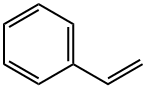
- 100-42-5
- C8H8
- 104.15
- All (38)
- China (36)
- (38)
- 79637-11-9
- C8H8
- 104.15000
- All (38)
- China (36)
- (38)
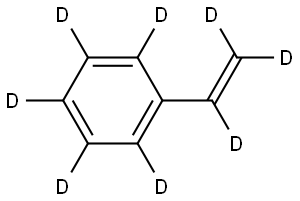
- 19361-62-7
- C8D8
- 112.2
- All (0)
- China (0)
- (0)
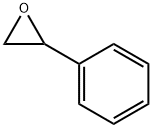
- 96-09-3
- C8H8O
- 120.15
- All (0)
- China (0)
- (0)
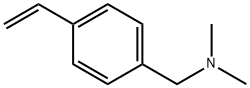
- 2245-52-5
- C11H15N
- 161.24
- All (0)
- China (0)
- (0)
- 145964-63-2
- C8H8Ar
- 144.09700
- All (0)
- China (0)
- (0)
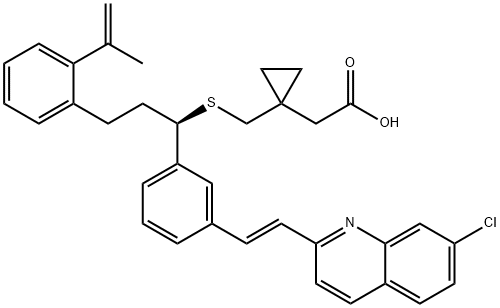
- 918972-54-0
- C35H34ClNO2S
- 568.17
- All (0)
- China (0)
- (0)
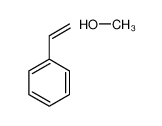
- 444843-35-0
- C9H12O
- 136.19100
- All (0)
- China (0)
- (0)
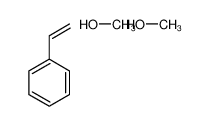
- 444843-36-1
- C10H16O2
- 168.23300
- All (0)
- China (0)
- (0)
Related Products More >

- CNY Request For Quotation
- CNY Request For Quotation
- CNY Request For Quotation
- CNY Request For Quotation


From a physiological perspective, inhaling fumes from burning plastic can trigger irritation in the eyes, nose, throat, and lungs. Some compounds released, such as dioxins or styrene, are known to have toxic effects and, with prolonged exposure, may contribute to respiratory issues or even more severe health problems. The intensity of symptoms depends on exposure duration and individual sensitivity.
Clinically, patients exposed to burning plastic fumes might experience coughing, wheezing, shortness of breath, headaches, or nausea. In more sensitive individuals, such as those with asthma or other respiratory conditions, these fumes can exacerbate symptoms and cause distress. Therefore, it is crucial to reduce exposure and address the source promptly.
To manage this situation, first ventilate the area thoroughly by opening windows and using fans to disperse fumes. Turn off the oven and inspect it carefully for any plastic items left inside or any damaged components with plastic coatings. Cleaning the oven after it cools down may help remove residues. If the smell persists, consider professional maintenance to check for electrical issues or internal damage.
As an alternative, avoid placing plastic items or containers in or near the oven. Use oven-safe cookware and regularly clean the appliance to prevent buildup of residues. If symptoms persist after exposure, seek medical advice, especially if respiratory symptoms worsen.
Another culprit could be a faulty part. Some oven components (like gaskets around the door or wiring insulation) are made of heat-resistant plastic, but if they’re damaged or worn, they might start to melt when the oven gets too hot. That’s less common, but it’s worth checking if the smell persists.
People often make a few mistakes here. One is ignoring the smell and keeping the oven on, which can make the plastic burn more, releasing stronger fumes. Others try to fan the smell away without finding the source—if there’s a plastic item inside, it’ll just keep burning. And some folks use harsh cleaners to “fix” the smell, but that can leave residues that burn later, making things worse.
For a home fix, start by turning off the oven and letting it cool down—safety first. Once it’s cool, check inside for any plastic items: look on the racks, under the heating elements, or even in the bottom tray. If you find melted plastic, let it harden completely, then scrape it off gently with a plastic spatula (metal might scratch the oven). For leftover residue, wipe with a damp cloth and a little baking soda—no harsh chemicals.
If it’s a new oven, the “burn-in” process can help. Turn it to 400°F, leave the door slightly open, and let it run for 30-60 minutes. This burns off the protective coating, and the smell should fade. Open windows and turn on fans to vent the fumes—they’re not great to breathe, but they’re temporary.
If the smell comes from a part (like a door gasket), check for cracks or melting. If you see damage, it’s best to call a repair person—replacing a gasket is doable, but you want to make sure it’s done right to avoid future issues.
To prevent it, get in the habit of checking the oven before preheating. Make sure no plastic utensils, wraps, or bags are inside, and keep the area around the oven clear of plastic items that could fall in. Wipe up spills regularly, too—grease buildup can trap small plastic bits, which burn later.
That burning plastic smell is annoying, but it’s almost always fixable. A little detective work to find the source, some gentle cleaning, and a few minutes of venting should have your oven smelling normal again. Just don’t rush—letting the oven cool first keeps you safe and makes cleanup easier.
Imagine you’re preheating your oven for cookies and toss in a plastic container of leftovers by mistake. As the plastic heats up, it doesn’t just melt—it breaks down into tiny particles and gases (like formaldehyde or vinyl chloride, depending on the type). These fumes smell acrid, like a mix of chemicals and burning trash. I once accidentally left a plastic spatula on the stove burner (oops!), and the whole kitchen reeked for hours—even after airing it out!
Here’s the science: Most plastics are made of long-chain polymers (like polyethylene or polystyrene). When heated above their “glass transition temperature” (the point where they soften), these chains unravel and release volatile organic compounds (VOCs). These VOCs are what you’re smelling—and they’re not great for your lungs (or your appetite). Even “heat-resistant” plastics (like those labeled “microwave-safe”) have limits—usually around 400°F (200°C). Ovens often hit 450°F+ (230°C+), so anything plastic inside is a disaster waiting to happen.
Fun fact: Some ovens have hidden plastic parts, like the coating on racks or the trim around the door. If these parts are damaged or exposed to extreme heat (say, from a self-cleaning cycle gone wrong), they can emit that same burning smell. Older ovens with worn-out insulation might also let plastic fumes from nearby cabinets or countertop edges seep in.
Pro tip for immediate action: Turn off the oven, open all windows, and use a fan to ventilate the area ASAP. Then, let the oven cool completely before inspecting for melted plastic (check the racks, walls, and even the heating element). If you find residue, scrape it off with a wooden spoon (avoid metal—it can scratch the oven surface) and wipe the area with a mix of baking soda and water to neutralize odors. For stubborn smells, place a bowl of white vinegar inside the oven overnight—it’ll absorb lingering fumes.
Bonus hack: To prevent future plastic meltdowns, always double-check that you’re using oven-safe cookware (look for labels like “oven-safe to 500°F” or “Pyrex”). And never, ever store plastic utensils, containers, or parchment paper (unless it’s specifically “oven-safe”) inside the oven—even when it’s off. Out of sight, out of (melting) mind!
Bottom line: Burning plastic smells are your oven’s SOS signal. Act fast, clean thoroughly, and stay vigilant about what goes inside. Your nose (and lungs) will thank you! ??
However, when heated beyond their thermal stability, these covalent bonds can break through a process called pyrolysis. Pyrolysis is a chemical reaction where high temperatures cause the polymer chains to degrade into smaller molecules, some of which are volatile organic compounds (VOCs). These VOCs often include aldehydes, ketones, and aromatic hydrocarbons, many of which have distinct, often unpleasant odors like the “burning plastic” smell you notice.
The polarity of the molecules plays a role in their behavior: while the original plastic polymer is mostly nonpolar, some of the breakdown products are polar and reactive, which can interact with the mucous membranes in our respiratory system if inhaled. This interaction explains why exposure to burning plastic fumes can cause irritation and discomfort.
In industrial and laboratory settings, controlling the temperature is critical to avoid unwanted polymer degradation. For example, in plastic manufacturing or recycling, precise heat control helps prevent burning or toxic fumes. In everyday use, such as with ovens, leaving plastic items or packaging inside by mistake can cause this chemical breakdown and harmful smell.
Understanding the chemical stability and bond types in plastics helps us appreciate why they behave the way they do when exposed to heat. It also informs safer practices, like avoiding plastic near heat sources.