


 Home
Home
Hi, I'd like to ask—does cocoa butter help reduce the redness or thickness of scars? Can it stimulate collagen production to make scars fade? Is it effective for different types of scars like acne scars or surgical scars? How long does it usually take to see results when using cocoa butter on scars? Thanks!
Can Cocoa Butter Help Improve the Appearance of Scars and Promote Scar Healing?
Related Encyclopedia
- 8002-31-1
- 0
- All (10)
- China (6)
- (10)
- 9007-34-5
- 0
- All (14)
- China (1)
- (14)
- 9064-67-9
- C4H6N2O3R2.(C7H9N2O2R)n
- 0
- All (14)
- China (1)
- (14)
- 92113-31-0
- CO(NH2)2,Fe+++
- 0
- All (3)
- China (0)
- (3)
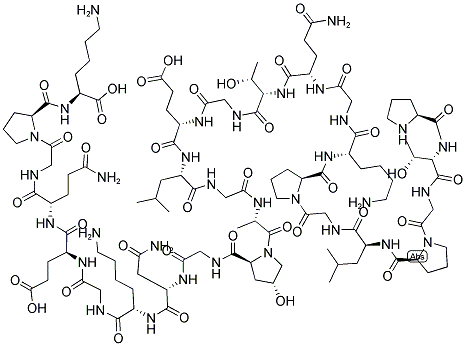
- 144703-90-2
- C106H174N32O37
- 2488.71
- All (0)
- China (0)
- (0)
Related Products More >

- 92113-31-0
- Request For Quotation
- 25kg/Cardboard Drum
- 92113-31-0
- Request For Quotation
- 1g,50g,100g,1000g
- 92113-31-0
- Request For Quotation
- 92113-31-0
- Request For Quotation
- 25kg/drum
- 92113-31-0
- Request For Quotation
- 92113-31-0
- Request For Quotation
- 92113-31-0
- Request For Quotation
- 92113-31-0
- Request For Quotation
- 100g;1kg;25g


When it comes to stimulating collagen production to fade scars, research is scarce. Collagen synthesis in scar tissue is a complex biological process, and cocoa butter lacks proven ingredients known to trigger this. While moisturized skin might look healthier, this isn’t the same as promoting collagen growth that fades scars visibly.
For different scars like acne or surgical scars, cocoa butter’s effectiveness varies. Acne scars often involve pitting or discoloration from damaged dermis, and surgical scars may form thickened tissue; cocoa butter’s surface hydration rarely addresses these deeper structural changes. Some people note mild improvements with regular use, but this differs greatly by individual.
As for results, any effects usually need consistent application over weeks or months. Changes are often subtle, mainly from better hydration rather than scar remodeling, so significant differences rarely show quickly. Individual responses vary, and severe scars typically need more targeted treatments than cocoa butter.
The antioxidant properties of cocoa butter derive primarily from its vitamin E content, particularly α-tocopherol, which constitutes approximately 0.1-0.3% of its weight. This fat-soluble antioxidant neutralizes reactive oxygen species generated during the inflammatory phase of wound healing. By protecting fibroblasts from oxidative damage, cocoa butter may indirectly support collagen synthesis and cross-linking, though the exact molecular mechanisms remain under investigation. Recent in vitro studies suggest that oleic acid might modulate transforming growth factor-beta (TGF-β) signaling pathways, which regulate fibroblast proliferation and extracellular matrix production. However, these findings require validation through clinical trials.
Clinical observations indicate variable efficacy across different scar types. For acne scars, which typically involve atrophic changes and collagen deficiency, cocoa butter's moisturizing effects may improve skin elasticity and reduce the visibility of depressed areas. In contrast, surgical scars, characterized by excessive collagen deposition, show more modest improvements. The timing of application significantly influences outcomes; early intervention during the proliferative phase (3-6 weeks post-injury) appears more effective than delayed treatment during the remodeling phase.
Empirical evidence suggests visible improvements require consistent daily application for 8-12 weeks. This duration correlates with the natural collagen remodeling cycle, during which scar tissue undergoes progressive reorganization. However, individual responses vary considerably due to factors such as skin phototype, scar etiology, and genetic predisposition to fibrosis. For optimal results, cocoa butter should be integrated into a comprehensive scar management regimen that includes silicone-based therapies and broad-spectrum sun protection to mitigate photoaging effects on healing tissue.
When applied topically, cocoa butter may help reduce the redness and thickness of certain scar types through its moisturizing effects. The fatty acids in cocoa butter can enhance skin hydration, which might make raised or hypertrophic scars appear smoother and less noticeable. Some users report improvements in the texture and color of acne scars after several weeks of consistent application, though these changes are often subtle. For surgical scars, particularly those in the early healing stages, cocoa butter's emollient properties may aid in maintaining skin flexibility during the remodeling phase, potentially preventing excessive collagen buildup that leads to keloid formation.
The product's ability to stimulate collagen production remains questionable. While cocoa butter contains vitamin E and other antioxidants that theoretically support skin repair, there's no conclusive evidence that it significantly boosts collagen synthesis compared to established treatments like silicone gel sheets or prescription retinoids. Dermatologists generally consider cocoa butter a supplementary measure rather than a primary scar treatment, particularly for deep or older scars that have already completed the remodeling phase.
Effectiveness varies considerably depending on scar type and individual skin characteristics. Fresh surgical scars may show more noticeable improvements with consistent cocoa butter application during the first six months of healing, while older, well-established scars typically respond less dramatically. Acne scars, particularly atrophic or pitted types, rarely show significant improvement from topical moisturizers alone, as these require more aggressive treatments like microneedling or chemical peels to address the underlying tissue damage.
Visible results from using cocoa butter typically require months of daily application. Most users report gradual softening of scar tissue and slight fading of discoloration after 8-12 weeks of regular use, though individual responses vary widely. The product's natural composition makes it generally well-tolerated, but some individuals with acne-prone skin may experience clogged pores or breakouts if applied too frequently or in thick layers. For optimal results, dermatologists often recommend combining cocoa butter with other evidence-based scar treatments rather than relying on it exclusively.
When it comes to making collagen, there’s not much solid research. It has fatty acids that help keep skin hydrated, which might make it easier for the skin to heal on its own. But there’s no proof it directly boosts collagen production.
How well it works depends on the scar type. Acne scars, especially those that leave indentations, might not get better much because they damage deeper layers. Surgical scars, which are thicker, could feel softer with regular use, but they probably won’t fade a lot.
Seeing any changes takes time. Most people who use it daily say it takes three to six months to notice small differences. How your skin is and how old the scar is matter too—newer scars might improve more than older ones that have been around a long time.