


 Home
Home
Many people know collagen is good for skin and joints, but do we know what actually makes it in our bodies? Is it a specific part of the body, or do different areas contribute? What materials does it need to make collagen, and where do those come from? Does this process slow down over time, and if so, why? How can we help our bodies keep making it?
What in the Body Produces Collagen and How Does It Happen?
Related Encyclopedia
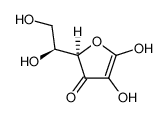
- 78619-96-2
- C6H8O6
- 176.12400
- All (24)
- China (1)
- (24)
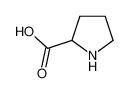
- 29795-82-2
- C5H9NO2
- 115.13000
- All (19)
- China (0)
- (19)
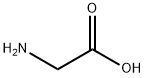
- 56-40-6
- C2H5NO2
- 75.07
- All (308)
- China (62)
- (308)
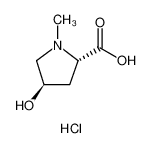
- 89771-43-7
- C6H12ClNO3
- 181.61700
- All (0)
- China (0)
- (0)
- 284038-41-1
- C15H21N5O4
- 335.35800
- All (0)
- China (0)
- (0)
- 51163-51-0
- C13H17N3O4
- 279.29200
- All (0)
- China (0)
- (0)
- 284038-40-0
- C17H23N5O5
- 377.39500
- All (0)
- China (0)
- (0)
- 1160708-87-1
- C8H16N2O
- 156.22500
- All (0)
- China (0)
- (0)
- 96450-73-6
- C5H9NO2
- 116.12400
- All (0)
- China (0)
- (0)
- 154508-79-9
- C25H29N9O6
- 551.55400
- All (0)
- China (0)
- (0)
Related Products More >

- 147-85-5
- CNY Request For Quotation
- 147-85-4
- CNY Request For Quotation
- 147-85-3
- CNY Request For Quotation
- CNY Request For Quotation
- CNY Request For Quotation
- CNY Request For Quotation
- CNY Request For Quotation
- CNY Request For Quotation


Think of it like baking a cake—those cells are the bakers, and things like protein from beans or meat, vitamin C from oranges, and certain minerals are the ingredients. They mix these together to create collagen, which then goes to work holding your skin tight, keeping your joints flexible, and supporting your bones.
As you get older, these "factories" slow down a bit, which is why your skin might feel less firm or joints a little stiffer. But eating foods with those key ingredients can give the cells a boost, helping them keep up with making the collagen your body needs.
A common misunderstanding is that collagen production is uniform across tissues; in reality, different collagen types (e.g., type I in skin vs. type III in blood vessels) are synthesized by distinct cell populations with tissue-specific regulatory mechanisms. For example, fibroblasts in aging skin produce less collagen due to reduced growth factor signaling, whereas in wound healing, inflammatory cytokines temporarily boost production.
In biotechnology, understanding collagen biosynthesis enables the engineering of recombinant collagen via yeast or mammalian cell cultures, circumventing ethical concerns of animal-derived sources. Clinically, disorders like scurvy (vitamin C deficiency) or Ehlers-Danlos syndrome (defective cross-linking) highlight the precision required in each production step. This complexity underscores collagen’s role as a dynamic structural protein, whose synthesis is not merely a cellular output but a finely tuned biological process with implications spanning tissue engineering, nutrition, and disease pathology.
Other cell types contribute to collagen production in specific tissues. Chondrocytes, for example, synthesize type II collagen in cartilage, forming the flexible matrix that cushions joints. Osteoblasts in bone produce type I collagen, which serves as a scaffold for mineral deposition, while smooth muscle cells in blood vessels generate type III collagen to maintain vascular elasticity. Each cell type tailors collagen synthesis to tissue needs: chondrocytes prioritize a more hydrated matrix, while osteoblasts focus on creating a structure rigid enough to support bone density.
The process relies on a steady supply of amino acids and cofactors. Fibroblasts, for instance, require adequate glycine to form the tight triple helix and lysine to enable cross-linking between molecules, which strengthens the final fibers. When vitamin C is deficient, hydroxylation is impaired, leading to weak collagen—explaining why scurvy, caused by such deficiency, results in fragile skin and blood vessels. In wound healing, fibroblasts migrate to the damaged area, ramping up collagen production to form granulation tissue, a temporary matrix that bridges the wound before being remodeled into stronger fibers.
Regulatory factors like growth factors and hormones also influence production. Transforming growth factor-beta (TGF-β) stimulates fibroblast activity, increasing collagen synthesis during tissue repair, while estrogen enhances fibroblast function in skin—one reason collagen production declines post-menopause. Disruptions in these cells or their regulatory signals can lead to conditions like scleroderma, where excessive collagen production causes tissue hardening, highlighting the precision with which these cells must balance synthesis and degradation.
Beyond endogenous production, industrial collagen is harvested from animal sources like bovine hides, porcine skin, and fish scales through acid or enzymatic extraction. These processes preserve the protein’s native structure for applications in food additives, pharmaceutical capsules, and biomedical materials. Recent advances in biotechnology have introduced microbial fermentation systems, where genetically modified bacteria or yeast produce recombinant human collagen, offering a scalable and pathogen-free alternative. In cosmetics, collagen-stimulating ingredients like retinoids and peptides are formulated to boost fibroblast activity, while nutraceuticals leverage amino acids and cofactors to support natural synthesis. The balance between collagen production and breakdown is also a focus in sports medicine, where targeted therapies aim to repair tendon and ligament injuries by modulating extracellular matrix remodeling.
The environmental and ethical implications of collagen sourcing have spurred innovation in cellular agriculture and plant-based mimics. Lab-grown collagen derived from fibroblast cultures or engineered plant proteins challenges traditional paradigms, particularly in vegan skincare and cruelty-free biomaterials. In regenerative medicine, decellularized collagen scaffolds from donor tissues or 3D-printed matrices guide tissue regeneration, demonstrating how understanding collagen production can revolutionize organ repair. From an evolutionary standpoint, the conservation of collagen genes across species underscores its fundamental role in multicellular life, while modern science continues to unlock its potential—whether in anti-aging therapies, sustainable textiles, or bioartificial organs. The interplay between biological synthesis and technological exploitation of collagen highlights its unparalleled versatility as both a biological building block and an industrial commodity.