


 Home
Home
Many people wonder if taking collagen supplements can actually improve their sleep quality. Considering that collagen contains amino acids like glycine, which are believed to promote relaxation, could regular collagen intake support deeper or more restful sleep? Are there specific forms or dosages that are more effective, and how does collagen compare to other natural sleep aids like magnesium or herbal supplements? Could incorporating collagen into a nightly routine genuinely help with sleep problems, or is the effect mostly indirect through overall health improvements?
Does Collagen Help You Sleep?
Related Encyclopedia
- 9007-34-5
- 0
- All (14)
- China (1)
- (14)
- 9064-67-9
- C4H6N2O3R2.(C7H9N2O2R)n
- 0
- All (14)
- China (1)
- (14)
- 92113-31-0
- CO(NH2)2,Fe+++
- 0
- All (3)
- China (0)
- (3)
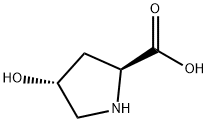
- 51-35-4
- C5H9NO3
- 131.13
- All (84)
- China (23)
- (84)
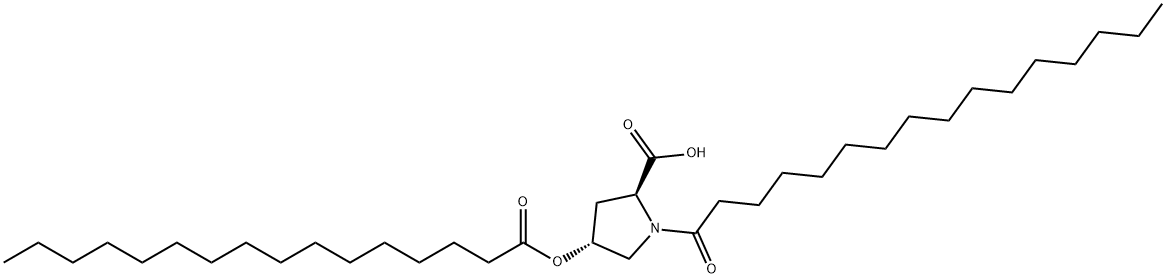
- 41672-81-5
- C37H69NO5
- 607.95
- All (1)
- China (0)
- (1)
- 147028-80-6
- C5H9NO3
- 131.13000
- All (84)
- China (23)
- (84)
- 66451-70-5
- C13H14N2O3
- 246.26200
- All (0)
- China (0)
- (0)
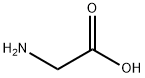
- 56-40-6
- C2H5NO2
- 75.07
- All (308)
- China (62)
- (308)
- 104111-00-4
- C5H9NO3
- 131.13000
- All (0)
- China (0)
- (0)
- 286375-02-8
- C53H78N12O16S4
- 1267.52000
- All (0)
- China (0)
- (0)
Related Products More >

- CNY Request For Quotation
- CNY Request For Quotation
- CNY Request For Quotation
- 107-43-7
- CNY Request For Quotation
- 107-43-7
- CNY Request For Quotation
- 14281-83-5
- CNY 9.0000
- 25kg
- 56-40-6
- CNY 10.0000
- 25kg
- 999-29-1
- Request For Quotation
- 25kg/Drum


The relationship between collagen and sleep intersects with nutritional biochemistry: when collagen is digested, glycine is released and absorbed, entering the bloodstream to cross the blood-brain barrier. Once in the brain, glycine may reduce hyperarousal, a state of excessive neural activity that can delay sleep onset or disrupt sleep cycles. This contrasts with sleep aids like melatonin, which regulate circadian rhythms, or benzodiazepines, which enhance GABA activity; glycine’s action is more subtle, supporting a state of calm without strong sedation. For individuals with diets low in glycine-rich foods—such as bone broth, meat, or fish—collagen supplementation can increase intake, potentially augmenting these relaxing effects.
In practical terms, the impact of collagen on sleep varies by individual. Those with mild sleep disturbances may notice improved sleep quality, including shorter time to fall asleep or fewer awakenings, particularly when taking collagen before bed. However, for individuals with chronic insomnia or sleep disorders, collagen is unlikely to replace targeted treatments, as its effects are modest and dependent on baseline glycine levels. This aligns with the understanding that sleep is regulated by a complex interplay of hormones, neurotransmitters, and environmental factors, with collagen serving as one of many nutrients that can subtly influence this balance.
Beyond individual wellness, the connection between collagen and sleep highlights the role of protein metabolism in neurological health. Glycine, derived from collagen, is not only a neurotransmitter but also a precursor to other molecules involved in stress response, such as glutathione, an antioxidant that mitigates oxidative stress linked to poor sleep. This multi-faceted role underscores why nutritional approaches to sleep often emphasize a range of nutrients, with collagen contributing through its unique amino acid profile. Recognizing this dynamic helps individuals appreciate that collagen’s effects on sleep are part of a broader metabolic network, where structural proteins also support neurological function, bridging seemingly unrelated bodily systems.
Additionally, collagen’s influence extends beyond direct neurotransmission. Its role in maintaining connective tissue, skin elasticity, and joint health can indirectly support better sleep. For instance, individuals with joint discomfort may experience less nocturnal pain after consistent collagen supplementation, resulting in fewer nighttime awakenings. Real-world examples include older adults or athletes who report improved overall comfort and relaxation at bedtime after integrating collagen into their daily routine. While collagen does not function as a sedative, its systemic effects on both biochemistry and musculoskeletal comfort create a supportive environment for more restorative sleep.
Taken together, collagen represents a multi-faceted approach to sleep support. By providing key amino acids like glycine and promoting physical comfort, it can subtly enhance sleep quality, particularly when combined with other healthy lifestyle practices. Its practicality, ease of incorporation into meals or beverages, and relatively low risk profile make it an accessible tool for individuals exploring natural strategies to improve sleep patterns.
During sleep, the body needs to transition into a relaxed state. The inhibitory action of glycine from collagen can contribute to this process by reducing excessive neural firing, making it easier to fall asleep and stay asleep. For instance, individuals who struggle with restlessness at bedtime might find that consuming collagen - rich foods or supplements before sleep leads to a more peaceful transition into slumber.
It's crucial to differentiate collagen from other sleep - aid substances like melatonin. Melatonin is a hormone that regulates the sleep - wake cycle, while collagen, through glycine, works on the neural level to promote relaxation. In real - life scenarios, someone dealing with occasional sleeplessness due to stress - induced neural hyperactivity could potentially benefit from incorporating collagen into their evening routine as a natural way to support better sleep quality.