


 Home
Home
Many people wonder about the temperature at which collagen starts to break down, especially when cooking meats with tough connective tissues. Does it happen quickly once a certain heat is reached, or does it take time? How does this affect the texture of food, like making meat tender? Does the same temperature apply to collagen in our bodies versus in food? What happens to collagen when it breaks down, anyway?
At What Temperature Does Collagen Break Down?
Related Encyclopedia
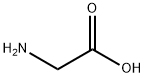
- 56-40-6
- C2H5NO2
- 75.07
- All (308)
- China (62)
- (308)
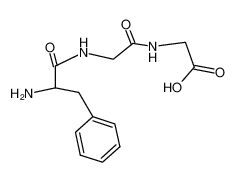
- 51163-51-0
- C13H17N3O4
- 279.29200
- All (0)
- China (0)
- (0)
- 14313-00-9
- C2H7NO6S
- 173.14500
- All (0)
- China (0)
- (0)
- 1352614-79-9
- C4H8N4O2
- 144.13200
- All (0)
- China (0)
- (0)
- 19794-45-7
- C2H3NO2T2
- 79.08280
- All (0)
- China (0)
- (0)
- 121648-99-5
- C2H4NO2
- 74.05870
- All (0)
- China (0)
- (0)
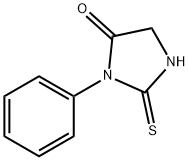
- 2010-15-3
- C9H8N2OS
- 192.24
- All (0)
- China (0)
- (0)
- 84769-18-6
- C6H11NO4
- 161.15600
- All (0)
- China (0)
- (0)
- 851138-31-3
- C2H4INO2
- 200.96300
- All (0)
- China (0)
- (0)
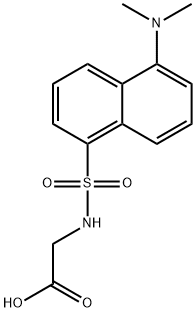
- 1091-85-6
- C14H16N2O4S
- 308.35
- All (0)
- China (0)
- (0)
Related Products More >

- CNY Request For Quotation
- CNY Request For Quotation
- CNY Request For Quotation
- 107-43-7
- CNY Request For Quotation
- 107-43-7
- CNY Request For Quotation
- 14281-83-5
- CNY 9.0000
- 25kg
- 56-40-6
- CNY 10.0000
- 25kg
- 999-29-1
- Request For Quotation
- 25kg/Drum


When you cook these meats slowly at that temperature, the collagen softens up and turns into a gel-like substance. That’s why slow-cooked meats end up tender instead of chewy—all that tough collagen breaks down into something smooth and juicy. If you cook too quickly at high heat, though, the collagen doesn’t have time to break down properly, leaving the meat tough.
It’s not just about cooking, though. High heat from things like sunburns can affect collagen in your skin over time, but that’s a slower process. For everyday stuff, though, you’ll probably notice collagen breaking down most in the kitchen, turning tough meats into something delicious.
In culinary science, collagen breakdown temperatures fundamentally transform cooking outcomes. Slow cooking at 60-80°C converts tough collagen-rich cuts into tender dishes through prolonged hydrothermal cleavage of intermolecular crosslinks—a principle leveraged in sous vide techniques. Conversely, high-temperature searing (>120°C) creates Maillard reactions while preserving collagen's structural integrity in surface tissues. Medical applications face opposite requirements: laser therapies for skin tightening operate at precise 55-65°C ranges to partially denature dermal collagen and stimulate remodeling without causing tissue necrosis. The temperature sensitivity of collagen also impacts biomedical device sterilization, where conventional autoclaving would destroy collagen-based implants, necessitating alternative low-temperature sterilization methods for products like wound dressings or surgical meshes.
Material scientists manipulate collagen's thermal behavior to engineer biomimetic materials with tailored degradation profiles. Crosslinking techniques using UV or chemical agents can elevate collagen's denaturation threshold by 20-30°C, creating thermally stable scaffolds for tissue engineering. In leather production, controlled thermal denaturation during tanning alters collagen fiber arrangement to enhance durability. The irreversible nature of thermal denaturation poses challenges for cellular agriculture, where maintaining native collagen architecture is crucial for cultivating realistic meat alternatives. These diverse applications reveal how a single physicochemical property—thermal lability—influences fields ranging from regenerative medicine to sustainable material design, demonstrating collagen's unique position at the intersection of biology, chemistry, and engineering.
A common misunderstanding is equating collagen’s breakdown temperature with cooking guidelines for meat tenderness. While slow heating at lower temperatures (e.g., 60–70°C) can partially denature collagen into gelatin—a process exploited in braising to soften tough cuts—complete structural collapse occurs only above 60°C. In industrial applications, this principle informs the design of biodegradable materials: collagen scaffolds for tissue engineering must withstand physiological temperatures (37°C) but degrade predictably at higher temperatures during sterilization.
In food science, thermal processing of collagen-rich products like bone broth or gelatin desserts relies on controlled heating to balance solubility and texture. Clinically, hyperthermia therapies for cancer exploit collagen’s thermal sensitivity to selectively weaken tumor stroma at 42–48°C, though overheating risks damaging healthy tissues. Understanding these thresholds is essential for distinguishing between reversible denaturation (e.g., temporary softening in cooking) and irreversible degradation, a distinction with implications across biotechnology, medicine, and culinary arts.
The rate of breakdown depends on temperature, time, and pH. In culinary contexts, slow cooking tough meats (e.g., beef shank) at 65–80°C for hours leverages this: denatured collagen first forms gelatin (a viscous mixture of unfolded chains), then hydrolyzes into soluble peptides, tenderizing the meat by replacing rigid connective tissue with a moist, gel-like matrix. This is why braising, which maintains steady temperatures in the denaturation range, yields softer results than grilling at high heat, which can char surface collagen before internal breakdown occurs.
In biological systems, collagen’s thermal stability is critical for tissue function. For example, skin collagen resists denaturation under normal body temperatures (37°C), preserving structural integrity. However, extreme heat—such as in burns exceeding 60°C—causes irreversible denaturation, leading to tissue shrinkage and loss of elasticity, as the collagen network can no longer support the dermis. Similarly, in laboratory settings, researchers use controlled heating (e.g., 90°C for 30 minutes) to isolate collagen peptides from tissues, exploiting thermal breakdown to solubilize the protein for analysis or biomedical applications like wound dressings.
Notably, different collagen types exhibit slight variations: type I (in tendons) is marginally more heat-stable than type II (in cartilage) due to higher cross-linking, but both follow the same general denaturation pattern. This thermal sensitivity underscores collagen’s dual role as a heat-labile structural protein, vulnerable to excessive temperature yet adaptable to controlled breakdown for culinary or industrial use.