


 Home
Home
I’ve been hearing a lot about dichloromethane and I’m curious about its safety. Specifically, is it flammable? Can it catch fire easily like gasoline or lighter fluid? How risky is it to use around heat, sparks, or open flames? Are there situations at home or work where it could become dangerous without you realizing it? I want to understand in simple terms whether I need to take extra precautions when handling this chemical. So, is dichloromethane something that can easily catch fire or not?
Is Dichloromethane Flammable? What You Should Know
Related Encyclopedia

- 3474-12-2
- CHCl2
- 83.92460
- All (30)
- China (24)
- (30)

- 70110-03-1
- CH2Cl2
- 85.94000
- All (30)
- China (24)
- (30)
- 64742-49-0
- N/A
- 112
- All (0)
- China (0)
- (0)
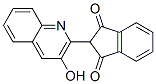
- 75216-45-4
- C18H11NO3
- 289.28
- All (0)
- China (0)
- (0)
- 64742-94-5
- C9
- 0
- All (22)
- China (4)
- (22)
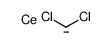
- 94616-84-9
- CHCeCl2-
- 224.04100
- All (0)
- China (0)
- (0)
- 83620-38-6
- CHCl2N3
- 125.94500
- All (0)
- China (0)
- (0)
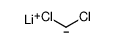
- 2146-67-0
- CHCl2Li
- 90.86560
- All (0)
- China (0)
- (0)
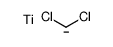
- 35340-45-5
- CHCl2Ti-
- 131.79200
- All (0)
- China (0)
- (0)
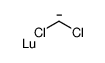
- 143824-88-8
- CHCl2Lu
- 258.89100
- All (0)
- China (0)
- (0)
Related Products More >

- 93-46-9
- CNY 4500.0000
- 1ton
- 75-09-2
- CNY 15.0000
- 25kg
- 75-09-2
- USD 125.0000
- 250kg
- 71902-18-6
- Request For Quotation
- 25kg
- 71902-18-6
- Request For Quotation
- 1ton
- 71902-18-6
- Request For Quotation
- 1ton
- 71902-18-6
- Request For Quotation
- 25kg
- 5601-29-6
- Request For Quotation
- 25kg


In practical terms, dichloromethane’s non-flammable nature sets it apart from solvents like acetone or ethanol, which are highly flammable and pose significant fire risks. This distinction is critical in industrial and laboratory settings where solvent handling is common. For example, in paint stripping or pharmaceutical synthesis, using dichloromethane avoids the need for specialized fire suppression equipment that would be mandatory with flammable solvents. Its inability to sustain combustion also means it does not contribute to fire propagation, a key advantage in environments where ignition sources might be present.
A common misconception is that all halogenated solvents are non-flammable, but this is not universally true. Some, like chloroform, share low flammability, but others with fewer halogen atoms can still ignite under certain conditions. Dichloromethane, however, remains non-flammable even at elevated temperatures or in the presence of open flames, a property rooted in its specific molecular structure. This stability arises from the balance between the carbon-halogen bonds, which are strong enough to resist breaking during thermal stress, preventing the formation of free radicals that would initiate and sustain combustion.
Understanding dichloromethane’s lack of flammability is essential for safe handling, as it prevents unnecessary precautions that would be wasted on a non-flammable substance while ensuring that attention is directed toward its other hazards, such as toxicity. In contexts where solvent selection hinges on fire safety, recognizing this property allows for informed decisions that optimize both efficiency and risk mitigation, distinguishing it clearly from its flammable counterparts in the chemical toolkit.
In practical terms, DCM’s limited flammability makes it a preferred solvent in industrial applications where fire risks must be minimized. For instance, it’s widely used in paint stripping, pharmaceutical manufacturing, and aerosol formulations. Unlike acetone or ethanol, which pose significant fire hazards, DCM’s combustion requires sustained ignition sources and higher vapor concentrations. However, this doesn’t eliminate risks entirely; confined spaces or poor ventilation can lead to hazardous vapor accumulation, potentially reaching flammable limits.
The interplay between DCM’s chemical properties and real-world use is evident in safety protocols. Laboratories handling DCM prioritize ventilation and explosion-proof equipment, not because of frequent fires, but due to the compound’s slow-burning characteristics and toxic combustion byproducts like phosgene. Anecdotal cases, such as its use in decaffeinating coffee, highlight how its low flammability balances efficiency with operational safety. Yet, its toxicity remains a primary concern, overshadowing fire-related risks in most regulatory frameworks.
In practical terms, DCM’s low flammability allows it to be used safely in applications where heat sources might be present, such as paint stripping, degreasing, or certain laboratory procedures. Its density, which is higher than water, means it tends to sink when spilled, which can influence how vapors accumulate and how ventilation strategies are designed. From an interdisciplinary perspective, the physical and chemical characteristics of DCM intersect with occupational safety, environmental management, and public health. Vapors can be hazardous to inhale, and prolonged exposure can affect the nervous system and other organ systems. Thus, even though fire hazards are minimal, handling protocols often emphasize protective equipment, fume hoods, and controlled storage conditions.
The broader significance of DCM’s flammability profile lies in risk management and industrial design. Its low tendency to ignite reduces certain fire risks, which is beneficial in high-volume industrial use and reduces insurance and safety constraints compared to more volatile solvents. Meanwhile, understanding its chemical stability and physical behavior informs environmental policies, spill response procedures, and regulations for disposal. In medical and laboratory contexts, DCM’s properties allow it to be used in controlled extractions or chemical syntheses where other flammable solvents would pose higher dangers. This combination of chemical behavior, safety profile, and practical versatility demonstrates why dichloromethane continues to be a widely employed compound, despite the need for careful handling and awareness of its toxicological effects.