


 Home
Home
Have you ever wondered what LDPE really is and why it’s used so widely in things around you? You might see it in grocery bags, squeeze bottles, or even in some food wraps, but what makes this material special? Is it safe, flexible, or just another type of plastic? How does it differ from other plastics like HDPE or PVC, and why do manufacturers choose it for certain products over others? Could understanding LDPE help you make better choices in daily life or recycling?
What Is LDPE and Why Is It So Common in Everyday Life?
Related Encyclopedia
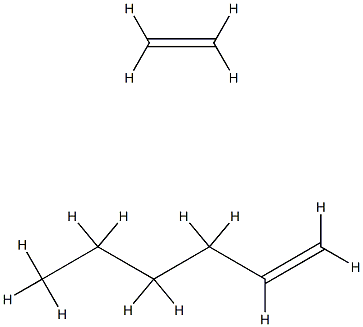
- 25213-02-9
- C8H16
- 112.21264
- All (24)
- China (2)
- (24)
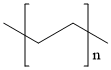
- 9002-88-4
- (C2H4)n
- 28.05316
- All (24)
- China (2)
- (24)
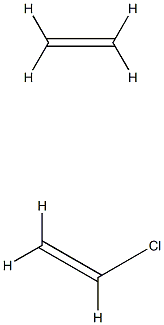
- 63231-66-3
- C4H7Cl
- 90.55138
- All (3)
- China (3)
- (3)
- 68131-73-7
- C12H5N7O12
- 0
- All (2)
- China (0)
- (2)
- 68441-17-8
- C51H102O21Si2
- 0
- All (29)
- China (28)
- (29)
- 64754-90-1
- 0
- All (3)
- China (3)
- (3)
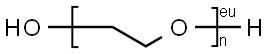
- 25322-68-3
- (C2H4O)nH2O
- 0
- All (65)
- China (33)
- (65)
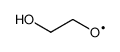
- 28287-76-5
- C2H5O2
- 61.05990
- All (65)
- China (33)
- (65)
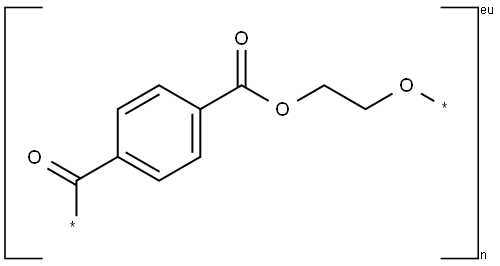
- 25038-59-9
- C10H12O6
- 228.19868
- All (3)
- China (0)
- (3)

- 51252-84-7
- C3H4O2
- 72.06270
- All (0)
- China (0)
- (0)
Related Products More >

- 63231-66-3
- CNY Request For Quotation
- 632-51-9
- CNY Request For Quotation
- 632-51-9
- CNY Request For Quotation
- 632-51-9
- CNY Request For Quotation


One of LDPE’s key attributes is its versatility in applications requiring durability and moisture resistance. For instance, it is widely used in packaging films, grocery bags, and squeeze bottles due to its ability to stretch without tearing. The material’s low melting point (around 105–115°C) makes it easy to process through extrusion or blow molding, though it limits its use in high-temperature environments. Its resistance to acids, bases, and alcohols further expands its utility in food storage and laboratory equipment.
In everyday life, LDPE’s impact is evident in products like cling wrap, which relies on its cling properties and barrier function to preserve food. Another example is its use in wire and cable insulation, where its electrical resistance and flexibility are critical. Despite its advantages, LDPE’s environmental persistence poses challenges, driving innovations in recycling and biodegradable alternatives. The balance between its functional benefits and sustainability considerations continues to shape its role in modern manufacturing.
In practical terms, LDPE’s unique combination of properties has led to widespread use across multiple sectors. In packaging, it is commonly employed for films, bags, and flexible containers due to its ability to stretch without tearing. Its low water permeability and chemical resistance make it ideal for storing liquids or food items safely. Beyond consumer applications, LDPE finds roles in industrial contexts, including tubing, insulation for wiring, and protective coatings, where durability and flexibility are paramount. Its relatively low processing temperature and ease of extrusion and molding also make it cost-effective and adaptable for various manufacturing processes.
From an environmental and interdisciplinary perspective, the prevalence of LDPE raises important considerations. While its lightweight nature reduces transportation energy, its resistance to degradation contributes to long-term persistence in waste streams, influencing recycling strategies and environmental management practices. Advances in polymer science have sought to enhance LDPE’s properties further or develop blends with other polymers to optimize performance for medical, agricultural, and technological applications. In this way, LDPE exemplifies how a fundamental understanding of molecular architecture translates into practical versatility, shaping both everyday products and broader industrial innovations.
In the field of materials science and engineering, LDPE’s unique structural attributes translate to a set of valuable mechanical properties that make it indispensable in various applications. Its high ductility and impact resistance allow it to withstand repeated bending and stretching without breaking, a trait particularly useful in products like plastic bags, squeeze bottles, and flexible tubing. Additionally, LDPE exhibits excellent chemical resistance to many acids, alkalis, and organic solvents, and it has good electrical insulation properties, making it suitable for wire and cable jacketing. These characteristics stem directly from its branched structure, which limits crystalline regions and enhances amorphous domains, contributing to its overall flexibility.
Distinguishing LDPE from other polyethylenes is crucial for selecting the right material for specific uses. High-density polyethylene (HDPE), for instance, is produced through low-pressure polymerization using a Ziegler-Natta or metallocene catalyst, leading to a linear structure with minimal branching. This linearity allows for close packing of chains, resulting in higher density (0.941–0.965 g/cm³), greater rigidity, and higher tensile strength, making HDPE ideal for rigid containers like milk jugs and detergent bottles. Linear low-density polyethylene (LLDPE), on the other hand, has a more controlled short-chain branching introduced via copolymerization with alpha-olefins, giving it a balance of strength and flexibility that often makes it a substitute for LDPE in films, though LDPE still offers superior clarity and processability in certain extrusion methods.
A common misunderstanding about LDPE is that its low density equates to low strength, but this is not universally true. While it is less rigid than HDPE, LDPE’s toughness and ability to absorb energy make it highly durable in applications where flexibility is paramount. Another misconception is that all polyethylenes are interchangeable, but the differences in their molecular structures lead to distinct performance profiles—using LDPE in a role requiring the rigidity of HDPE would result in a product that fails under stress, just as HDPE would be too stiff for applications needing the elasticity of LDPE. Recognizing these nuances ensures that LDPE is utilized effectively in its optimal range of uses, leveraging its specific advantages in flexibility, processability, and chemical resistance.