


 Home
Home
Have you ever wondered if it’s possible to make chloroform at home using common household items? People often hear that things like bleach and acetone can create chloroform, but how does that work in reality? Is it something that can actually be done without professional equipment, and what are the risks involved? Could this process be harmful or dangerous even if you only use small amounts? Why do some people think it’s easy, and what should you know before trying anything like that at home?
How to Make Chloroform at Home Safely?
Related Encyclopedia
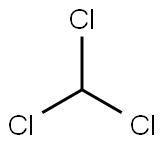
- 67-66-3
- CHCl3
- 119.38
- All (0)
- China (0)
- (0)
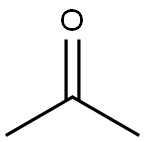
- 67-64-1
- C3H6O
- 58.08
- All (22)
- China (16)
- (22)
![[14C]-Chloroform](https://chemcloud-1304660855.cos.ap-shanghai.myqcloud.com/compound/efb0eeb1f4fe47ee81daf5f97d57302d.png?imageMogr2/format/webp)
- 10307-69-4
- CHCl3
- 121.37000
- All (0)
- China (0)
- (0)
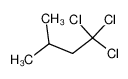
- 133733-29-6
- C5H9Cl3
- 175.48400
- All (0)
- China (0)
- (0)
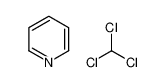
- 18675-83-7
- C6H6Cl3N
- 198.47800
- All (0)
- China (0)
- (0)
- 18675-92-8
- C7H7Cl3
- 197.48900
- All (0)
- China (0)
- (0)
- 61414-06-0
- CH37Cl3O18
- 443.65300
- All (0)
- China (0)
- (0)
![[3H]chloroform](https://chemcloud-1304660855.cos.ap-shanghai.myqcloud.com/compound/b5c04ab84ae34a36a282ea79d69e10fb.png?imageMogr2/format/webp)
- 38024-32-7
- CCl3T
- 121.38600
- All (0)
- China (0)
- (0)
- 73506-42-0
- CCl4O4
- 217.82000
- All (0)
- China (0)
- (0)
- 32955-16-1
- C3H4Cl3N
- 160.43000
- All (0)
- China (0)
- (0)
Related Products More >

- 96-26-4
- CNY Request For Quotation
- 96-26-4
- CNY Request For Quotation
- CNY Request For Quotation
- CNY Request For Quotation
- 67-64-1
- CNY 2000.0000
- 1ton
- 7778-54-3
- USD 50.0000
- 45kg
- 51364-51-3
- Request For Quotation
- 100g
- 51364-51-3
- Request For Quotation
- 10g


You might have heard that mixing bleach and acetone makes chloroform, and that’s technically true. But the problem is, when those two mix, they can release toxic fumes and even cause explosions if things go wrong. Breathing those fumes for even a short time can make you dizzy, knock you out, or worse, cause permanent damage.
Even tiny mistakes—like the wrong temperature or too much of one ingredient—can lead to injuries. Plus, chloroform can be absorbed through your skin, which is scary because you wouldn’t even notice at first. So if you’re curious, the safest thing you can do is read about it, not try it in real life. Some science experiments are better left in the lab, not the kitchen.
From a chemical perspective, chloroform is formed through the halogenation of methane or similar compounds, most commonly involving chlorine. In simplified discussions, people often mention that bleach (sodium hypochlorite) and acetone can react to generate chloroform under specific conditions. This reaction occurs because the hypochlorite oxidizes acetone, producing chloroform and other byproducts. While this principle illustrates fundamental concepts in organic chemistry, such as oxidation and substitution, attempting it outside a controlled laboratory environment introduces serious hazards, including toxic vapors and the possibility of violent reactions.
In a physiological context, chloroform’s mechanism involves depressing neuronal activity by altering ion channel conductance and modulating cell membrane fluidity. While this once made it an attractive anesthetic, its narrow therapeutic margin and potential for organ toxicity rendered it obsolete. Today, chloroform is primarily used as an industrial solvent and in certain chemical syntheses, but strict regulations govern its handling because chronic exposure is linked to carcinogenicity and liver damage. Its environmental impact is also notable; chloroform can persist in water and soil, contributing to pollution and bioaccumulation concerns.
On an interdisciplinary level, chloroform illustrates how chemistry, medicine, toxicology, and environmental science intersect. Its history as a medical tool that transitioned into a controlled industrial compound underscores the ethical and safety considerations surrounding chemical innovation. This complexity highlights why such substances demand respect, robust safety measures, and informed governance rather than casual experimentation.
In a laboratory setting, chloroform can be produced by mixing sodium hypochlorite (bleach) with acetone or isopropyl alcohol, though this requires precise control of conditions to avoid hazardous side reactions. The reaction proceeds exothermically, releasing heat and potentially dangerous gases like chlorine. Due to its volatility and health risks, handling chloroform demands proper ventilation and protective equipment. Even minor exposure can lead to dizziness, nausea, or long-term organ damage, emphasizing why its unsupervised production is strongly discouraged.
Beyond its obsolete medical use, chloroform finds niche applications in industrial processes, such as solvent extraction or pesticide formulation. For instance, it’s used to isolate alkaloids from plant materials or as a reagent in chemical synthesis. However, its role has diminished with the advent of safer alternatives. The compound’s dual nature—useful yet hazardous—highlights the importance of understanding chemical properties before attempting any synthesis. Improper handling could easily turn a theoretical exercise into a real-world danger.
In chemical synthesis, chloroform serves as a versatile reagent, particularly in reactions involving the introduction of chlorine atoms or the formation of dichlorocarbene intermediates, a role less commonly fulfilled by its analogs due to its specific pattern of halogenation. Its ability to dissolve a wide range of organic compounds also makes it useful in extraction processes, where its density (1.48 g/cm³) allows for clear separation from aqueous layers, a practical advantage over lighter solvents like diethyl ether. However, its chemical stability is limited under certain conditions; exposure to oxygen and light can lead to the formation of phosgene, a highly toxic gas, which necessitates careful storage in dark, sealed containers—a precaution not always required for more stable halogenated solvents.
Physiologically, chloroform acts as a depressant, primarily affecting the central nervous system by enhancing the activity of gamma-aminobutyric acid (GABA) receptors, similar to some anesthetics but with distinct potency and side effect profiles. Unlike ethanol, which also interacts with GABA receptors but through a different mechanism, chloroform’s effects are more rapid and profound, making precise dosage control critical. Its hepatotoxicity, a result of metabolic breakdown into reactive intermediates in the liver, further differentiates it from less toxic alternatives, underscoring why its use in medical and household contexts is strictly regulated. Misconceptions about its simplicity of production often overlook the complexity of safely handling chlorine gas or bleach-derived reagents, as well as the difficulty in achieving sufficient purity to avoid harmful byproducts, which are well-understood in professional chemical contexts.