


 Home
Home
Many people wonder about the chemical nature of chloroform and how it behaves in different situations. Does it mix well with water or stay separate? How does its structure affect the way it interacts with other liquids and materials? Can it dissolve certain substances better than others? People often hear about chloroform in labs or old movies, but it’s less clear whether it’s polar or nonpolar. So, is chloroform polar or nonpolar, and why does that matter for everyday use or common applications?
Is Chloroform Polar or Nonpolar? Understanding Its Nature
Related Encyclopedia
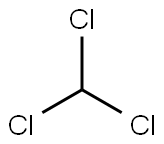
- 67-66-3
- CHCl3
- 119.38
- All (0)
- China (0)
- (0)
![[14C]-Chloroform](https://chemcloud-1304660855.cos.ap-shanghai.myqcloud.com/compound/efb0eeb1f4fe47ee81daf5f97d57302d.png?imageMogr2/format/webp)
- 10307-69-4
- CHCl3
- 121.37000
- All (0)
- China (0)
- (0)
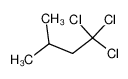
- 133733-29-6
- C5H9Cl3
- 175.48400
- All (0)
- China (0)
- (0)
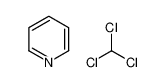
- 18675-83-7
- C6H6Cl3N
- 198.47800
- All (0)
- China (0)
- (0)
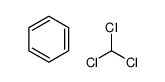
- 18675-92-8
- C7H7Cl3
- 197.48900
- All (0)
- China (0)
- (0)
- 61414-06-0
- CH37Cl3O18
- 443.65300
- All (0)
- China (0)
- (0)
![[3H]chloroform](https://chemcloud-1304660855.cos.ap-shanghai.myqcloud.com/compound/b5c04ab84ae34a36a282ea79d69e10fb.png?imageMogr2/format/webp)
- 38024-32-7
- CCl3T
- 121.38600
- All (0)
- China (0)
- (0)
- 73506-42-0
- CCl4O4
- 217.82000
- All (0)
- China (0)
- (0)
- 32955-16-1
- C3H4Cl3N
- 160.43000
- All (0)
- China (0)
- (0)
- 7285-11-2
- C2H5Cl3O
- 151.41900
- All (0)
- China (0)
- (0)
Related Products More >

- 93-46-9
- CNY 4500.0000
- 1ton
- 71902-18-6
- Request For Quotation
- 25kg
- 71902-18-6
- Request For Quotation
- 1ton
- 71902-18-6
- Request For Quotation
- 1ton
- 71902-18-6
- Request For Quotation
- 25kg
- 5601-29-6
- Request For Quotation
- 25kg
- 12226-82-3
- Request For Quotation
- 25kg
- 12226-82-3
- Request For Quotation
- 1ton


Understanding the polarity of chloroform is crucial in various chemical contexts, such as solvent selection. Polar solvents like chloroform interact differently with other polar molecules through dipole-dipole interactions, making them effective for dissolving substances with similar polarity. This contrasts with nonpolar solvents, which rely on London dispersion forces and are better suited for nonpolar solutes. For instance, chloroform’s ability to dissolve organic compounds like fats or oils stems from its polar characteristics, a property that nonpolar solvents like hexane would not replicate to the same extent.
A common misconception is that molecules with symmetric geometries are necessarily nonpolar, but chloroform demonstrates that symmetry alone is not the sole determinant. While the trigonal pyramidal arrangement might seem symmetric, the differing electronegativities of hydrogen and chlorine disrupt the balance. Unlike carbon tetrachloride (CCl₄), which is nonpolar because its four symmetric C-Cl bonds cancel each other’s dipoles, chloroform’s inclusion of a hydrogen atom breaks this symmetry, leading to its polar nature. This distinction highlights the importance of considering both molecular geometry and bond polarities when assessing overall polarity.
In practical applications, such as in chemical synthesis or extraction processes, recognizing chloroform’s polarity guides its use. Its polar nature allows it to form hydrogen bonds with certain compounds, enhancing solubility and reactivity in specific reactions. This behavior would not be observed with nonpolar solvents, underscoring why chloroform remains a valuable tool in laboratories despite its toxicity, with its polarity playing a key role in its functional utility.
The polarity of chloroform influences its solubility and reactivity. It mixes well with other polar solvents like water to some extent but is more miscible with organic solvents such as ethanol or ether. This property is exploited in laboratories for extracting organic compounds from aqueous solutions. For instance, chloroform’s ability to dissolve lipids makes it useful in DNA extraction, where it helps separate proteins and nucleic acids.
In practical applications, chloroform’s polarity also affects its behavior in chemical reactions. It can participate in hydrogen bonding as a weak acceptor, though not as effectively as water or alcohols. This characteristic is evident in its use as a solvent for nonpolar and moderately polar substances in pharmaceuticals. Despite its historical use as an anesthetic, safety concerns have limited its medical applications, but its solvent properties remain valuable in industrial and research settings. The interplay between its polarity and molecular structure underscores its versatility in both theory and practice.
In practical settings, chloroform’s polarity has direct implications. In laboratory applications, it is commonly used as a solvent for substances that do not dissolve well in water, such as oils, lipids, and many organic compounds. Its partial polarity allows it to dissolve a wide range of organic molecules, making it valuable in extraction procedures and chemical synthesis. Additionally, because it does not mix with water extensively, it is often employed in separation techniques where layering of solvents is required. This property is also relevant in industrial formulations where controlled solubility is needed for chemical reactions or product stabilization.
From a broader perspective, understanding chloroform’s polarity helps explain its interactions in medical, industrial, and environmental contexts. Historically, it was used as an anesthetic due to its ability to penetrate lipid membranes and depress the central nervous system, a property influenced by its molecular polarity. Industrially, it is incorporated in cleaning agents and as a precursor for other chemical products, where its solubility profile is critical. Environmentally, its low water solubility combined with slight polarity affects how it disperses, persists, and interacts with organic materials in soil and water. This combination of chemical structure, partial polarity, and solubility behavior highlights why chloroform remains a molecule of interest across multiple disciplines, demonstrating the nuanced ways in which molecular characteristics influence practical applications and material interactions.