


 Home
Home
Hi, I'd like to ask—Is dichloromethane more polar than ethyl acetate? How do their molecular structures (like chlorine substitution in dichloromethane) affect polarity differences? What's the dielectric constant comparison between dichloromethane and ethyl acetate? Does polarity influence their separation in liquid chromatography? Thanks!
Is Dichloromethane More Polar Than Ethyl Acetate?
Related Encyclopedia

- 3474-12-2
- CHCl2
- 83.92460
- All (30)
- China (24)
- (30)

- 70110-03-1
- CH2Cl2
- 85.94000
- All (30)
- China (24)
- (30)
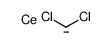
- 94616-84-9
- CHCeCl2-
- 224.04100
- All (0)
- China (0)
- (0)
- 83620-38-6
- CHCl2N3
- 125.94500
- All (0)
- China (0)
- (0)
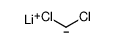
- 2146-67-0
- CHCl2Li
- 90.86560
- All (0)
- China (0)
- (0)
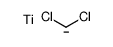
- 35340-45-5
- CHCl2Ti-
- 131.79200
- All (0)
- China (0)
- (0)
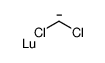
- 143824-88-8
- CHCl2Lu
- 258.89100
- All (0)
- China (0)
- (0)
- 102835-08-5
- CH3Cl2Sc
- 130.89000
- All (0)
- China (0)
- (0)
- 1665-00-5
- CCl2D2
- 86.94
- All (7)
- China (6)
- (7)
- 141-78-6
- C4H8O2
- 88.11
- All (39)
- China (31)
- (39)
Related Products More >

- 141-78-6
- Request For Quotation
- 79-20-9
- CNY 4500.0000
- 1ton
- 141-78-6
- CNY 5000.0000
- 1ton
- 75-09-2
- CNY 15.0000
- 25kg
- 75-09-2
- USD 125.0000
- 250kg
- 165668-41-7
- Request For Quotation
- 5kg
- 165668-41-7
- Request For Quotation
- 1kg
- 165668-41-7
- Request For Quotation
- 100g


Dielectric constant comparisons further illustrate this disparity: dichloromethane has a value of approximately 8.9, while ethyl acetate’s measures around 6.02. Though dichloromethane’s higher dielectric constant might suggest greater polarity, ethyl acetate’s stronger dipole-dipole interactions and role as a hydrogen bond acceptor (due to its oxygen atoms) make it more polar in practical contexts.
In liquid chromatography, polarity dictates separation dynamics. In normal-phase chromatography with a polar stationary phase, ethyl acetate elutes polar compounds more rapidly by outcompeting them for interactions with the stationary phase. Dichloromethane, as a less polar solvent, is better suited for eluting nonpolar substances. Even in reversed-phase systems, ethyl acetate’s higher polarity influences retention times, highlighting how solvent choice directly impacts separation efficiency and compound elution order.
The chlorine atoms in dichloromethane contribute significantly to its dipole moment through their high electronegativity, yet the molecule's symmetry limits its overall polarity. Ethyl acetate's polarity is further enhanced by the electron-withdrawing nature of its carbonyl group, which strengthens the partial charges across the ester linkage. This makes ethyl acetate particularly effective in liquid chromatography applications where separation of polar compounds is required. In normal-phase chromatography, ethyl acetate typically elutes after less polar solvents like hexane but before more polar solvents such as methanol, creating an optimal separation window for many organic compounds.
From a global trade perspective, these polarity differences have practical implications. Ethyl acetate's moderate polarity and water miscibility make it subject to specific hazardous material regulations when shipped internationally, particularly regarding moisture content limits during transport. Dichloromethane's lower polarity and higher volatility result in different packaging and labeling requirements under IMDG and IATA regulations. Manufacturers must carefully consider these factors when supplying solvents to international markets, as improper classification can lead to customs delays or penalties.
The choice between these solvents in pharmaceutical production illustrates their differing polarities. Ethyl acetate is often preferred for extracting polar active ingredients from plant materials, while dichloromethane is used for nonpolar compound purification. This specialization affects supply chain logistics, as buyers must specify exact solvent requirements based on their extraction or purification processes. Understanding these molecular properties helps international traders ensure compliance with technical specifications and regulatory standards across different jurisdictions.
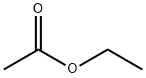
Ethyl acetate, on the other hand, has a different molecular structure. It consists of an ester group (COO) attached to an ethyl group (CH2CH3). While the ester group is polar due to the presence of the carbonyl and oxygen atoms, the overall polarity of ethyl acetate is less than that of dichloromethane. The ethyl group is relatively nonpolar, and it somewhat balances the polarity of the ester group. Additionally, the molecular structure of ethyl acetate is more flexible, which can also affect its overall polarity.
The dielectric constant is a measure of a solvent's ability to reduce the electrostatic forces between charged particles. Dichloromethane has a dielectric constant of approximately 8.93, while ethyl acetate has a dielectric constant of around 6.02. This indicates that dichloromethane is more effective at reducing electrostatic forces, which is consistent with its higher polarity. The higher dielectric constant of dichloromethane means it can better stabilize charges within the solvent, making it more polar than ethyl acetate.
In liquid chromatography, the polarity of the solvent plays a crucial role in the separation of compounds. The interaction between the solvent and the stationary phase affects the elution strength and the retention times of the components in a mixture. A more polar solvent like dichloromethane will interact differently with the stationary phase compared to a less polar solvent like ethyl acetate. This difference in interaction can influence the separation efficiency and the order in which compounds are eluted.
For example, in thin-layer chromatography (TLC), a more polar solvent like dichloromethane may move compounds more quickly up the plate compared to a less polar solvent like ethyl acetate. This is because the polar solvent can better dissolve polar compounds and carry them along with the solvent front. Conversely, a less polar solvent like ethyl acetate may result in slower movement of compounds, allowing for better separation of components with different polarities. This property is often exploited to optimize separation conditions and achieve better resolution of components in a mixture.
Dielectric constant comparisons support this: dichloromethane has a dielectric constant of ~9.1, while ethyl acetate’s is ~6.0, indicating stronger polarity in the former. In liquid chromatography, polarity influences separation: in reverse-phase chromatography (using nonpolar stationary phases), more polar dichloromethane interacts less with the stationary phase and elutes faster, while ethyl acetate, being less polar, may have slightly longer retention. In normal-phase chromatography (polar stationary phases), the order could reverse, as more polar compounds bind more strongly. These polarity differences thus allow their separation based on interaction strengths with the chromatographic medium.