


 Home
Home
Hi, I'd like to ask—what household items can help remove glue and resins from gold? Is acetone a safe option to remove glue and resins off gold? How long should I let the cleaning agent sit on the gold to dissolve glue and resins? Will scrubbing too hard damage the gold when removing glue and resins? What should I do if there are still traces of glue or resins left on the gold after cleaning? Thanks!
How to Remove Glue and Resins Off Gold Without Causing Any Damage?
Related Encyclopedia
- 64742-16-1
- 0
- All (35)
- China (13)
- (35)
- 9003-56-9
- C45H51N3X2
- 633.91
- All (21)
- China (1)
- (21)
- 67-64-1
- C3H6O
- 58.08
- All (22)
- China (16)
- (22)

- 7440-57-5
- Au
- 196.97
- All (29)
- China (5)
- (29)
- 32449-00-6
- C3H5NaO
- 80.06100
- All (0)
- China (0)
- (0)

- 17104-38-0
- C3H7O+
- 59.08710
- All (0)
- China (0)
- (0)
- 84219-67-0
- C18H18N2O2
- 294.34800
- All (0)
- China (0)
- (0)
- 15364-56-4
- C5H11NO
- 101.15
- All (0)
- China (0)
- (0)
- 100975-82-4
- C15H16O2
- 228.28600
- All (0)
- China (0)
- (0)
- 88394-79-0
- C3H7NO4
- 121.09200
- All (0)
- China (0)
- (0)
Related Products More >

- 96-26-4
- CNY Request For Quotation
- 96-26-4
- CNY Request For Quotation
- CNY Request For Quotation
- CNY Request For Quotation
- 67-64-1
- CNY 2000.0000
- 1ton
- 108-78-1
- USD 4.5000
- 25kg
- 13453-07-1
- Request For Quotation
- 1L


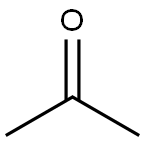
To use acetone, place the gold item in a small container and pour a small amount of acetone over it. Allow the gold to soak for approximately 10 to 15 minutes. This soaking period enables the acetone to penetrate and dissolve the glue or resin. After soaking, use a soft-bristled toothbrush to gently scrub the gold. The key here is to apply gentle pressure to avoid scratching the gold surface. Gold, particularly gold-plated items, can be easily damaged by vigorous scrubbing.
If traces of glue or resin remain after the initial cleaning, consider using rubbing alcohol (isopropyl alcohol) as an alternative. Rubbing alcohol is less harsh than acetone and can still effectively dissolve residual adhesives. Soak the gold in rubbing alcohol for a similar duration of 10 to 15 minutes and then gently scrub with a soft brush.
For a more gentle approach, particularly suitable for gold-plated items, a solution of mild dish soap and warm water can be used. Mix a few drops of dish soap with warm water and soak the gold item in this solution for about 15 to 20 minutes. The soap helps to loosen the adhesive, making it easier to remove. After soaking, use a soft-bristled toothbrush to gently scrub the gold.
In each case, after cleaning, rinse the gold thoroughly with water to remove any remaining cleaning agents. If necessary, dry the gold with a soft, lint-free cloth. These methods provide a balance between effectively removing glue and resins and preserving the integrity of the gold.
Acetone can remove glue and resin from gold but requires careful handling. It effectively dissolves stubborn adhesives like super glue and epoxy resins, but its strong chemical nature poses risks. Prolonged exposure may damage gold-plated items or harm gemstones set in the gold. If using acetone, apply it sparingly with a cotton swab directly to the residue rather than soaking the entire piece. Limit contact time to 30 seconds to 1 minute before immediately wiping the area with a soft cloth and washing the gold with mild soap and water to remove any chemical traces. Testing the acetone on an inconspicuous area first helps ensure it won’t harm the item.
The duration for letting a cleaning agent sit depends on the adhesive’s strength. Rubbing alcohol or oil typically requires 2-5 minutes to loosen most residues. Acetone should never be left on longer than 1 minute to prevent potential damage. Always test the cleaner on a small, hidden area first to verify its safety for the specific gold item. For particularly stubborn residues, gently reapplying the solvent after an initial wipe-down may help without increasing exposure time.
Scrubbing too hard can scratch or dent gold, especially if the item has a polished finish or delicate engravings. Always use a soft microfiber cloth, cotton swab, or soft-bristled toothbrush for gentle cleaning. Applying excessive pressure, even with mild solvents, may wear down the metal over time. If the residue resists gentle rubbing, let the solvent penetrate longer rather than scrubbing forcefully. For embedded resin particles, lightly brushing with a toothbrush in circular motions can help dislodge them without damaging the surface.
If traces of glue or resin remain after cleaning, repeat the process with a fresh application of the chosen solvent. For persistent residues, a mixture of warm water and mild dish soap can help lift remaining particles after initial solvent treatment. Avoid abrasive materials like baking soda paste or toothpaste, which can create fine scratches on gold surfaces.
Acetone is usually okay for gold, since gold doesn’t react much to solvents. But it’s good to test a tiny hidden spot first, just in case there are other metals mixed in that might react. Letting acetone sit for 10 to 15 minutes gives it time to break down the glue or resin without hurting the gold.
Scrubbing too hard can scratch gold, especially if it’s polished or has small details. Using a soft cloth or a very soft brush, like an old toothbrush, is better. Light pressure keeps the gold from getting damaged.
If some glue or resin is still there, doing the same process again might help. For tough spots, dabbing a cotton swab in the cleaner and holding it on the residue for a minute can loosen it.