


 Home
Home
Hello! Is cocoa butter safe for long-term use on sensitive skin? Does it effectively prevent stretch marks or just moisturize? Any better alternatives for acne-prone/irritated skin? When should I avoid it, and how often is safe to apply?
Is Cocoa Butter Good for Your Skin? Understanding Its Chemical Properties, Benefits, and Potential Risks
Related Encyclopedia
- 8002-31-1
- 0
- All (10)
- China (6)
- (10)

- 67701-08-0
- C18H34O2
- 282.46100
- All (0)
- China (0)
- (0)

- 67701-03-5
- C34H68O4
- 540.90132
- All (0)
- China (0)
- (0)

- 61788-66-7
- 0.00000
- All (0)
- China (0)
- (0)
- 67784-82-1
- (C3H8O3
- 0
- All (2)
- China (2)
- (2)
- 61789-31-9
- 0
- All (6)
- China (6)
- (6)
- 86403-32-9
- 0
- All (1)
- China (1)
- (1)
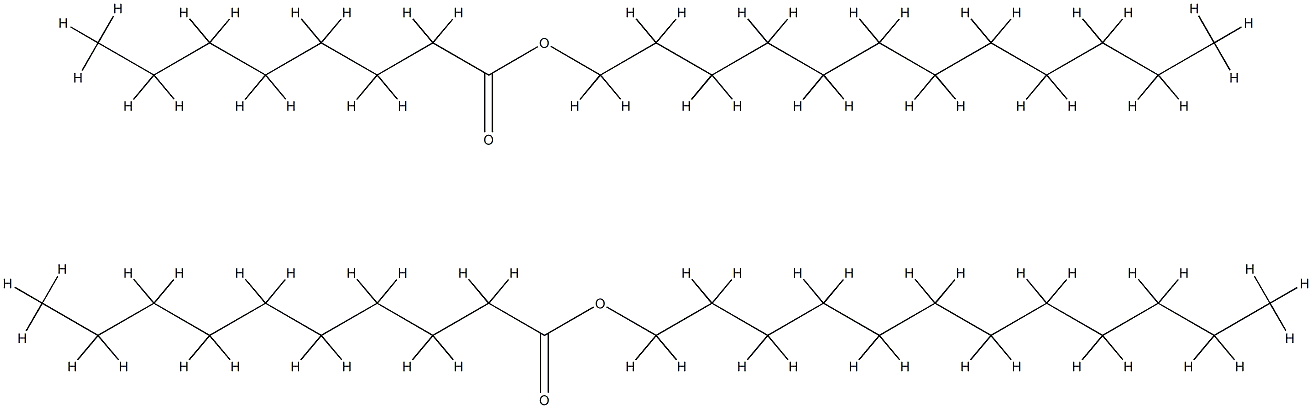
- 95912-86-0
- C42H84O4
- 653.11396
- All (1)
- China (1)
- (1)
- 68410-23-1
- 0
- All (2)
- China (0)
- (2)
- 91995-81-2
- 0
- All (8)
- China (7)
- (8)
Related Products More >

- 991-84-4
- Request For Quotation
- 991-84-4
- Request For Quotation
- 96-69-5
- Request For Quotation
- 95912-86-0
- Request For Quotation
- 220L/drum
- 947-19-3
- Request For Quotation
- 93348-22-2
- Request For Quotation
- 25KG/50KG/1000KG
- 93348-22-2
- Request For Quotation
- 25kg/Cardboard Drum
- 92044-87-6
- Request For Quotation


Cocoa butter, derived from the fat of cocoa beans, is rich in fatty acids like oleic, palmitic, and stearic acid. These compounds create a protective barrier over the skin to lock in moisture, making it a popular ingredient for improving skin hydration and elasticity. Its emollient properties help smooth and soften dry, rough, or flaky skin, which explains why it’s frequently used in body lotions, balms, and scar treatments.
From a dermatological standpoint, cocoa butter does not penetrate deeply into the dermis but instead acts on the stratum corneum—the outermost layer of the skin. This can be effective for mild cases of dryness or environmental skin stress (e.g., cold weather), but it does not treat underlying inflammatory or infectious skin conditions. Furthermore, while cocoa butter contains antioxidants such as vitamin E, its efficacy in scar healing or stretch mark prevention remains mostly anecdotal and not well supported by large-scale clinical trials.
There are some potential risks, especially for individuals with acne-prone or sensitive skin. Cocoa butter is comedogenic, meaning it can clog pores and potentially trigger breakouts or folliculitis. In rare cases, it may also cause contact dermatitis due to natural fragrances or added preservatives.
For safer and more targeted skincare, especially in clinical or sensitive contexts, dermatologists may recommend alternatives like ceramide-based moisturizers, hyaluronic acid serums, or petrolatum-based ointments (such as Aquaphor or Vaseline). These are generally non-comedogenic and have more consistent clinical data backing their safety and efficacy.
Think of your skin like a sponge. When it’s dry, it’s stiff and crackly (hello, winter flakes!). Cocoa butter is like soaking that sponge in water—it melts into skin, delivering fatty acids and antioxidants that lock in moisture and keep it plump. But if your sponge is already soggy (oily skin), adding more “water” (cocoa butter) won’t help—it might even clog pores! ??
Quick fix: If you have dry skin, swap your regular lotion for cocoa butter after showering (when skin is damp) to seal in hydration. For oily/acne-prone skin, use it sparingly on rough patches like elbows or heels instead. Pro tip: Look for “unrefined” cocoa butter—it’s packed with more nutrients than the refined stuff! ??
Why it works: Cocoa butter’s stearic and oleic acids create a protective barrier that prevents water loss, while its antioxidants (like polyphenols) calm inflammation and may reduce sun damage over time. Pair it with sunscreen during the day for double-duty protection! ☀️?️
Cocoa butter, also known as theobroma oil, is a naturally occurring fat extracted from cocoa beans. Its chemical structure is primarily made up of triglycerides, which are esters formed from glycerol and three fatty acid chains—mainly stearic acid, palmitic acid, and oleic acid. These long hydrocarbon chains are nonpolar and hydrophobic, which explains cocoa butter’s water-resistant and emollient properties.
The molecular bonds within cocoa butter are primarily covalent bonds, especially within the fatty acid chains. These covalent bonds contribute to the molecule’s stability under standard conditions, allowing cocoa butter to remain solid at room temperature and melt close to body temperature (~34–38°C), making it ideal for topical use. The non-polarity of its molecules makes cocoa butter poorly soluble in water but highly compatible with the lipid layers of human skin. This interaction helps to lock in moisture, forming a protective barrier that reduces transepidermal water loss.
From a chemical reactivity standpoint, cocoa butter is relatively inert. It does not readily undergo oxidation unless exposed to high heat or light over time. However, it may become rancid through lipid peroxidation in the presence of oxygen and UV radiation, a reaction involving free radicals. This is why commercial formulations often include antioxidants like Vitamin E (tocopherol) to prolong shelf life.
In laboratory or industrial contexts, cocoa butter is also used in pharmaceuticals and cosmetics because of its melting profile, chemical stability, and compatibility with both lipophilic and active ingredients.
So, is cocoa butter good for your skin? From a chemical point of view, yes—because its structure supports hydration, barrier formation, and compatibility with skin lipids.
First, source matters. Pure, unprocessed cocoa butter is safer than versions with added ingredients like fragrances, preservatives, or essential oils—these can irritate a dog’s sensitive skin. How you apply it counts too: A thin layer on dry paws might be okay, but slathering it on large areas can make fur greasy, trap dirt, or clog pores.
Dog differences play a role, too. Puppies or dogs with skin conditions (like allergies or hot spots) are more likely to react. Breeds with thick fur (think Golden Retrievers) may get matting from the oil, while short-haired dogs might just end up with sticky skin.
Common myths? Myth 1: “It’s natural, so it’s always safe.” Natural doesn’t equal dog-friendly—many plants are natural but toxic! Myth 2: “It works as well for dogs as it does for humans.” Dogs’ skin has a different pH balance, so what hydrates us can upset theirs.
Family-friendly tips:
Stick to dog-specific products (like paw balms) designed for their skin and safe if licked.
If you use cocoa butter, test a tiny spot on their paw first. Wait 24 hours—no redness? Then a thin layer is okay, but wipe excess off to prevent licking.
For dry paws, try a warm cloth wipe followed by a dog-safe balm. It’s gentler and less messy than cocoa butter.