


 Home
Home
Hello, I’d like to ask how many calories are in a tablespoon of olive oil? Is that amount similar to other cooking oils? Does the type of olive oil (like extra virgin) change the calorie count? And is that calorie amount something to worry about when using it in daily cooking?
How Many Calories Are in a Tablespoon of Olive Oil?
Related Encyclopedia
- 8001-25-0
- N/A
- 0
- All (19)
- China (6)
- (19)

- 67701-08-0
- C18H34O2
- 282.46100
- All (0)
- China (0)
- (0)

- 67701-03-5
- C34H68O4
- 540.90132
- All (0)
- China (0)
- (0)

- 61788-66-7
- 0.00000
- All (0)
- China (0)
- (0)
- 67784-82-1
- (C3H8O3
- 0
- All (2)
- China (2)
- (2)
- 61789-31-9
- 0
- All (6)
- China (6)
- (6)
- 86403-32-9
- 0
- All (1)
- China (1)
- (1)
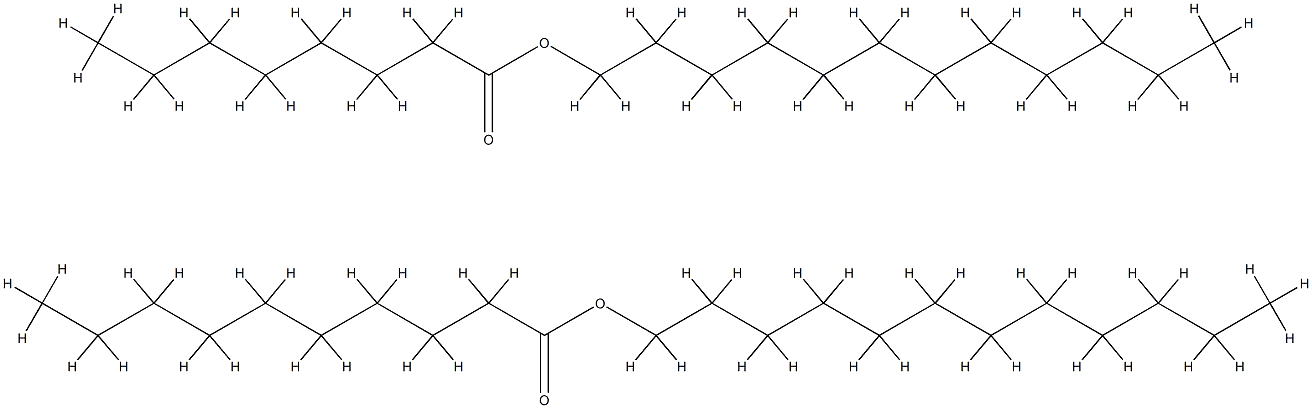
- 95912-86-0
- C42H84O4
- 653.11396
- All (1)
- China (1)
- (1)
- 68410-23-1
- 0
- All (2)
- China (0)
- (2)
- 91995-81-2
- 0
- All (8)
- China (7)
- (8)
Related Products More >

- 95912-86-0
- Request For Quotation
- 220L/drum
- 93348-22-2
- Request For Quotation
- 25KG/50KG/1000KG
- 93348-22-2
- Request For Quotation
- 25kg/Cardboard Drum
- 92044-87-6
- Request For Quotation
- 91995-81-2
- Request For Quotation
- 25
- 91995-81-2
- Request For Quotation
- 190kg/drum
- 91995-81-2
- Request For Quotation
- Bottle,barrel,cargo,container,etc.
- 91995-81-2
- Request For Quotation
- 200kgs net plastic drum.


In daily use, that tablespoon is what you might drizzle on a salad, toss with veggies, or use to sauté a small pan of food. It’s not a huge number on its own, but it adds up. If you’re watching calories, using a little less—maybe a teaspoon instead—can help. But olive oil is also known for being a healthier fat, so many people think the small amount is worth it for things like salads or light cooking. Just keep in mind, like with any oil, it’s easy to pour more than a tablespoon without noticing, and those extra calories add up over time.
Physiologically, these calories stem from the oxidation of fatty acids in the mitochondria, a process that releases energy for cellular functions. Unlike simple carbohydrates, which are metabolized rapidly, the lipids in olive oil undergo β-oxidation, providing sustained energy but also contributing to adipose tissue storage when consumed in excess. This metabolic pathway explains why even small overconsumption—e.g., 2 tablespoons daily beyond energy needs—can lead to gradual weight gain over months.
From a physical perspective, the caloric density correlates with olive oil’s hydrophobic nature; its inability to mix with water means it retains energy-dense triglycerides without dilution, a property exploited in food processing for texture and flavor retention. Chemically, the stability of its monounsaturated fatty acids (predominantly oleic acid) reduces oxidative breakdown during cooking, preserving caloric content even at moderate temperatures—a key distinction from polyunsaturated oils prone to lipid peroxidation.
In clinical nutrition, this caloric value informs dietary guidelines: the USDA’s MyPlate recommends limiting added fats to 5–7 teaspoons daily (≈30–42 grams), with olive oil’s 14 grams per tablespoon representing a significant portion. In public health, its caloric density underscores portion control in Mediterranean diet advocacy, where its inclusion is balanced with fiber-rich foods to mitigate excess energy intake. Industrially, this consistency enables standardized nutritional labeling, aiding consumer transparency. Thus, the 120 kcal per tablespoon is not merely a number but a nexus of biochemistry, physiology, and practical nutrition.
From a nutritional standpoint, the high calorie count in olive oil is offset by its beneficial properties. MUFAs are known to support heart health by reducing LDL ("bad") cholesterol levels while maintaining or even increasing HDL ("good") cholesterol. Additionally, olive oil contains antioxidants such as polyphenols and vitamin E, which combat oxidative stress and inflammation. These properties make it a staple in the Mediterranean diet, where it’s linked to longevity and reduced risk of chronic diseases. For example, using a tablespoon of olive oil in a salad dressing not only adds flavor but also enhances the absorption of fat-soluble vitamins (A, D, E, K) from vegetables.
At its core, olive oil is a lipid, composed mainly of triglycerides—molecules formed by glycerol and three fatty acid chains. Each gram of fat contributes 9 kilocalories, unlike proteins or carbohydrates, which provide roughly 4 kcal per gram. The specific caloric value of olive oil, then, is a direct result of its chemical composition: around 73% of its fatty acids are monounsaturated (notably oleic acid, C18:1), with smaller proportions of polyunsaturated fats (like linoleic acid) and saturated fats (such as palmitic acid). The energy density of olive oil is tied to the molecular bonds in these fatty acids, which yield high amounts of ATP during oxidation in metabolic pathways like β-oxidation and the citric acid cycle.
In professional nutrition and dietetics, the functional significance of olive oil’s calories goes beyond mere energy. Unlike trans fats or many saturated fats, the monounsaturated fats in olive oil are linked to improved lipid profiles, reduced inflammation, and cardioprotective effects. This has elevated olive oil—especially extra virgin olive oil (EVOO)—to a staple in evidence-based dietary frameworks like the Mediterranean diet. The relatively high caloric density is often misunderstood: while some interpret it as “fattening,” professionals understand that caloric density must be contextualized within total dietary patterns and nutrient quality, not just quantity.
From a food processing or culinary engineering standpoint, olive oil’s structure also affects its thermal stability and oxidative resistance, important in both nutrition and food technology. The stability of monounsaturated fats, combined with antioxidant compounds like polyphenols and tocopherols found in EVOO, means the oil is more resistant to oxidation and rancidity compared to polyunsaturated oils like soybean or sunflower oil. This not only preserves flavor and safety but also retains more bioactive compounds during cooking.
A common misconception is equating all cooking oils based on calorie count alone. While it’s true that most oils—olive, canola, sunflower—contain similar calorie values per tablespoon, their biological effects and compositional integrity vary widely. Olive oil, due to its unique mix of fatty acids and antioxidants, plays a different role in health and food formulation than, say, refined vegetable oils or animal fats. Hence, understanding the “120 calories” in olive oil requires not just a numerical view, but a qualitative biochemical lens.