


 Home
Home
Hello, I’d like to ask: Is Palmer's Cocoa Butter safe for sensitive skin? Can it really help with stretch marks or scars? Are there risks of clogging pores or causing irritation? What alternatives would you recommend?
Is Palmer's Cocoa Butter Good? What Are Its Benefits and Risks for Your Skin?
Related Encyclopedia

- 194043-92-0
- 0.00000
- All (0)
- China (0)
- (0)
- 8002-31-1
- 0
- All (10)
- China (6)
- (10)
- 67629-40-7
- C30H49ClO3
- 493.16100
- All (38)
- China (12)
- (38)

- 59-02-9
- C29H50O2
- 430.71
- All (38)
- China (12)
- (38)

- 79434-83-6
- C29H50O2
- 430.70600
- All (38)
- China (12)
- (38)

- 2074-53-5
- C29H50O2
- 430.71
- All (38)
- China (12)
- (38)
- 142386-74-1
- C38H67N2O3P
- 630.92400
- All (38)
- China (12)
- (38)
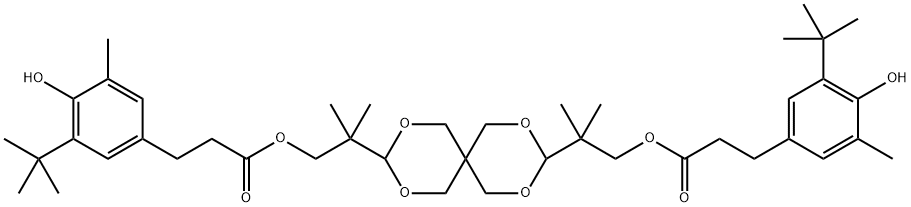
- 90498-90-1
- C43H64O10
- 740.98
- All (0)
- China (0)
- (0)

- 110675-26-8
- C33H60OS2
- 536.96
- All (0)
- China (0)
- (0)
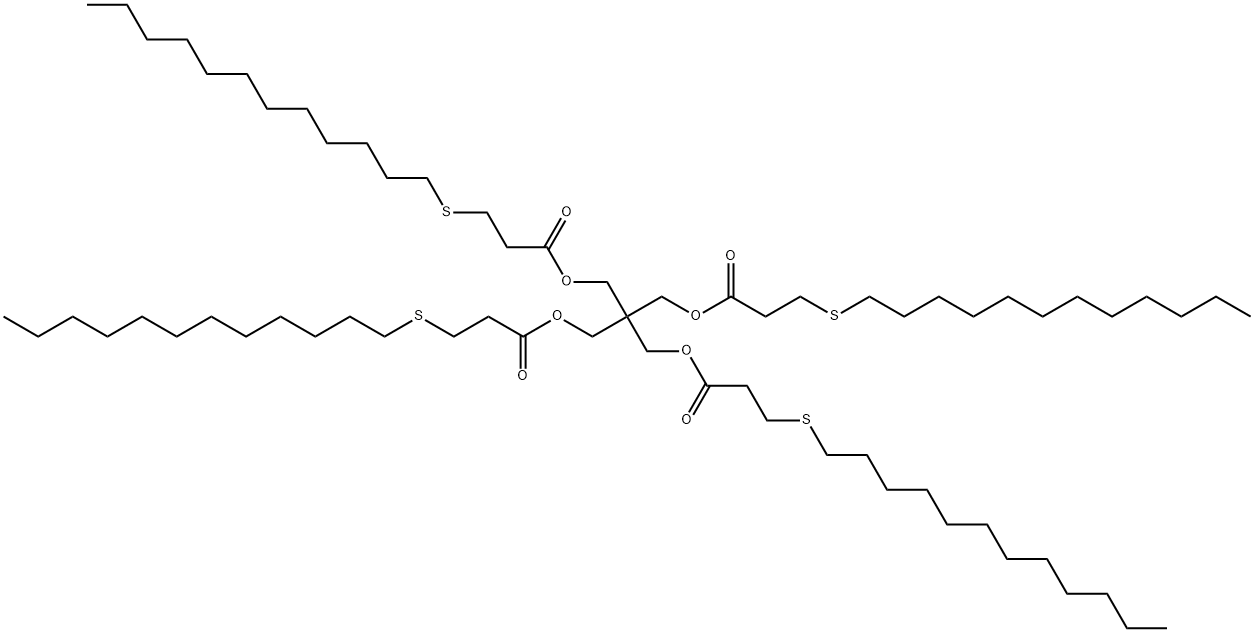
- 29598-76-3
- C65H124O8S4
- 1161.94
- All (0)
- China (0)
- (0)
Related Products More >

- CNY Request For Quotation
- CNY Request For Quotation
- CNY Request For Quotation
- CNY Request For Quotation
- CNY Request For Quotation
- CNY Request For Quotation
- CNY Request For Quotation
- CNY Request For Quotation


Palmer's Cocoa Butter contains a blend of natural cocoa butter along with added ingredients such as vitamin E and shea butter, which work together to hydrate and nourish the skin. The cocoa butter provides a lipid-rich barrier that helps retain moisture by reducing transepidermal water loss, which can improve the skin's texture and appearance, especially for dry or flaky skin. Vitamin E acts as an antioxidant, helping to protect skin cells from oxidative stress, which may support skin repair processes. Shea butter also adds to the moisturizing and anti-inflammatory effects.
From a pharmacological perspective, these ingredients collectively promote skin hydration and may aid in the reduction of scars and stretch marks when used consistently. However, individuals with sensitive or acne-prone skin should use such products cautiously, as the rich, occlusive nature of cocoa butter and shea butter may clog pores and lead to irritation or breakouts in some cases. Allergic reactions are rare but possible, especially if the formulation contains fragrances or preservatives.
For optimal skin health, users should test the product on a small skin area first and avoid applying on broken or infected skin. Alternatives such as fragrance-free, non-comedogenic moisturizers or products with proven active ingredients like hyaluronic acid or ceramides might be preferred for sensitive or acne-prone individuals. Proper hydration, sun protection, and a balanced skincare routine are also essential components of skin care.
The chemical bonds within cocoa butter are primarily covalent bonds, particularly ester bonds connecting the glycerol backbone to fatty acids. These covalent bonds confer chemical stability under normal conditions, ensuring that cocoa butter remains solid at room temperature and melts around human body temperature. This melting behavior allows cocoa butter to spread smoothly on the skin, enhancing its practical use in skincare.
From a chemical reactivity perspective, cocoa butter is relatively stable but can undergo lipid peroxidation—a free radical-driven oxidation process—when exposed to oxygen, light, and heat. This degradation affects product shelf life and effectiveness. To mitigate this, formulations like Palmer's often include antioxidants such as vitamin E, which help protect the fats from oxidation and extend the product’s stability.
Palmer's Cocoa Butter lotion may also contain additional ingredients like shea butter and various emulsifiers to create a smooth texture suitable for skin application. Emulsifiers are compounds that enable the mixing of hydrophobic cocoa butter with water, forming an emulsion that balances occlusiveness and skin feel.
In industrial applications, the stability and melting profile of cocoa butter make it useful not only in cosmetics but also in pharmaceuticals and food products, where controlled melting and moisturizing effects are desirable.
First, source matters. Pure, unprocessed cocoa butter is safer than versions with added ingredients like fragrances, preservatives, or essential oils—these can irritate a dog’s sensitive skin. How you apply it counts too: A thin layer on dry paws might be okay, but slathering it on large areas can make fur greasy, trap dirt, or clog pores.
Dog differences play a role, too. Puppies or dogs with skin conditions (like allergies or hot spots) are more likely to react. Breeds with thick fur (think Golden Retrievers) may get matting from the oil, while short-haired dogs might just end up with sticky skin.
Common myths? Myth 1: “It’s natural, so it’s always safe.” Natural doesn’t equal dog-friendly—many plants are natural but toxic! Myth 2: “It works as well for dogs as it does for humans.” Dogs’ skin has a different pH balance, so what hydrates us can upset theirs.
Family-friendly tips:
Stick to dog-specific products (like paw balms) designed for their skin and safe if licked.
If you use cocoa butter, test a tiny spot on their paw first. Wait 24 hours—no redness? Then a thin layer is okay, but wipe excess off to prevent licking.
For dry paws, try a warm cloth wipe followed by a dog-safe balm. It’s gentler and less messy than cocoa butter.
Think of your skin like a sponge—when it’s dry, it’s stiff and cracked. But soak it in water (or in this case, cocoa butter), and it becomes soft, bouncy, and stretchy. Palmer’s formula uses cocoa butter (a natural emollient rich in fatty acids) plus vitamin E to lock in moisture and protect against free radicals. It’s like giving your skin a “hydration shield” that stays put, even after washing hands or sweating.
Pro tip: For best results, apply it right after showering while your skin is still damp. The warmth opens pores, helping the cream absorb deeper instead of sitting on top. Focus on rough spots like elbows, knees, or belly if you’re pregnant. And don’t skip the “pat and wait” step—massage it in gently until it’s fully absorbed to avoid that greasy residue.