


 Home
Home
Hi, I'd like to ask—Are the main raw materials of MSG wheat, corn, or other crops? Will gluten residues remain during the production process? Which brands of MSG clearly label "gluten-free"? What specific symptoms (such as abdominal pain or rash) can occur if someone Accidentally ingested monosodium glutamate (MSG) containing gluten?Besides MSG, which condiments (like soy sauce or oyster sauce) may contain both MSG and gluten? Thanks!
Does MSG Contain Gluten? What Should Gluten-Intolerant People Note When Consuming It?
Related Encyclopedia
- 8002-80-0
- 0
- All (2)
- China (0)
- (2)
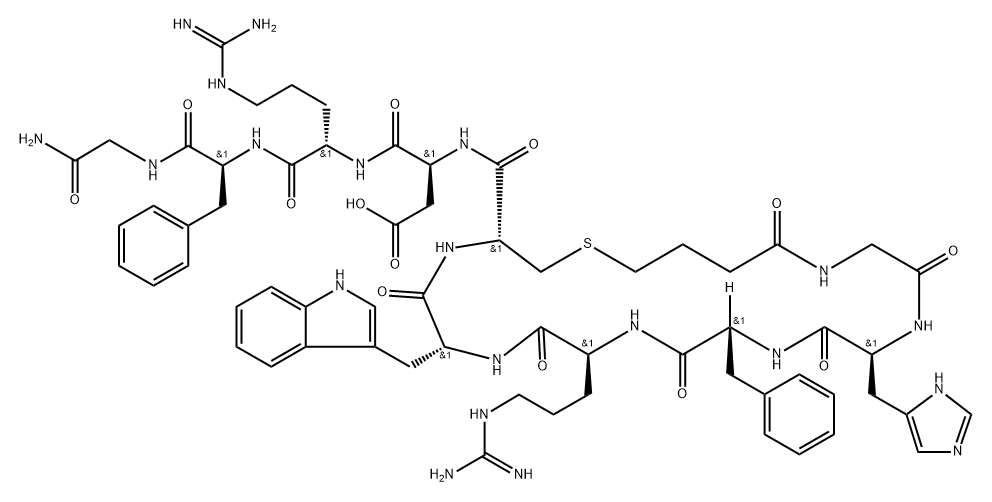
- 1416983-77-1
- C62H82N20O13S
- 1347.51
- All (0)
- China (0)
- (0)
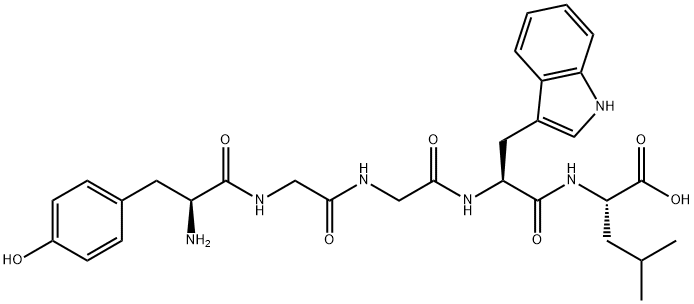
- 68382-18-3
- C30H38N6O7
- 594.66
- All (0)
- China (0)
- (0)
- 14732-77-5
- C37H56O3S
- 580.90400
- All (0)
- China (0)
- (0)
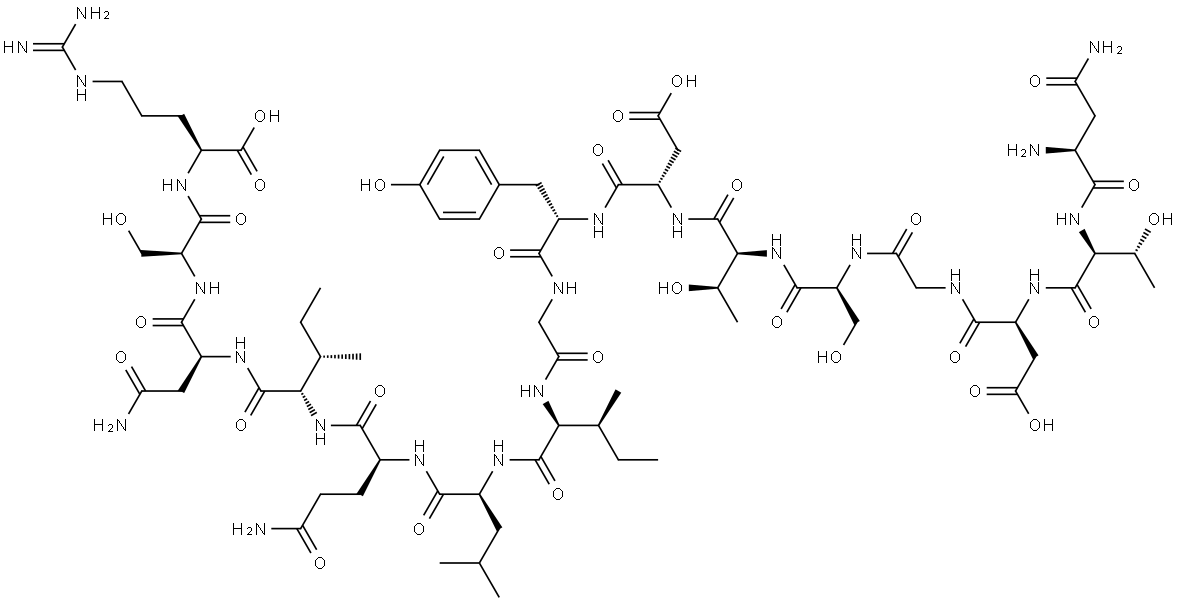
- 62982-31-4
- C72H116N22O29
- 1753.82
- All (0)
- China (0)
- (0)
Related Products More >

- 3380-34-5 Trichloro-2-hydroxydiphenylether Factory Supply Cosmetic ingredients
- CNY Request For Quotation
- 66071-96-3
- USD 15.0000
- 25kg
- 9010-66-6
- USD 9.0000
- 50kg
- 11138-66-2
- USD 90.0000
- 25kg
- 97-67-6
- Request For Quotation
- 97-67-6
- Request For Quotation
- 90823-38-4
- Request For Quotation
- 9064-67-9
- Request For Quotation


Regarding gluten residues, if wheat is used as the raw material, there’s a potential for gluten to remain if the processing doesn’t fully remove it. However, modern fermentation techniques often separate proteins like gluten during processing. Still, cross-contamination or incomplete purification could lead to trace residues. Brands that explicitly label MSG as "gluten-free" typically use corn or rice as raw materials and undergo rigorous testing; examples may include some products from Ajinomoto or specific store brands, but it’s crucial to check labels individually.
Accidental ingestion of MSG containing gluten can trigger symptoms in sensitive individuals, such as abdominal pain, diarrhea, bloating, skin rashes, or fatigue—similar to gluten intolerance or celiac disease reactions. Symptoms vary based on sensitivity and intake amount.
Other condiments that may contain both MSG and gluten include soy sauce (often brewed with wheat), certain oyster sauces, bouillon cubes, and some seasoning blends. For instance, many soy sauces use wheat as a key ingredient, and manufacturers may add MSG for flavor, making them a dual source. Always check ingredient lists for "wheat" and "monosodium glutamate" to avoid cross-contamination.
Gluten residues in MSG primarily stem from wheat-derived raw materials during fermentation. Even with purification steps including filtration, crystallization, and ion exchange, trace amounts of gliadin or glutenin may persist. Analytical methods like ELISA testing detect gluten concentrations below 20ppm in most commercial MSG samples, technically qualifying them as "gluten-free" under FDA standards. However, sensitive individuals with celiac disease may still react to these residual levels.
Several premium MSG brands explicitly label products as gluten-free through third-party certifications. Ajinomoto's "Glutamate MSG" line carries GF certification, as do products from Korean manufacturer CJ CheilJedang and Swiss firm Jungbunzlauer. These manufacturers implement dedicated gluten-free production lines and batch testing protocols to ensure compliance.
For celiac patients, accidental ingestion of gluten-contaminated MSG can trigger immune-mediated responses. Within hours to days, symptoms manifest as abdominal cramping, diarrhea, nausea, and headaches. Dermatological reactions like dermatitis herpetiformis may occur in genetically predisposed individuals, while chronic exposure risks intestinal villous atrophy and nutrient malabsorption.
Condiments frequently containing both MSG and gluten include soy sauce, Worcestershire sauce, and certain barbecue sauces. Traditional soy sauce production involves wheat koji fermentation, introducing gluten proteins. Oyster sauce typically uses wheat flour as a thickening agent, though gluten-free variants exist. Malt vinegar, often included in salad dressings and marinades, presents another hidden gluten source due to barley-derived malt. Consumers should scrutinize ingredient lists for "wheat," "barley," or "rye" descriptors and seek out certified gluten-free alternatives.
When wheat is used as a raw material, although it contains gluten, the fermentation process usually breaks down the complex protein structure, including gluten, into simpler substances. However, the question of whether gluten residues remain is not straightforward. In an ideal production scenario with advanced refining techniques, manufacturers take multiple steps to purify the product, removing impurities and reducing the likelihood of gluten presence. But in some cases, especially in less - controlled or older production facilities, cross - contamination might occur. For instance, if the equipment used for processing wheat - based MSG is not thoroughly cleaned before handling other products, there could be a transfer of gluten particles. Also, an incomplete breakdown during the initial stages of production could potentially leave small amounts of gluten.
For consumers with gluten sensitivities or celiac disease, identifying MSG products that are safe to consume is crucial. Brands like McCormick and Accent have recognized this need and clearly label their MSG products as "gluten - free". These labels provide reassurance to those who must avoid gluten. However, it's important to note that labeling regulations differ from one region to another. In some areas, the criteria for using the "gluten - free" label might be more lenient, allowing for a certain amount of trace gluten. Therefore, in addition to relying on labels, consumers can contact the manufacturer directly to inquire about their production processes and gluten - control measures.
If someone with gluten sensitivity accidentally ingests MSG containing gluten, various symptoms may manifest. The most common ones are related to the digestive system, such as abdominal pain, which can range from mild discomfort to sharp cramps. Bloating and diarrhea are also frequently reported. On the skin, a rash might appear, often characterized by itchy, red patches. For individuals with celiac disease, the consequences can be more severe. The ingestion of gluten can trigger an autoimmune response in the small intestine, leading to inflammation and damage to the villi, which are crucial for nutrient absorption. This can result in a range of long - term health issues if not addressed promptly.
If someone with gluten sensitivity accidentally ingests MSG containing gluten, symptoms such as abdominal pain, rash, or headaches may occur. However, it is important to note that modern MSG production methods ensure that the final product is gluten - free, making it safe for most consumers.
In addition to MSG, other condiments like soy sauce and oyster sauce may contain both MSG and gluten. Soy sauce is traditionally made from wheat and soybeans, which means it contains gluten. Oyster sauce may also contain gluten - containing ingredients and often has added MSG for flavor enhancement. Consumers with gluten sensitivities should carefully check the labels of these products.