


 Home
Home
Hi, I'd like to ask—is the oxidation state of zinc always +1? What is the valence of zinc in zinc oxide? When zinc forms a compound with chlorine, does its valence become +2? How can we determine the specific oxidation state of zinc from a compound's chemical formula? Thanks!
Is Zinc Always in +1 Oxidation State? Uncovering Valence Variations in Zinc Compounds
Related Encyclopedia
- 7440-66-6
- Zn
- 65.39
- All (7)
- China (5)
- (7)
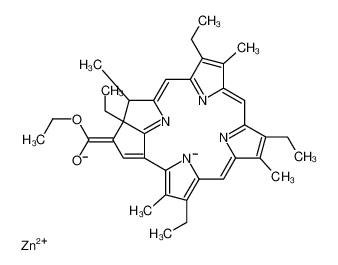
- 113031-38-2
- C37H42N4O2Zn
- 640.14498
- All (0)
- China (0)
- (0)
- 12034-86-5
- NbZn3
- 289.04600
- All (0)
- China (0)
- (0)
- 12040-28-7
- VZn3
- 247.08100
- All (0)
- China (0)
- (0)
- 12050-67-8
- CeZn
- 205.49600
- All (0)
- China (0)
- (0)
- 12057-22-6
- LiZn
- 72.32100
- All (0)
- China (0)
- (0)
- 12064-51-6
- GdZn2
- 288.01000
- All (0)
- China (0)
- (0)
- 12066-85-2
- PrZn2
- 271.66800
- All (0)
- China (0)
- (0)
- 12067-93-5
- YbZn
- 238.43400
- All (0)
- China (0)
- (0)
- 12159-63-6
- ErZn
- 232.63900
- All (0)
- China (0)
- (0)
Related Products More >

- 13927-77-0
- CNY Request For Quotation
- 3030-80-6
- CNY Request For Quotation
- 6990-43-8
- CNY Request For Quotation
- 155-04-4
- CNY Request For Quotation
- 36190-62-2 Zinc diisobutyldithiocarbamate
- CNY Request For Quotation
- 14634-93-6 Zinc ethylphenyl dithiocarbamate
- CNY Request For Quotation
- 14726-36-4 Zinc dibenzyldithiocarbamate
- CNY Request For Quotation
- 137-30-4 Zinc dimethyldithiocarbamate
- CNY Request For Quotation


Oxygen usually has an oxidation state of -2 in compounds, and to balance the charges in ZnO, zinc must be +2. When zinc forms a compound with chlorine, such as zinc chloride, its valence is indeed +2. Zinc chloride is represented by the chemical formula ZnCl₂; since each chlorine atom has an oxidation state of -1, two chlorine atoms contribute a total charge of -2, so zinc must be +2 to maintain electrical neutrality.
To determine zinc’s oxidation state from a compound’s formula, one can use the rules for assigning oxidation states: identify the known oxidation states of other elements in the compound (e.g., oxygen is -2, halogens like chlorine are -1 in most cases) and calculate zinc’s state to balance the total charge. Zinc’s oxidation state is +2 in most compounds due to its tendency to lose both valence electrons, though rare exceptions might exist in some specialized compounds, but +2 is the predominant state.
In zinc oxide (ZnO), the oxidation state of zinc is +2. This is because oxygen typically has an oxidation state of –2 in such compounds. For the compound to be neutral, the sum of the oxidation states of all elements must be zero. So, zinc needs to have an oxidation state of +2 to balance out the –2 from oxygen: (+2) + (–2) = 0.
When zinc forms a compound with chlorine, like zinc chloride (ZnCl₂), the valence of zinc is +2. Chlorine usually has an oxidation state of –1 in binary compounds. Since there are two chlorine atoms each with an oxidation state of –1, zinc must have an oxidation state of +2 to make the compound neutral: (+2) + 2×(–1) = 0.
To determine the specific oxidation state of zinc from a compound's chemical formula, there are some key steps. First, know the common oxidation states of other elements. For example, oxygen is often –2, halogens like chlorine are usually –1, and alkali metals are typically +1. Then, balance the charges. For a neutral compound, the total sum of the oxidation states should be zero, and for an ion, it should equal the ion's charge. Take zinc sulfate (ZnSO₄) as an example. The sulfate ion (SO₄²⁻) has a charge of –2, so zinc must be +2 to neutralize this charge.
It's important to note that there are exceptions. Rare compounds like Zn₂Cl₂ exist where each zinc has an oxidation state of +1. In such cases, the dimeric structure (with a Zn–Zn bond) allows for the sharing of electrons, resulting in a total oxidation state of +2 for the Zn₂ unit.
In zinc oxide (ZnO), the oxidation state of zinc is definitively +2. Oxygen typically adopts a -2 oxidation state in compounds, and since ZnO is electrically neutral, the charges must balance. This means zinc must compensate for oxygen's -2 charge with a +2 state, resulting in the ionic compound Zn²⁺O²⁻. This +2 state is so characteristic of zinc that ZnO is often used as a reference example when studying metal oxides with divalent cations.
When zinc combines with chlorine to form zinc chloride (ZnCl₂), the oxidation state remains +2. Chlorine has a -1 oxidation state in most of its compounds, and since ZnCl₂ is neutral, two chlorine atoms (-1 each) require zinc to be +2 to achieve charge balance. This pattern repeats in other zinc halides like ZnBr₂ and ZnI₂, where zinc consistently exhibits its +2 oxidation state. The formation of ZnCl₂ also highlights zinc's tendency to create ionic compounds with halogens, further reinforcing its +2 valence.
Determining zinc's oxidation state from a chemical formula involves analyzing the known oxidation states of the other elements and applying the principle of charge neutrality. For example, in zinc sulfate (ZnSO₄), the sulfate ion (SO₄²⁻) carries a -2 charge. Since the compound is neutral, zinc must offset this with a +2 state. Similarly, in zinc hydroxide (Zn(OH)₂), each hydroxide group (OH⁻) has a -1 charge, so two hydroxide groups require zinc to be +2 to balance the overall charge.
This predictable behavior makes zinc's oxidation state relatively easy to determine compared to transition metals with variable valences. Even in complex compounds like zinc phosphate (Zn₃(PO₄)₂), where phosphate (PO₄³⁻) has a -3 charge, the math is straightforward: three zinc ions (+2 each) balance two phosphate ions (-3 each), maintaining electrical neutrality.
While theoretical discussions might explore hypothetical zinc compounds with different oxidation states, no stable or naturally occurring examples exist outside the +2 state. This consistency simplifies chemical analysis and prediction, as zinc's behavior in compounds is highly reliable and well-documented across countless chemical contexts.
To determine zinc’s oxidation state from a formula, use the compound’s overall charge and known oxidation states of other elements. For neutral compounds, the sum of oxidation states must be zero. Zinc rarely has a +1 oxidation state; such cases are uncommon and usually involve specific coordination compounds or unusual reaction conditions. Its typical valence is +2 in most stable compounds.