


 Home
Home
Hello, I’m curious about how calcium hydroxide is made. I’ve heard it’s used in some everyday things, but I don’t know the steps involved. Do you need special ingredients or equipment? Is it a simple process, or does it require complex techniques? Can someone make it at home with easy-to-find items, or is it something that’s usually done in factories? How exactly do you go about making calcium hydroxide?
How Can You Make Calcium Hydroxide Using Common Materials?
Related Encyclopedia

- 1305-62-0
- CaH2O2
- 74.09
- All (241)
- China (18)
- (242)
- 12323-41-0
- CaO
- 58.07720
- All (164)
- China (21)
- (164)
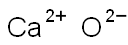
- 73018-51-6
- CaO
- 56.08
- All (164)
- China (21)
- (164)
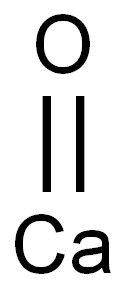
- 1305-78-8
- CaO
- 56.08
- All (164)
- China (21)
- (164)
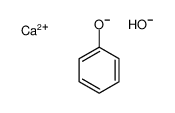
- 89306-95-6
- C6H6CaO2
- 150.18900
- All (0)
- China (0)
- (0)
- 32119-90-7
- DOT
- 22.02930
- All (50)
- China (13)
- (50)
- 20272-95-1
- DOT
- 21.02960
- All (50)
- China (13)
- (50)

- 358616-29-2
- H3O2
- 35.02260
- All (50)
- China (13)
- (50)
- 61468-85-7
- OT2
- 23.03120
- All (50)
- China (13)
- (50)
- 53774-37-1
- OT2
- 24.03130
- All (50)
- China (13)
- (50)
Related Products More >

- 9003-05-8
- USD 30.0000
- 25kg
- 9003-05-8
- USD 30.0000
- 25kg
- 1305-78-8
- USD 135.0000
- 1ton
- 1305-62-0
- USD 270.0000
- 900kg
- 1305-62-0
- USD 117.0000
- 900kg
- 1336-21-6
- CNY 500.0000
- 1ton


After adding the water and letting it sit, the quicklime and water turn into a new substance: calcium hydroxide. It might look like a white paste or powder once it’s done. You’ve probably seen this stuff without knowing it—it’s what’s in some types of mortar for building, or even in the lime water used to test for certain gases. Just remember, quicklime can be tricky to handle because it gets so hot when mixed with water, so it’s best to be cautious if you ever try it.
The key to this reaction lies in the ionic nature of both compounds. Calcium oxide’s lattice of Ca²⁺ and O²⁻ ions dissociates in water, with O²⁻ ions reacting with H₂O to form OH⁻ ions, which then bond with Ca²⁺ to form Ca(OH)₂. This mechanism ensures complete conversion when stoichiometric amounts of water are used, though excess water results in a saturated solution (lime water) due to Ca(OH)₂’s low solubility (≈1.7 g/L at 20°C).
In practical applications, this synthesis is foundational. In construction, slaked lime mixed with sand forms mortar, where Ca(OH)₂ reacts with atmospheric CO₂ to regenerate CaCO₃, hardening the mixture over time. In water treatment, the reaction’s byproduct—heat—accelerates the precipitation of impurities, while Ca(OH)₂’s basicity neutralizes acidity. Even in food processing, carefully controlled slaking produces food-grade Ca(OH)₂ used in nixtamalization, where it softens corn kernels for tortilla production. Each use hinges on mastering the hydration reaction’s conditions to control product form and purity.
Unlike calcium carbonate, which is insoluble in water, Ca(OH)₂’s moderate solubility (1.73 g/100 mL at 20°C) and strong basicity distinguish it as a key alkaline agent. Its production differs from preparing calcium chloride (CaCl₂), which involves reacting CaO with hydrochloric acid, highlighting the specificity of hydration in forming hydroxides. A common misconception is that adding excess water accelerates the reaction; in reality, it dilutes the product and may reduce purity. Proper aging of the hydrated paste allows carbonation (reaction with CO₂) to stabilize the material, enhancing its utility in mortars and plasters.
In engineering, Ca(OH)₂’s role extends to soil stabilization, where its alkaline properties neutralize acidic soils, improving load-bearing capacity. In medicine, its antiseptic properties derive from hydroxide ions’ ability to denature proteins, a principle distinct from acidic disinfectants. Understanding these nuances—from reaction kinetics to application-specific formulations—ensures Ca(OH)₂’s effectiveness across disciplines, avoiding pitfalls like incomplete hydration or misapplication in acidic environments.
The compound's utility spans numerous disciplines due to its versatile chemical nature. In construction and civil engineering, its alkaline chemistry is crucial for creating lime mortar and plasters, where it slowly absorbs carbon dioxide from the air to recrystallize as calcium carbonate, thereby achieving a hardened, durable structure. Environmental science leverages this same carbonation process for scrubbing acidic pollutants from flue gases and for stabilizing soil pH and heavy metals in contaminated land. Within industrial food processing, its high pH is employed to alter the properties of ingredients, such as in the traditional preparation of corn for tortillas (nixtamalization), which improves nutritional value and texture.
In biological and medical contexts, the hydroxide ions released upon dissolution are responsible for its antimicrobial effects, making it a key component in dental applications like root canal sealers to create a sterile environment and promote calcification. Its role extends to physiological interactions where it modulates pH environments, affecting processes from cellular metabolism to the bioavailability of minerals. The broader significance of calcium hydroxide lies in its embodiment of a simple yet profoundly useful alkali, demonstrating how a fundamental chemical principle—base reactivity—can be harnessed across domains from large-scale industrial manufacturing to precise medical interventions, highlighting the interconnectedness of molecular behavior and macroscopic application.