


 Home
Home
Hi, I’m curious about calcium oxide and its chemical nature. I often see it in building materials and chemical labs, but I’m not really sure what type of compound it actually is. Is it considered ionic or something else? How does its structure affect the way it reacts with other substances? Can it be found in everyday products, and why is it so widely used? I’m hoping someone can explain this in simple terms so I can really understand what calcium oxide is.
Understanding What Type of Compound Calcium Oxide Is and Its Common Uses
Related Encyclopedia
- 12323-41-0
- CaO
- 58.07720
- All (164)
- China (21)
- (164)
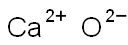
- 73018-51-6
- CaO
- 56.08
- All (164)
- China (21)
- (164)
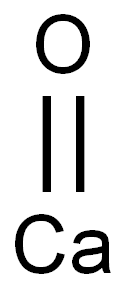
- 1305-78-8
- CaO
- 56.08
- All (164)
- China (21)
- (164)
- 188528-77-0
- Ca2O2
- 112.15500
- All (0)
- China (0)
- (0)

- 13774-85-1
- F4OXe
- 223.28600
- All (0)
- China (0)
- (0)
- 15605-36-4
- ClH2OTi
- 101.33500
- All (0)
- China (0)
- (0)

- 20665-52-5
- GaH2O2
- 103.73800
- All (0)
- China (0)
- (0)
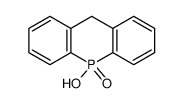
- 18593-24-3
- C13H11O2P
- 230.19900
- All (0)
- China (0)
- (0)
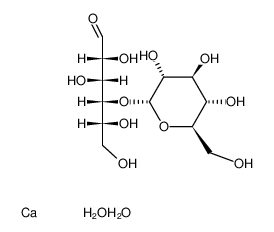
- 36570-80-6
- C12H26CaO13
- 422.43700
- All (0)
- China (0)
- (0)

- 14337-01-0
- O-
- 15.99940
- All (0)
- China (0)
- (0)
Related Products More >

- CNY Request For Quotation
- CNY Request For Quotation
- CNY Request For Quotation
- CNY Request For Quotation
- CNY Request For Quotation
- 3564-28-1
- CNY Request For Quotation
- 68187-51-9
- CNY Request For Quotation
- 68187-51-9
- CNY Request For Quotation


Calcium oxide’s ionic nature also influences its solubility and reactivity. For example, in industrial applications, it is used to neutralize acidic soils in agriculture, where the strong ionic interactions allow it to effectively alter pH levels. In construction, quicklime is incorporated into cement and mortar; its ability to react with water and carbon dioxide, forming solid compounds, helps the material harden and gain strength over time. The compound’s reactivity also makes it valuable in chemical manufacturing, such as in producing calcium-based chemicals and as a desiccant.
Understanding calcium oxide as an ionic compound helps explain why it behaves consistently under different conditions. Its practical applications, from soil treatment to building materials, rely on the predictable reactions that arise from its ionic structure. For instance, when added to water, the formation of slaked lime is rapid and exothermic, demonstrating the energy associated with the rearrangement of ions. These properties illustrate how the ionic nature of calcium oxide underpins both its chemical behavior and its usefulness in real-world processes.
This classification distinguishes CaO from covalent compounds, where atoms share electrons (e.g., water, H₂O) or metallic compounds, which consist of delocalized electrons in a metal lattice (e.g., pure iron). Ionic compounds like CaO exhibit properties such as high melting points (CaO melts at ~2572°C) due to strong interionic forces, solubility in polar solvents (like water, where ions dissociate), and electrical conductivity when molten or dissolved, as charged ions can move freely.
A common misconception is labeling CaO as a molecular compound, but its rigid, crystalline structure—lacking discrete molecules—and the presence of ions confirm its ionic nature. Another misunderstanding is equating "oxide" with covalent character; while some oxides (e.g., CO₂) are covalent, metal oxides like CaO are ionic due to the large electronegativity difference between metals and oxygen (3.5 for O vs. 1.0 for Ca).
In chemistry and materials science, recognizing CaO as an ionic compound is critical. Its ionic properties explain its reactivity—for example, its exothermic reaction with water to form calcium hydroxide (Ca(OH)₂)—and its industrial uses, such as in cement production, where its ionic lattice breaks down in water to form binding complexes. This classification also reinforces principles of bonding, helping predict how similar metal oxides behave in reactions and applications.
Chemically, the ionic nature of CaO dictates its reactivity and solubility. When exposed to water, CaO undergoes an exothermic reaction to form calcium hydroxide (Ca(OH)₂), releasing significant heat—a property harnessed in self-heating materials and industrial processes. Physically, CaO crystallizes in a cubic lattice structure, characterized by high melting (2,572°C) and boiling points (2,850°C), attributes common to ionic solids with strong electrostatic forces holding the lattice together.
The ionic character of CaO underpins its versatility across sectors. In construction, it serves as a key ingredient in cement and mortar, binding materials through its reaction with water. Industrially, CaO acts as a flux in metallurgy to remove impurities during steel production and as a desulfurizing agent in power plants to mitigate sulfur dioxide emissions. Medically, it neutralizes excess stomach acid in antacids and stabilizes dental cements. These applications illustrate how understanding the ionic nature of compounds like CaO enables the development of materials critical for infrastructure, environmental sustainability, and healthcare, bridging fundamental chemistry with real-world innovation.