


 Home
Home
Hi, I’m curious about how batteries and similar devices actually generate power. What happens inside them that turns chemicals into electricity? Are all batteries the same, or do different types produce energy differently? How does this process work in everyday gadgets like phones or cars, and can it be applied on a larger scale for homes or industries? I want to understand clearly: how is electrochemical energy produced and what makes it work?
How Is Electrochemical Energy Produced and Used in Daily Life
Related Encyclopedia
- 14885-65-5
- FLi
- 25.01350
- All (0)
- China (0)
- (0)
- 12057-22-6
- LiZn
- 72.32100
- All (0)
- China (0)
- (0)
- 121398-70-7
- LiZn2
- 137.70100
- All (0)
- China (0)
- (0)
- 103371-91-1
- Li4Zn
- 93.14400
- All (0)
- China (0)
- (0)
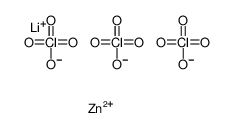
- 73747-56-5
- Cl3LiO12Zn
- 370.67300
- All (0)
- China (0)
- (0)

- 7440-66-6
- Zn
- 65.39
- All (7)
- China (5)
- (7)
- 12596-44-0
- Li2
- 13.03110
- All (2)
- China (2)
- (2)
- 12596-45-1
- Li2
- 14.03200
- All (2)
- China (2)
- (2)

- 17341-24-1
- Li+
- 6.94
- All (2)
- China (2)
- (2)
- 12596-43-9
- Li2
- 12.03020
- All (2)
- China (2)
- (2)
Related Products More >

- 13927-77-0
- CNY Request For Quotation
- 3030-80-6
- CNY Request For Quotation
- 6990-43-8
- CNY Request For Quotation
- 155-04-4
- CNY Request For Quotation
- 36190-62-2 Zinc diisobutyldithiocarbamate
- CNY Request For Quotation
- 14634-93-6 Zinc ethylphenyl dithiocarbamate
- CNY Request For Quotation
- 14726-36-4 Zinc dibenzyldithiocarbamate
- CNY Request For Quotation
- 137-30-4 Zinc dimethyldithiocarbamate
- CNY Request For Quotation


For instance, in a simple AA battery, zinc and manganese dioxide react in a way that produces a flow of electrons. In lithium-ion batteries, used in phones and electric cars, lithium ions move between electrodes, creating a steady current. This process is what powers almost every portable device around you. Even though the chemistry can be different in each battery type, the idea is the same: chemical reactions produce a flow of electrons that we can use for all sorts of everyday energy needs.
At the anode, oxidation occurs: a substance loses electrons, which flow through an external circuit to the cathode. At the cathode, reduction takes place: another substance gains these electrons. The electrolyte facilitates the movement of ions between the electrodes to maintain charge neutrality, completing the circuit. This electron flow through the external circuit constitutes an electric current, embodying electrochemical energy.
A common example is a battery, where the anode and cathode are made of different materials (e.g., zinc and copper in a simple cell) and the electrolyte is a solution (like sulfuric acid). In rechargeable batteries, such as lithium-ion variants, the reactions are reversible: applying an external current drives electrons back to the anode, regenerating the original chemical compounds for reuse.
This process differs from other energy conversion methods, such as combustion (which converts chemical energy to heat, then to electricity) or photovoltaics (which convert light to electricity), by directly linking chemical reactions to electron flow without intermediate steps. A misconception is conflating electrochemical cells with electrolytic cells, which use electrical energy to drive chemical reactions (the reverse process), such as in electrolysis.
In energy storage and portable power, electrochemical energy is indispensable. Batteries power devices from smartphones to electric vehicles, while fuel cells—another form of electrochemical system—generate continuous electricity by consuming fuel (e.g., hydrogen) and oxygen, emitting only water. Their efficiency and portability make them critical in transitioning to renewable energy, enabling storage of intermittent solar or wind power for consistent use.
For example, in a lithium-ion battery, lithium ions shuttle between the anode and cathode through the electrolyte during charge and discharge cycles, generating a controlled flow of electrons in the external circuit. Zinc-carbon and alkaline batteries work on similar principles, using zinc and manganese compounds to drive electron movement. On a larger scale, electrochemical cells are employed in energy storage systems for renewable power sources, such as storing excess solar or wind energy, and in fuel cells, where hydrogen and oxygen reactions produce electricity for vehicles and stationary power systems.
Understanding the principles of electrochemical energy allows engineers to optimize battery performance, manage energy density, and extend device lifespan. By carefully selecting electrode materials and electrolytes, designers can create cells suited for portable electronics, electric vehicles, or grid-level storage, illustrating how fundamental electrochemical mechanisms directly translate into practical energy solutions that shape modern technology and everyday life.
The efficiency of electrochemical systems depends on material properties and reaction kinetics. Electrode materials must exhibit high conductivity and catalytic activity to accelerate electron transfer and minimize energy losses. Electrolytes, whether liquid, solid, or gel, require ionic conductivity to shuttle charges between electrodes without short-circuiting the system. Temperature and pressure also influence performance; higher temperatures enhance reaction rates but may degrade materials, while pressure adjustments optimize gas solubility in fuel cells. These parameters collectively determine the system’s voltage, current density, and overall energy output, governed by thermodynamic principles like Gibbs free energy and Nernst equations.
In daily life, electrochemical energy powers portable devices through lithium-ion batteries, where lithium ions shuttle between graphite and metal oxide electrodes during charging and discharging. Industrial applications include large-scale flow batteries for grid storage, balancing renewable energy supply and demand. In medicine, implantable devices like pacemakers rely on compact, long-lasting electrochemical cells to deliver stable power without frequent replacements. These examples underscore how electrochemical energy bridges chemistry, physics, and engineering to address energy storage challenges, reduce reliance on fossil fuels, and enable technologies critical for modern life and sustainable development.