


 Home
Home
If you’re thinking about studying biochemistry, you might wonder whether it’s closer to biology or chemistry. Does it focus more on living things, or on chemical reactions? Are you mostly learning about cells and organisms, or about molecules and compounds? How much of the work is lab-based versus theory? Basically, is biochemistry biology or chemistry, and what kind of science are you really studying when you take these courses?
Is Biochemistry Biology or Chemistry? Understanding the Difference
Related Encyclopedia
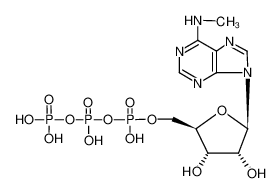
- 3130-39-0
- C11H18N5O13P3
- 521.20800
- All (0)
- China (0)
- (0)
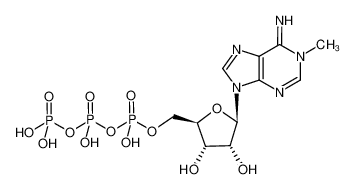
- 68643-11-8
- C11H18N5O13P3
- 521.20800
- All (0)
- China (0)
- (0)
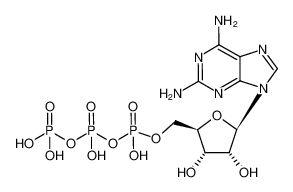
- 18549-34-3
- C10H17N6O13P3
- 522.19600
- All (0)
- China (0)
- (0)
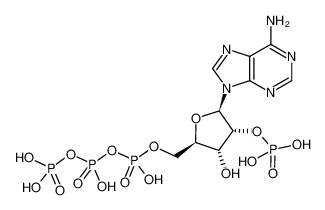
- 23339-43-7
- C10H17N5O16P4
- 587.16100
- All (3)
- China (0)
- (3)
- 64363-04-8
- C10H14N5O13P3--
- 505.16500
- All (3)
- China (0)
- (3)
- 64344-01-0
- C10H13N5O13P3---
- 504.15700
- All (3)
- China (0)
- (3)
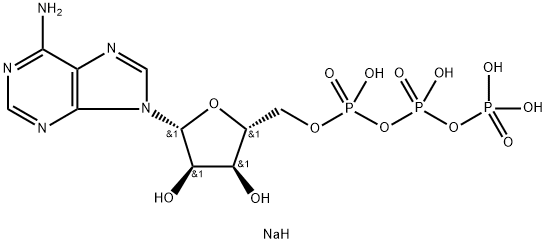
- 987-65-5
- C10H17N5NaO13P3
- 531.18
- All (0)
- China (0)
- (0)
- 139373-97-0
- C17H26N6O6
- 410.42500
- All (0)
- China (0)
- (0)
- 1135221-02-1
- C15H31N3O13P2
- 523.36600
- All (0)
- China (0)
- (0)
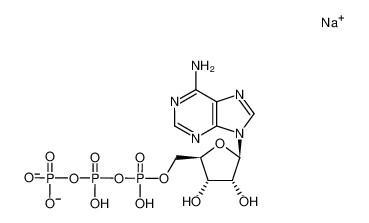
- 4691-96-7
- C10H14N5NaO13P3-
- 528.15500
- All (0)
- China (0)
- (0)
Related Products More >

- 987-65-5
- Request For Quotation
- 25kg/Cardboard Drum
- 987-65-5
- Request For Quotation
- 1kg ,25kg or according to customer's detail requirement.
- 987-65-5
- Request For Quotation
- 100g; 1kg; 25g
- 987-65-5
- Request For Quotation
- 1kg/bag;25kg/Cardboard Drum
- 987-65-5
- Request For Quotation
- 1g,5g,10g,100g,1000g
- 987-65-5
- Request For Quotation
- 25kg/cardboard drum
- 987-65-5
- Request For Quotation
- 987-65-5
- Request For Quotation
- bottle or customized


Think of it this way: biology gives you the big picture of life, and chemistry explains the tiny details of how molecules interact to make that life possible. So in biochemistry, you’re learning both sides—you get to see the science of life at the molecular level, which makes it a really interesting bridge between two fields.
This distinction sets it apart from biology, which often examines life at higher levels—organisms, ecosystems, or organs—without deep diving into the underlying chemistry. A biologist studying muscle contraction might focus on how muscle fibers interact, while a biochemist would investigate the chemical changes in ATP (adenosine triphosphate) that power that contraction, breaking down the process into reactions involving phosphate group transfers. Similarly, it differs from chemistry, which typically studies non-biological substances or reactions in isolation. A chemist analyzing a carbon compound might focus on its reactivity with other chemicals, whereas a biochemist would explore how that compound functions within a living cell, such as its role in a metabolic pathway.
The importance of this overlap lies in its ability to answer "how" and "why" at the molecular level. For instance, explaining why a vitamin deficiency causes disease requires understanding the vitamin’s chemical structure, how it interacts with enzymes (biological catalysts), and how this interaction enables critical physiological processes like collagen synthesis. Without this chemical perspective, biology cannot fully explain the mechanisms of life; without the biological context, chemistry cannot address the unique complexity of living systems.
A common misconception is that biochemistry leans more toward one parent discipline, but its strength lies in integration. It uses tools from both: chromatography (a chemical technique) to separate proteins, and microscopy (a biological tool) to observe their cellular locations. It also develops its own methods, such as X-ray crystallography to determine protein structures, which combines chemical analysis with biological relevance. Ultimately, biochemistry is a bridge, revealing that life’s processes are not just biological events but chemical reactions—ordered, regulated, and uniquely adapted to sustain living systems.
In practical terms, this means that biochemists can investigate how enzymes catalyze reactions, how DNA sequences determine protein function, or how metabolic pathways are regulated under different conditions. For instance, in medicine, understanding the biochemical basis of a disease enables the design of targeted drugs that interact with specific molecular sites, such as enzyme active sites or receptor proteins. In agriculture, manipulating biochemical pathways in plants can improve nutrient content or resistance to stress.
Laboratory work exemplifies this integration: students and professionals apply chemical techniques to biological samples, using tools like spectrophotometry, chromatography, or electrophoresis to analyze molecular composition and activity. These approaches allow biochemists to connect molecular interactions to observable biological outcomes, whether that’s in drug development, environmental monitoring, or food science. Essentially, biochemistry is a hybrid science where the principles of chemistry illuminate the processes of biology, providing a foundation for both theoretical understanding and practical application across multiple disciplines.
For those working in research or industry, this interdisciplinary perspective is critical for solving complex problems, from engineering enzymes for industrial processes to developing diagnostics that detect specific molecular markers in health and disease.
In practical applications, biochemistry’s hybrid nature drives innovation across sectors. Pharmaceutical companies rely on its chemical insights to design drugs that target specific biological pathways, such as kinase inhibitors for cancer therapy, while its biological understanding ensures these compounds are safe and effective in living systems. Industrial biotechnology leverages biochemistry to optimize enzyme-driven processes, like using cellulases to break down plant biomass into sugars for ethanol production—a task requiring both chemical expertise in reaction kinetics and biological knowledge of microbial fermentation. Even in agriculture, biochemists modify crop genomes to enhance nutrient uptake, combining chemistry’s precision in DNA editing with biology’s understanding of plant physiology.
The broader impact of biochemistry extends to everyday life. Diagnostic tools like glucose meters, which measure blood sugar levels using enzyme-coated electrodes, emerge from lab research on glucose oxidase specificity—a topic rooted in both enzyme chemistry and metabolic biology. Food scientists apply biochemistry to develop plant-based meat alternatives by analyzing how amino acid compositions affect texture, a process informed by protein chemistry and sensory biology. By bridging molecular-scale interactions with organismal functions, biochemistry ensures that advances in one field amplify progress in the other, solidifying its role as a catalyst for solving complex challenges in health, sustainability, and industrial innovation.