


 Home
Home
If you’re thinking about majoring in biochemistry, you might wonder what kind of work actually awaits you after graduation. Do biochemistry majors only work in labs, or can they find jobs in healthcare, teaching, or even business? How much of their work involves hands-on experiments versus analyzing data? Can the skills they learn be applied outside of science, like in technology or environmental work? Basically, what do biochemistry majors do in their day-to-day professional lives, and where can their degree take them?
What Do Biochemistry Majors Do? Career Paths and Everyday Roles
Related Encyclopedia
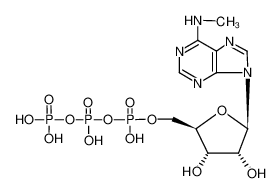
- 3130-39-0
- C11H18N5O13P3
- 521.20800
- All (0)
- China (0)
- (0)
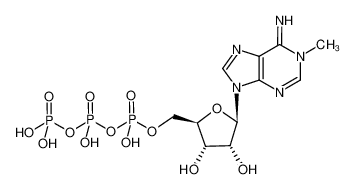
- 68643-11-8
- C11H18N5O13P3
- 521.20800
- All (0)
- China (0)
- (0)
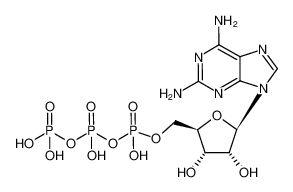
- 18549-34-3
- C10H17N6O13P3
- 522.19600
- All (0)
- China (0)
- (0)
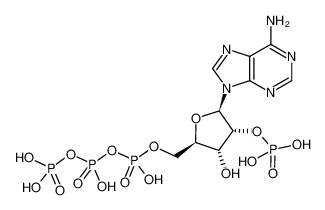
- 23339-43-7
- C10H17N5O16P4
- 587.16100
- All (3)
- China (0)
- (3)
- 64363-04-8
- C10H14N5O13P3--
- 505.16500
- All (3)
- China (0)
- (3)
- 64344-01-0
- C10H13N5O13P3---
- 504.15700
- All (3)
- China (0)
- (3)
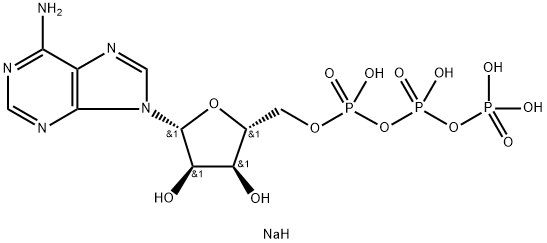
- 987-65-5
- C10H17N5NaO13P3
- 531.18
- All (0)
- China (0)
- (0)
- 139373-97-0
- C17H26N6O6
- 410.42500
- All (0)
- China (0)
- (0)
- 1135221-02-1
- C15H31N3O13P2
- 523.36600
- All (0)
- China (0)
- (0)
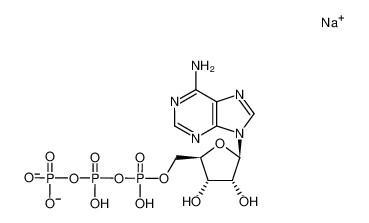
- 4691-96-7
- C10H14N5NaO13P3-
- 528.15500
- All (0)
- China (0)
- (0)
Related Products More >

- 987-65-5
- Request For Quotation
- 25kg/Cardboard Drum
- 987-65-5
- Request For Quotation
- 1kg ,25kg or according to customer's detail requirement.
- 987-65-5
- Request For Quotation
- 100g; 1kg; 25g
- 987-65-5
- Request For Quotation
- 1kg/bag;25kg/Cardboard Drum
- 987-65-5
- Request For Quotation
- 1g,5g,10g,100g,1000g
- 987-65-5
- Request For Quotation
- 25kg/cardboard drum
- 987-65-5
- Request For Quotation
- 987-65-5
- Request For Quotation
- bottle or customized


Another way to look at it is that your degree teaches you how things in our bodies and the world work at a tiny, molecular level. That knowledge can make you helpful anywhere there’s science involved, from helping farmers improve crops to checking water quality. It’s more flexible than most people think, and there are plenty of ways to apply it in real life.
In professional settings, biochemistry majors often work in laboratories where they apply theoretical knowledge to concrete tasks. For instance, they might measure reaction rates in metabolic pathways, test the stability of new pharmaceutical compounds, or assess environmental samples for pollutants. Their understanding of molecular interactions enables them to interpret experimental data accurately and optimize protocols, ensuring reliable and reproducible results.
The analytical and problem-solving skills developed through a biochemistry degree are versatile. Graduates can move into biotechnology, pharmaceuticals, healthcare, or environmental science, where molecular insight directly informs decision-making. They might also collaborate with engineers to design bioreactors, or with computational scientists to model chemical interactions at the cellular level. Essentially, biochemistry majors act as a bridge between fundamental molecular principles and applied solutions in medicine, industry, and environmental management, translating complex mechanisms into practical outcomes that impact everyday life.
For those interested, these skills can also be applied in interdisciplinary roles, such as quality control in food or cosmetic industries, or in regulatory positions where understanding chemical and biological interactions is crucial for safety and compliance.
In research, they might study how enzymes catalyze reactions by analyzing their active sites, distinguishing this work from biology majors, who often focus on organismal or ecological interactions, or chemistry majors, who prioritize non-biological compounds. For instance, a biochemistry major investigating a metabolic disorder would trace how a mutated enzyme disrupts a biochemical pathway, whereas a biology major might examine the disorder’s effects on organ systems.
In pharmaceuticals, they design experiments to test how potential drugs interact with target molecules, leveraging understanding of molecular binding affinities to predict efficacy—this focus on biological targets sets them apart from chemical engineers, who concentrate more on scaling production processes. In clinical settings, they interpret blood tests by measuring levels of metabolites like glucose, using knowledge of how cellular respiration regulates these molecules to identify irregularities, a task requiring both chemical analysis skills and biological context.
A common误解 is that biochemistry majors only work in labs. In reality, many apply their expertise to science policy, evaluating the safety of new biotechnologies by assessing how their molecular components interact with living systems, or to science education, breaking down complex concepts like enzyme kinetics into teachable frameworks. In agriculture, they might develop crops with enhanced drought resistance by modifying pathways that produce osmolytes, small molecules that regulate cellular water balance—here, their work merges chemical structure analysis with plant physiology, distinct from agricultural science’s broader focus on crop management.
Ultimately, their work centers on translating molecular interactions into practical solutions, making their ability to bridge chemistry and biology invaluable across diverse professional landscapes.
In daily life, biochemistry majors contribute to innovations like plant-based meat alternatives, where enzyme engineering mimics animal protein texture, or smart textiles that use microbial-derived dyes. Industrially, they optimize bioreactor conditions for antibiotic synthesis or design biodegradable polymers to reduce plastic waste. In medicine, their expertise is pivotal in developing mRNA vaccines, which rely on lipid nanoparticle delivery systems, or precision oncology drugs targeting specific cancer-cell metabolic pathways. Even in forensic science, biochemists analyze DNA degradation patterns to estimate time of death or identify contaminants in environmental samples.
The broader impact of this field lies in its ability to merge theoretical knowledge with practical problem-solving. By understanding how metabolic networks adapt to stress, biochemistry majors can engineer microbes to produce biofuels from waste or design probiotics to restore gut health. Their work also addresses ethical dilemmas, such as balancing genetic modification benefits with ecological risks. Ultimately, a biochemistry major’s skill set transcends traditional lab boundaries, empowering them to tackle challenges in sustainability, healthcare, and technology by decoding life’s molecular complexity.