


 Home
Home
If you’ve earned a biochemistry degree, you might be wondering what comes next. Can you work in a lab right away, or do you need further schooling? Are there options outside traditional science careers, like healthcare, teaching, or business? How can your skills be applied to everyday industries such as food, pharmaceuticals, or environmental work? Basically, what can you realistically do with a biochemistry degree, and which paths are open to you after graduation?
What to Do with a Biochemistry Degree? Practical Options Explained
Related Encyclopedia
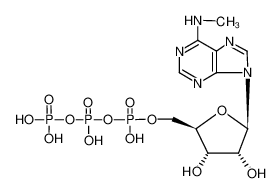
- 3130-39-0
- C11H18N5O13P3
- 521.20800
- All (0)
- China (0)
- (0)
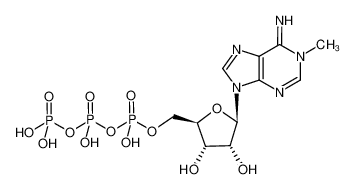
- 68643-11-8
- C11H18N5O13P3
- 521.20800
- All (0)
- China (0)
- (0)
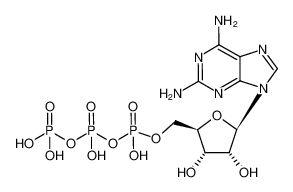
- 18549-34-3
- C10H17N6O13P3
- 522.19600
- All (0)
- China (0)
- (0)
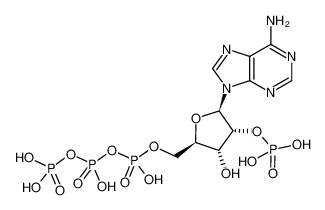
- 23339-43-7
- C10H17N5O16P4
- 587.16100
- All (3)
- China (0)
- (3)
- 64363-04-8
- C10H14N5O13P3--
- 505.16500
- All (3)
- China (0)
- (3)
- 64344-01-0
- C10H13N5O13P3---
- 504.15700
- All (3)
- China (0)
- (3)
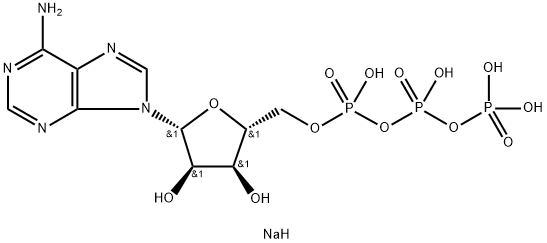
- 987-65-5
- C10H17N5NaO13P3
- 531.18
- All (0)
- China (0)
- (0)
- 139373-97-0
- C17H26N6O6
- 410.42500
- All (0)
- China (0)
- (0)
- 1135221-02-1
- C15H31N3O13P2
- 523.36600
- All (0)
- China (0)
- (0)
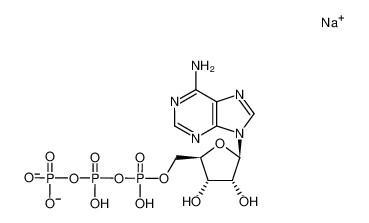
- 4691-96-7
- C10H14N5NaO13P3-
- 528.15500
- All (0)
- China (0)
- (0)
Related Products More >

- 987-65-5
- Request For Quotation
- 25kg/Cardboard Drum
- 987-65-5
- Request For Quotation
- 1kg ,25kg or according to customer's detail requirement.
- 987-65-5
- Request For Quotation
- 100g; 1kg; 25g
- 987-65-5
- Request For Quotation
- 1kg/bag;25kg/Cardboard Drum
- 987-65-5
- Request For Quotation
- 1g,5g,10g,100g,1000g
- 987-65-5
- Request For Quotation
- 25kg/cardboard drum
- 987-65-5
- Request For Quotation
- 987-65-5
- Request For Quotation
- bottle or customized


Another way to think about it is that your degree gives you a strong science foundation you can use in everyday jobs. You could help with quality checks in food or cosmetics, assist in environmental testing, or even get into sales and support for science-based companies. The skills you have are flexible and can be applied in lots of different ways depending on what you enjoy.
In drug development, for example, biochemists design molecules that disrupt specific protein-protein interactions, using their understanding of three-dimensional structures to ensure selectivity—this precision distinguishes their work from that of pharmacologists, who often focus more on drug effects in whole organisms. In forensic science, they analyze biological samples by identifying unique nucleic acid sequences or protein markers, leveraging techniques like PCR that rely on understanding DNA replication chemistry, a approach distinct from forensic investigators who emphasize crime scene analysis.
Beyond laboratories, graduates thrive in science communication, translating complex ideas like protein folding into clear language for public audiences, a role that demands mastery of both molecular details and their biological significance. In environmental sectors, they develop bioremediation strategies by studying how microbial enzymes break down pollutants, applying knowledge of metabolic pathways to optimize these processes—this differs from environmental scientists, who may focus more on ecosystem impacts than the underlying biochemical mechanisms.
A frequent misunderstanding is that the degree limits one to research. In reality, it supports roles in patent law, where evaluating biotech innovations requires interpreting claims about molecular structures and their biological effects, or in regulatory affairs, ensuring new therapies meet safety standards by assessing how their chemical components interact with bodily systems. Whether optimizing industrial fermentation processes by manipulating microbial metabolism or developing diagnostic tests that detect abnormal metabolite levels, biochemistry graduates bring a unique ability to connect molecular chemistry to real-world biological outcomes, making their skills indispensable across diverse fields.
In professional settings, biochemistry graduates often engage in experimental work where precise measurement and analysis are essential. They might evaluate how a new drug interacts with a protein target, monitor the stability of a bioproduct under different conditions, or test water samples for chemical contaminants. Understanding molecular mechanisms ensures that their data interpretation is accurate and reliable, and enables them to modify procedures to achieve more effective outcomes.
The degree also develops analytical and problem-solving skills that extend beyond the lab. Biochemistry graduates can work in pharmaceutical development, where they help design safer and more effective therapies, or in biotechnology firms, where molecular insights inform product innovation. Environmental agencies may employ them to assess the impact of chemicals on ecosystems. Essentially, a biochemistry degree allows individuals to bridge theoretical knowledge with practical solutions, applying molecular understanding to real-world challenges in healthcare, industry, and environmental management.
For those exploring interdisciplinary roles, these skills can be applied in computational biology, regulatory affairs, or quality control, where knowledge of molecular interactions directly informs decision-making and ensures compliance with scientific and safety standards.
In daily life, biochemistry graduates innovate across sectors. They might develop plant-based food additives by modifying enzyme pathways to enhance flavor or create biodegradable packaging using starch-based polymers. In industrial settings, their expertise optimizes fermentation processes for biofuel production, adjusting pH and temperature to maximize microbial yield, or designs catalytic converters that use enzyme-mimicking compounds to reduce automotive emissions. Medically, their skills are indispensable in advancing personalized medicine, such as tailoring cancer therapies based on tumor cell metabolic profiles, or engineering CAR-T cells by editing immune receptor genes to target specific antigens.
The broader significance of this degree lies in its capacity to bridge scientific theory with societal needs. By decoding how pathogens evade immune responses, graduates contribute to vaccine design, as seen in mRNA platforms that leverage lipid nanoparticle delivery. In environmental science, they model carbon capture mechanisms in algae, offering sustainable solutions for climate mitigation. Even in legal or policy domains, biochemists advise on ethical implications of genetic editing or synthetic biology. Thus, a biochemistry degree equips individuals not just with technical knowledge, but with a versatile lens to address global challenges at the intersection of life and chemistry.