


 Home
Home
If you’ve studied biochemistry, you might be curious about what kinds of jobs are realistic after graduation. Can you work directly in labs, or do you need more schooling? Are there career paths outside traditional research, like in healthcare, education, or business? How transferable are the skills you’ve learned to industries like pharmaceuticals, food science, or environmental work? Basically, what careers can you get with a biochemistry degree, and which options make sense for someone just starting out?
What Careers Can You Get with a Biochemistry Degree? Options Explained
Related Encyclopedia
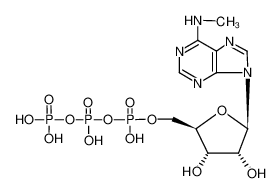
- 3130-39-0
- C11H18N5O13P3
- 521.20800
- All (0)
- China (0)
- (0)
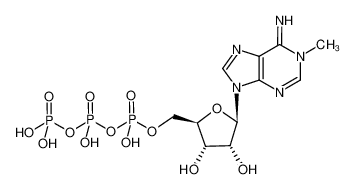
- 68643-11-8
- C11H18N5O13P3
- 521.20800
- All (0)
- China (0)
- (0)
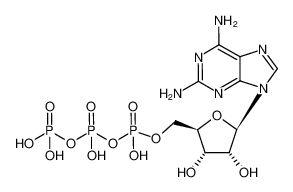
- 18549-34-3
- C10H17N6O13P3
- 522.19600
- All (0)
- China (0)
- (0)
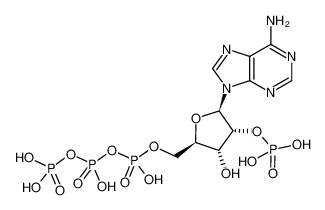
- 23339-43-7
- C10H17N5O16P4
- 587.16100
- All (3)
- China (0)
- (3)
- 64363-04-8
- C10H14N5O13P3--
- 505.16500
- All (3)
- China (0)
- (3)
- 64344-01-0
- C10H13N5O13P3---
- 504.15700
- All (3)
- China (0)
- (3)
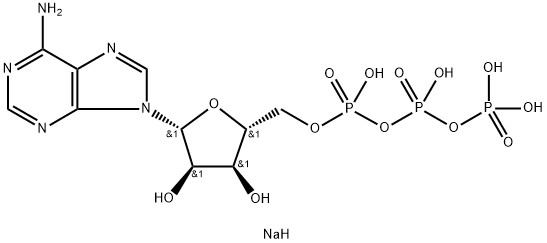
- 987-65-5
- C10H17N5NaO13P3
- 531.18
- All (0)
- China (0)
- (0)
- 139373-97-0
- C17H26N6O6
- 410.42500
- All (0)
- China (0)
- (0)
- 1135221-02-1
- C15H31N3O13P2
- 523.36600
- All (0)
- China (0)
- (0)
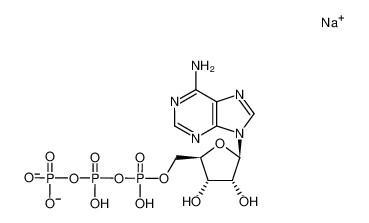
- 4691-96-7
- C10H14N5NaO13P3-
- 528.15500
- All (0)
- China (0)
- (0)
Related Products More >

- 987-65-5
- Request For Quotation
- 25kg/Cardboard Drum
- 987-65-5
- Request For Quotation
- 1kg ,25kg or according to customer's detail requirement.
- 987-65-5
- Request For Quotation
- 100g; 1kg; 25g
- 987-65-5
- Request For Quotation
- 1kg/bag;25kg/Cardboard Drum
- 987-65-5
- Request For Quotation
- 1g,5g,10g,100g,1000g
- 987-65-5
- Request For Quotation
- 25kg/cardboard drum
- 987-65-5
- Request For Quotation
- 987-65-5
- Request For Quotation
- bottle or customized


You can also find work in quality control for food, cosmetics, or environmental testing. Even roles in sales or support for science-based companies can use your background. Essentially, your degree gives you a strong foundation in science that can be applied in many everyday jobs, letting you choose a path that fits your interests and skills.
In professional roles, biochemistry graduates often engage in laboratory-based work that requires precise measurement and critical analysis. They may test new pharmaceutical compounds, assess food or environmental samples, or measure biomolecular interactions to ensure accurate outcomes. Their training allows them to interpret complex data, troubleshoot experiments, and adapt protocols to meet industry standards, bridging theoretical knowledge with hands-on application.
Beyond the lab, these graduates can contribute to interdisciplinary fields. In biotechnology firms, they may design experiments to improve crop yields or create sustainable bio-based products. Healthcare settings may employ them in diagnostic labs to evaluate patient samples, while environmental agencies might use their expertise to monitor chemical pollutants and their impact on ecosystems. Essentially, a biochemistry degree provides versatile skills that connect molecular understanding with practical solutions, enabling graduates to enter a range of careers where chemistry and biology intersect.
Opportunities also exist in regulatory affairs, quality assurance, and science communication, where the ability to explain molecular principles and ensure compliance is highly valued. These roles leverage the analytical, experimental, and problem-solving skills gained through biochemistry training to impact real-world outcomes across multiple industries.
In pharmaceuticals, roles like medicinal chemist involve designing drug candidates that target specific proteins, relying on understanding of molecular binding sites to ensure efficacy—a focus on biological relevance that sets them apart from organic chemists, who may synthesize compounds without such targeted biological intent. Clinical biochemists, meanwhile, analyze patient samples to measure metabolites like cholesterol, using knowledge of metabolic pathways to interpret results, distinguishing their work from medical technologists, who may perform tests without deep insight into underlying biochemical logic.
Careers in biotech manufacturing leverage expertise in fermentation processes, optimizing how microorganisms produce proteins by manipulating their metabolic pathways—here, understanding enzyme kinetics is critical, unlike in chemical engineering roles that focus more on production scaling. Beyond labs, science writers with biochemistry backgrounds translate concepts like protein misfolding into accessible content, requiring mastery of both molecular details and their biological implications.
A common misconception is that these careers are confined to laboratories, but opportunities extend to patent examining, where evaluating biotech inventions demands interpreting claims about molecular structures and their biological effects, or to regulatory affairs, ensuring new therapies meet safety standards by assessing chemical-biological interactions. Whether developing biofuels by engineering microbial metabolism or creating diagnostic kits that detect abnormal DNA sequences, biochemistry graduates bring a unique ability to link molecular chemistry to biological function, making their skills vital across diverse professional landscapes.
In the medical sector, biochemists play pivotal roles in drug discovery and development. They might design inhibitors targeting viral proteases, leveraging structural biology to predict binding affinities, or analyze metabolic biomarkers in patient samples to diagnose rare genetic disorders. Pharmaceutical companies rely on their expertise to streamline clinical trials by identifying drug-resistant mutations in pathogens or optimizing antibody-based therapies for cancer. Beyond labs, biochemists contribute to regulatory affairs, ensuring new treatments meet safety standards by evaluating toxicological data or pharmacokinetic profiles.
Industrial applications are equally diverse. Biochemists engineer enzymes for eco-friendly manufacturing, such as using cellulases to break down agricultural waste into biofuels or developing detergents with protease blends that function at lower temperatures, reducing energy consumption. In agriculture, they modify crop metabolic pathways to enhance nutrient content or create pest-resistant strains through gene editing. Even in forensic science, their skills are vital in analyzing DNA degradation patterns to estimate time of death or identifying chemical contaminants in environmental samples.
The broader impact of these careers lies in addressing global issues like sustainable development and healthcare equity. By designing low-cost diagnostic tools for tropical diseases or developing algae-based carbon capture systems, biochemists bridge scientific innovation with societal needs. Their ability to translate molecular mechanisms into practical solutions ensures their relevance across industries, from biotechnology startups to multinational corporations, making this degree a gateway to impactful, dynamic professions.