


 Home
Home
When we talk about how our muscles move, there are many tiny steps happening inside our body at the same time. But what exactly kicks off the process? Is it something chemical like ATP showing up, or maybe calcium being released? Could it be the moment when muscle fibers receive a signal from the brain? Out of all the complicated steps involved, which of these events occurs first in muscle fiber contraction?
Which of These Events Occurs First in Muscle Fiber Contraction?
Related Encyclopedia
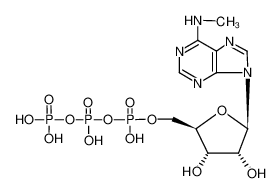
- 3130-39-0
- C11H18N5O13P3
- 521.20800
- All (0)
- China (0)
- (0)
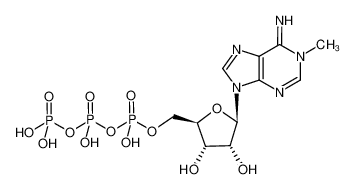
- 68643-11-8
- C11H18N5O13P3
- 521.20800
- All (0)
- China (0)
- (0)
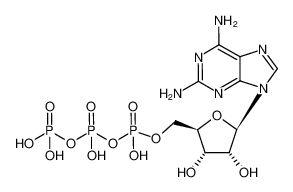
- 18549-34-3
- C10H17N6O13P3
- 522.19600
- All (0)
- China (0)
- (0)
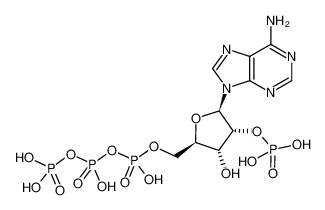
- 23339-43-7
- C10H17N5O16P4
- 587.16100
- All (3)
- China (0)
- (3)
- 64363-04-8
- C10H14N5O13P3--
- 505.16500
- All (3)
- China (0)
- (3)
- 64344-01-0
- C10H13N5O13P3---
- 504.15700
- All (3)
- China (0)
- (3)
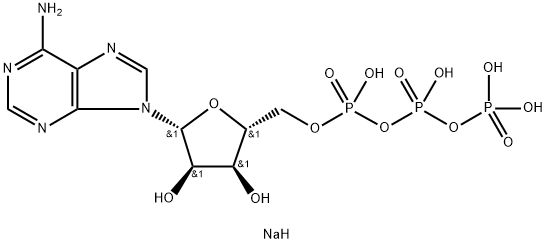
- 987-65-5
- C10H17N5NaO13P3
- 531.18
- All (0)
- China (0)
- (0)
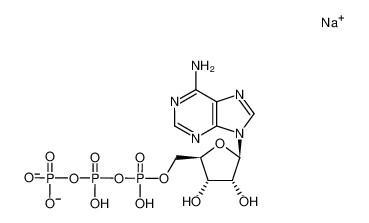
- 4691-96-7
- C10H14N5NaO13P3-
- 528.15500
- All (0)
- China (0)
- (0)
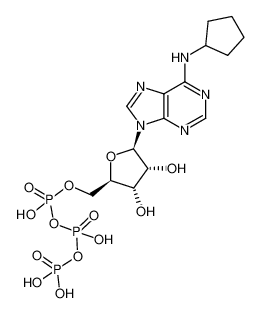
- 189822-11-5
- C15H24N5O13P3
- 575.29800
- All (0)
- China (0)
- (0)
- 29902-56-5
- C10H15KN5O13P3
- 545.27100
- All (0)
- China (0)
- (0)
Related Products More >

- 987-65-5
- Request For Quotation
- 25kg/Cardboard Drum
- 987-65-5
- Request For Quotation
- 1kg ,25kg or according to customer's detail requirement.
- 987-65-5
- Request For Quotation
- 100g; 1kg; 25g
- 987-65-5
- Request For Quotation
- 1kg/bag;25kg/Cardboard Drum
- 987-65-5
- Request For Quotation
- 1g,5g,10g,100g,1000g
- 987-65-5
- Request For Quotation
- 25kg/cardboard drum
- 987-65-5
- Request For Quotation
- 987-65-5
- Request For Quotation
- bottle or customized


So if you're wondering what kicks it all off — it’s the calcium release inside the muscle that comes first, right after the nerve signal. Pretty cool how one tiny thing can start a whole chain reaction, right?
Calcium ions play a central regulatory role by binding to troponin, a protein associated with the actin filament. This interaction causes a conformational change that shifts tropomyosin, thereby exposing the binding sites on actin for the myosin heads. ATP, already present in the muscle fiber, is hydrolyzed to provide the energy needed for the myosin heads to perform a power stroke—pulling the actin filaments inward, resulting in contraction. The cyclic nature of these interactions continues as long as calcium is present and ATP is available.
From a physiological and biochemical perspective, this process represents a remarkable interplay of electrical signals, ion movement, and protein mechanics. Physically, the conversion of chemical energy (from ATP) into mechanical work is a prime example of bioenergetics in action. Chemically, the system relies on rapid, reversible binding and hydrolysis reactions that are tightly regulated and spatially confined.
The implications of understanding this process extend far beyond textbook biology. In medicine, disorders such as myasthenia gravis and muscular dystrophies are directly linked to disruptions in various stages of this sequence. In the pharmaceutical industry, drugs that target neuromuscular signaling are crucial in anesthesia and pain management. From an engineering perspective, principles of muscle contraction are inspiring advances in biomimetic robotics and prosthetic design, where artificial actuators attempt to replicate the finesse of muscular movement. Even in sports science and rehabilitation, this knowledge helps optimize training, recovery, and injury prevention through targeted muscle engagement strategies.
Recognizing which event initiates muscle contraction offers not just academic insight, but also a foundational understanding with broad applications across health, technology, and human performance.
This depolarization activates dihydropyridine receptors (DHPR) in the T-tubules, which mechanically couple with ryanodine receptors (RyR) on the sarcoplasmic reticulum. The RyR channels open, flooding the sarcoplasm with Ca²⁺ ions that bind to troponin on the thin filaments. Troponin undergoes a conformational change, displacing tropomyosin to expose myosin-binding sites on actin. Only after these steps can myosin heads engage in cross-bridge cycling, powered by ATP hydrolysis, to generate sliding of filaments and muscle shortening.
A practical example is the rapid eye movement during reading. The precise timing of ACh release ensures immediate response to neural signals, allowing swift shifts in gaze. Disruptions in this sequence, such as in myasthenia gravis where ACh receptors are compromised, lead to muscle weakness—demonstrating the criticality of the initial neurotransmitter release. The entire process, though occurring within milliseconds, relies on strict chronological ordering, with ACh secretion as the indispensable first step.
This initial calcium release is critical because it acts as the molecular switch that initiates the entire contraction cascade. Without this calcium influx, troponin remains unbound, tropomyosin blocks the actin-myosin interaction, and contraction cannot proceed. For instance, in skeletal muscles during voluntary movement, such as lifting a book, the signal from motor neurons triggers the action potential, leading to calcium release from the sarcoplasmic reticulum—the first step that sets all subsequent contraction events in motion. Similarly, in cardiac muscle, calcium release from intracellular stores, following membrane depolarization, is the initial event driving the heart’s rhythmic contractions.