


 Home
Home
When working on crafts, school projects, or even small repairs, rubber cement often comes in handy thanks to its flexibility and easy application. But how long do you really have to wait before it’s completely dry and safe to handle? Does the drying time depend on how thick you apply it, the room temperature, or the surface type? What if you're in a hurry—can you speed it up somehow without messing it up? How long for rubber cement to dry under normal conditions?
How Long for Rubber Cement to Dry Before It’s Ready to Use?
Related Encyclopedia
![7-thiabicyclo[2.2.1]heptane](https://chemcloud-1304660855.cos.ap-shanghai.myqcloud.com/compound/54266140d5654419a0e04165753dc9b5.png?imageMogr2/format/webp)
- 279-59-4
- C6H10S
- 114.20900
- All (0)
- China (0)
- (0)
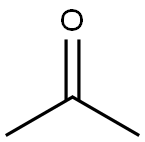
- 67-64-1
- C3H6O
- 58.08
- All (22)
- China (16)
- (22)
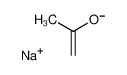
- 32449-00-6
- C3H5NaO
- 80.06100
- All (0)
- China (0)
- (0)
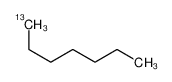
- 75560-45-1
- C7H16
- 101.21000
- All (17)
- China (13)
- (17)
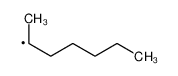
- 3474-30-4
- C7H15
- 99.19400
- All (17)
- China (13)
- (17)

- 142-82-5
- C7H16
- 100.2
- All (17)
- China (13)
- (17)
- 126331-83-7
- C4H9DO2
- 91.12720
- All (17)
- China (13)
- (17)
- 3356-67-0
- C7H15
- 99.19400
- All (17)
- China (13)
- (17)
- 125995-89-3
- C5H6LiNP
- 118.02300
- All (22)
- China (20)
- (22)
- 108-88-3
- C7H8
- 92.14
- All (22)
- China (20)
- (22)
Related Products More >

- 96-26-4
- CNY Request For Quotation
- 96-26-4
- CNY Request For Quotation
- CNY Request For Quotation
- CNY Request For Quotation
- 112945-52-5
- Request For Quotation
- 4549-31-9
- Request For Quotation
- 111-16-0
- Request For Quotation
- 629-30-1
- Request For Quotation


Most people use rubber cement for crafts, posters, or temporary fixes because it’s easy to use and doesn’t make a big mess. It sticks best when both surfaces get a light coat and you wait for them to get tacky before pressing them together. That’s when it grabs and holds well.
If you’re in a rush, a fan or a hair dryer on cool setting can help speed things up. Just avoid heat—it can affect how the glue sets. So overall, while it’s pretty quick-drying, giving it a few extra minutes just to be safe never hurts.
From a chemical perspective, the drying mechanism is largely physical rather than reactive. Unlike adhesives that cure through chemical reactions (such as epoxies), rubber cement functions via solvent evaporation. This evaporation rate is governed by vapor pressure, ambient conditions, and surface porosity. Once the solvent evaporates, the rubber particles coalesce into a continuous film that retains elasticity. This makes rubber cement particularly useful for temporary bonds, repositionable mounting, and applications where removability without residue is important.
Its unique combination of flexibility, reversibility, and ease of use makes rubber cement valuable across a range of disciplines. In everyday life, it's common in art, scrapbooking, and office tasks due to its clean finish and low risk of paper wrinkling. In industry, it’s used in shoemaking, bookbinding, and certain packaging processes where flexible adhesion is required. Even in medical device assembly and certain prosthetic applications, temporary adhesive solutions like rubber cement can serve niche purposes.
More broadly, rubber cement illustrates how material science intersects with design, ergonomics, and even sustainability. The choice of solvent, for example, affects both performance and health/environmental impact—volatile organic compounds (VOCs) released during drying contribute to air pollution and may pose inhalation risks in poorly ventilated spaces. Alternatives with less harmful solvents are gaining traction, reflecting a shift toward safer, greener formulations.
Understanding how rubber cement dries isn’t just a question of time—it’s a window into the physics of adhesion, solvent interactions, and the diverse ways materials adapt to user needs.
In practice, typical drying times range from a few minutes to an hour under standard room conditions—around 70°F (21°C) with moderate humidity. Warmer, drier environments accelerate solvent loss, cutting drying time, whereas cold or humid air slows it, sometimes doubling the wait. This mechanism mirrors how nail polish dries, relying on solvent evaporation rather than chemical curing.
Real-world uses highlight this variability. Artists using rubber cement for masking in watercolor painting often apply thin coats, allowing quick drying to avoid smudging. Conversely, in bookbinding, a thicker layer might be needed for initial positioning, requiring patience to ensure proper adhesion without solvent residue. Understanding these dynamics helps users adjust application methods, ensuring the adhesive performs as intended in diverse tasks.
The mechanism behind its drying process is straightforward: as the solvent dissipates, the rubber polymers form a tacky yet durable layer. In low-humidity environments, evaporation accelerates, shortening drying time. Conversely, high humidity slows the process. A thin, even application dries faster than a thick glob, which may remain tacky for hours. For optimal results, many professionals recommend clamping or pressing bonded materials lightly during drying to ensure even adhesion.
In practical applications, rubber cement’s repositionable nature makes it ideal for graphic design, scrapbooking, or temporary fixes. For instance, architects use it to attach draft sketches to boards, as it allows easy removal without damaging the substrate. Similarly, bookbinders rely on its flexibility to repair spines without cracking. However, its bond weakens over time, making it unsuitable for permanent heavy-duty projects. Understanding these nuances helps users leverage its strengths while avoiding pitfalls.