


 Home
Home
When you're shopping for glue or adhesives, you might see both contact cement and rubber cement on the shelf. They sound pretty similar—so does that mean they do the same thing? Are they made of the same stuff? Or are they used in totally different ways? If you’re trying to pick the right one for a craft project, repair job, or even some DIY at home, which one should you go for? What’s the actual difference between contact cement and rubber cement?
Is Contact Cement the Same as Rubber Cement?
Related Encyclopedia
![7-thiabicyclo[2.2.1]heptane](https://chemcloud-1304660855.cos.ap-shanghai.myqcloud.com/compound/54266140d5654419a0e04165753dc9b5.png?imageMogr2/format/webp)
- 279-59-4
- C6H10S
- 114.20900
- All (0)
- China (0)
- (0)
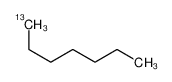
- 75560-45-1
- C7H16
- 101.21000
- All (17)
- China (13)
- (17)
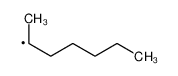
- 3474-30-4
- C7H15
- 99.19400
- All (17)
- China (13)
- (17)

- 142-82-5
- C7H16
- 100.2
- All (17)
- China (13)
- (17)
- 126331-83-7
- C4H9DO2
- 91.12720
- All (17)
- China (13)
- (17)
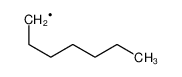
- 3356-67-0
- C7H15
- 99.19400
- All (17)
- China (13)
- (17)
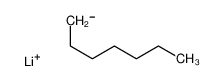
- 25047-67-0
- C7H15Li
- 106.13500
- All (0)
- China (0)
- (0)
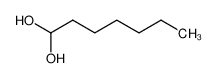
- 72854-41-2
- C7H16O2
- 132.20100
- All (0)
- China (0)
- (0)
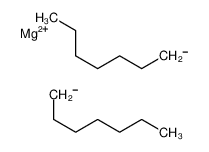
- 51276-70-1
- C14H30Mg
- 222.69300
- All (0)
- China (0)
- (0)
- 31036-99-4
- C7H16I2
- 354.01100
- All (0)
- China (0)
- (0)
Related Products More >

- 4549-31-9
- Request For Quotation
- 111-16-0
- Request For Quotation
- 629-30-1
- Request For Quotation
- 142-82-5
- CNY 10000.0000
- 1ton
- 96-04-8
- Request For Quotation
- 933735-39-8
- Request For Quotation
- 931-97-5
- Request For Quotation
- 90734-27-3
- Request For Quotation
- 25kg/Bag


Rubber cement, on the other hand, is much gentler. It’s made with rubber and a solvent, and it’s often used for things like paper, photos, or light crafts. It stays a bit flexible and can be peeled off without damaging the surface, which makes it super handy for temporary projects or stuff you might want to adjust.
So no, they’re not the same. One’s strong and permanent, the other’s flexible and removable. Choosing the right one just depends on what you’re working on!
The distinction is not merely in strength but also in bonding mechanism. Contact cement relies on a process where both surfaces are coated and allowed to dry, after which bonding occurs upon contact due to pressure-induced molecular entanglement. This makes it highly effective in applications requiring immediate, high-strength bonds such as laminate installation, footwear manufacturing, and certain automotive uses. On the other hand, rubber cement forms a bond through solvent evaporation from a single applied surface. It maintains elasticity and can often be peeled off without damage, making it useful in fields such as graphic design, paper crafts, and even archival work where removability is essential.
From a physical perspective, contact cement is thermoset in behavior—it does not remelt with heat—while rubber cement remains thermoplastic and softens over time or with heat exposure. These differences significantly affect their behavior under stress, temperature changes, and environmental conditions. In medicine and forensic science, for example, rubber cement’s reversible nature is useful for temporary mounting of slides, while contact cement’s durability makes it suitable for orthopedic braces or prosthetic components.
Understanding the divergence between these adhesives helps clarify their broader significance. It reflects how material science, industrial chemistry, and design intersect to meet distinct needs—temporary vs. permanent, flexible vs. rigid, removable vs. enduring. For professionals and informed users alike, choosing between contact cement and rubber cement is not just about sticking things together; it's about aligning chemical properties with the desired mechanical outcome.
The key distinction lies in their curing processes and final properties. Contact cement creates an instant, irreversible bond upon contact, ideal for laminates, countertops, or shoe repairs where alignment must be precise. Rubber cement, however, dries to a tacky finish, allowing for adjustments before setting. For example, in bookbinding, rubber cement’s repositionability is advantageous, while contact cement’s durability makes it suitable for bonding veneers to furniture.
Practical use cases highlight their differences. A carpenter might use contact cement to adhere Formica to plywood, relying on its gap-filling strength. Meanwhile, a graphic designer might prefer rubber cement for assembling mock-ups, as it permits easy removal without damaging substrates. Understanding these adhesives’ unique properties ensures optimal results in specific scenarios, emphasizing that they are not interchangeable despite superficial similarities.
Rubber cement, by contrast, is a weaker, more temporary adhesive composed of natural or synthetic rubber suspended in a volatile solvent. It forms a flexible, removable bond because the solvent evaporates leaving a rubbery film that can be easily peeled apart. This characteristic makes it useful for temporary applications, such as mounting photos in scrapbooks or holding paper together for drafting, where repositioning or removal is necessary without damaging the materials. The key distinction lies in their bond permanence and strength: contact cement creates a rigid, permanent seal suitable for heavy-duty use, while rubber cement offers a flexible, temporary hold for lighter, adjustable tasks.