


 Home
Home
Have you ever noticed small, hard bumps on your skin that feel like tiny plugs? These bumps can show up on your face, arms, or even thighs and often seem like clogged pores or rough patches. Many people confuse them with acne, but they’re not quite the same. Could they be something called keratin plugs? What causes these plugs to form, and are they harmful? How can you tell if you have one, and is there a safe way to get rid of them at home?
What Is a Keratin Plug and Why Does It Form?
Related Encyclopedia
- 68238-35-7
- 0
- All (3)
- China (1)
- (3)

- 69430-36-0
- C2H2BrClO2
- 173.39308
- All (0)
- China (0)
- (0)
- 69-72-7
- C7H6O3
- 138.12
- All (164)
- China (35)
- (164)
- 74134-03-5
- C24H26O8
- 442.45800
- All (0)
- China (0)
- (0)
- 74134-02-4
- C22H22O8
- 414.40500
- All (0)
- China (0)
- (0)
- 1139888-48-4
- C22H18N2O4
- 374.38900
- All (0)
- China (0)
- (0)
- 1258382-05-6
- C30H33Cl2N3O5
- 586.50600
- All (0)
- China (0)
- (0)
- 1225528-45-9
- C16H17NO5
- 303.31000
- All (0)
- China (0)
- (0)
- 1174325-91-7
- C21H19N3O7S2
- 489.52100
- All (0)
- China (0)
- (0)
- 905559-55-9
- C7H7NO3
- 153.13500
- All (0)
- China (0)
- (0)
Related Products More >

- 97-05-2
- USD 3000.0000
- 1ton
- 97-05-2
- Request For Quotation
- 25kg/Cardboard Drum
- 97-05-2
- Request For Quotation
- As your request
- 97-05-2
- Request For Quotation
- Bottle,barrel,cargo,container,etc.
- 97-05-2
- Request For Quotation
- 97-05-2
- Request For Quotation
- 97-05-2
- Request For Quotation
- 97-05-2
- Request For Quotation


People often mistake them for pimples, but they don’t have pus and don’t usually turn red unless they get irritated. Some folks get more of them if they have dry skin or conditions like keratosis pilaris.
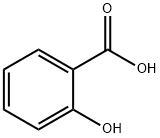
Good news is, they’re not permanent. Gently exfoliating, keeping your skin moisturized, and sometimes using products like salicylic acid can help smooth them out over time. Just don’t pick at them—they’ll go away with the right care.
At a physiological level, keratin plug formation is often associated with a disruption in the normal process of epidermal turnover. Normally, keratinocytes migrate from the basal layer of the epidermis to the stratum corneum, undergoing differentiation and eventually shedding off. However, when this desquamation process is impaired—due to genetic, hormonal, or environmental factors—keratin can accumulate at the follicular opening, creating a plug. Chemically, keratin’s insolubility and resistance to enzymatic degradation make these plugs persistent unless mechanically or chemically removed. Physically, the plug can alter the pore’s microenvironment, trapping oils and microorganisms, potentially contributing to secondary inflammation or infection.
From an interdisciplinary lens, keratin plugs are of interest in both medical and cosmetic dermatology. Clinically, they are benign but may signal underlying imbalances in skin barrier function or immune response, especially in chronic skin disorders. In cosmetology and skincare science, understanding keratin plug mechanisms informs product formulation—particularly exfoliants and barrier-repairing agents—aimed at reducing follicular blockage and improving skin texture. On a broader level, this intersects with materials science; keratin’s molecular stability and mechanical strength have inspired biomimetic materials in tissue engineering and biodegradable polymers.
In everyday life, keratin plugs are a common cosmetic concern rather than a medical emergency. However, they serve as a small but revealing example of how microscopic structural imbalances in the skin can reflect larger systemic or environmental influences. Their management often blends evidence-based skin physiology with lifestyle habits, highlighting the importance of both biological insight and practical application.
The mechanism behind keratin plug formation involves a disruption in the normal desquamation process, where skin cells are shed. When this process slows or becomes irregular, keratinocytes accumulate at a faster rate than they can be expelled, mixing with sebum and debris to form a plug. This can block the follicle, preventing oils from reaching the skin’s surface and creating an environment where bacteria may thrive. In practice, such plugs are often linked to common skin conditions: for example, in acne, keratin plugs can trap sebum and bacteria, leading to inflammation and pimple formation. On the upper arms, they appear as the small, rough bumps of keratosis pilaris, where the plugs cause the skin to feel dry and bumpy.
Understanding keratin plugs helps in developing targeted skincare routines. Exfoliation, using ingredients like salicylic acid or lactic acid, can help remove excess keratin and prevent plug formation by promoting cell turnover. Moisturizing can also support healthy skin barrier function, reducing the likelihood of irregular desquamation. These practical steps address the root causes of plug formation, improving skin texture and reducing associated conditions, showing how knowledge of such structures translates to effective daily care.
The formation of keratin plugs is linked to disruptions in the skin’s natural exfoliation process. Normally, keratinocytes—the cells producing keratin—are shed continuously, but when this process is impaired, they accumulate and adhere to the follicle wall. Factors like hormonal fluctuations, excessive skincare product use, or genetic predispositions can exacerbate this. For instance, individuals with keratosis pilaris, a common condition characterized by rough, bumpy skin, often experience keratin plugs due to abnormal keratinization around hair follicles.
In practice, keratin plugs are often managed through exfoliation—either mechanical (e.g., scrubs) or chemical (e.g., salicylic acid)—to promote cell turnover. Dermatologists may also recommend retinoids to regulate keratin production. A relatable example is the "blackhead," which, when extracted, sometimes reveals a keratin plug rather than oxidized sebum. Understanding these plugs helps differentiate them from other skin conditions, ensuring appropriate treatment and preventing unnecessary interventions like antibiotics for non-inflammatory blockages.