


 Home
Home
I'm really confused about heptane's structure. I know it's an alkane with seven carbon atoms, but I'm not sure how to identify quaternary atoms within it. Are there any specific rules for determining whether a carbon atom in heptane is quaternary? Does the straight - chain or branched - chain form of heptane affect the number of quaternary atoms? And how do I count them accurately? I've tried looking at structural diagrams, but I still can't figure out the exact number. I really need some clear guidance on this.
How Many Quaternary Atoms Does Heptane Have?
Related Encyclopedia
![7-thiabicyclo[2.2.1]heptane](https://chemcloud-1304660855.cos.ap-shanghai.myqcloud.com/compound/54266140d5654419a0e04165753dc9b5.png?imageMogr2/format/webp)
- 279-59-4
- C6H10S
- 114.20900
- All (0)
- China (0)
- (0)
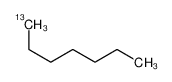
- 75560-45-1
- C7H16
- 101.21000
- All (17)
- China (13)
- (17)
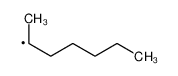
- 3474-30-4
- C7H15
- 99.19400
- All (17)
- China (13)
- (17)

- 142-82-5
- C7H16
- 100.2
- All (17)
- China (13)
- (17)
- 126331-83-7
- C4H9DO2
- 91.12720
- All (17)
- China (13)
- (17)
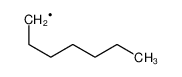
- 3356-67-0
- C7H15
- 99.19400
- All (17)
- China (13)
- (17)
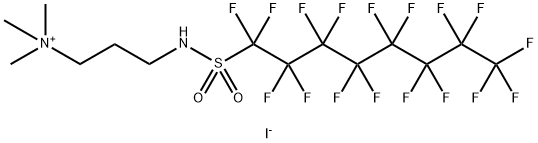
- 1652-63-7
- C14H16F17IN2O2S
- 726.23
- All (0)
- China (0)
- (0)
- 1333519-30-4
- C12H24Cl4N2O2Zn
- 435.52300
- All (0)
- China (0)
- (0)
- 1100676-16-1
- C35H47NO10S
- 673.82
- All (0)
- China (0)
- (0)
- 63181-94-2
- C23H30ClNO
- 371.9434
- All (0)
- China (0)
- (0)
Related Products More >

- 4549-31-9
- Request For Quotation
- 111-16-0
- Request For Quotation
- 629-30-1
- Request For Quotation
- 142-82-5
- CNY 10000.0000
- 1ton
- 96-04-8
- Request For Quotation
- 933735-39-8
- Request For Quotation
- 931-97-5
- Request For Quotation
- 90734-27-3
- Request For Quotation
- 25kg/Bag


First off, let's talk about what a quaternary atom is. In organic chemistry, a quaternary carbon atom is one that's bonded to four other carbon atoms. It's like the social butterfly of carbon atoms, all linked up with other carbons.
For heptane, which has seven carbon atoms, the straight - chain version, also called n - heptane, doesn't have any quaternary carbon atoms at all. In n - heptane, each carbon atom is either bonded to one or two other carbon atoms and some hydrogen atoms. The carbons at the ends are bonded to only one other carbon, and the ones in the middle are bonded to two. So zero quaternary carbons there.
Now, when you start looking at branched - chain forms of heptane, that's where things get interesting. For example, in 2,2,3 - trimethylbutane (a branched isomer of heptane), there is one quaternary carbon atom. The way you figure this out is by looking at the structure. The carbon atom that has three methyl groups (CH3) attached to it, plus it's also part of the main chain, is bonded to four other carbon atoms. That's your quaternary carbon.
To identify quaternary atoms in any heptane isomer, you've got to draw out the full structural formula. Look at each carbon atom and count how many other carbon atoms it's bonded to. If it's four, bingo, you've found a quaternary carbon.
The branched - chain forms of heptane definitely affect the number of quaternary atoms. The more branches you have, the more chances you have of creating a carbon atom that's bonded to four other carbons.
When you're looking at structural diagrams, make sure you're not just glancing at them. Trace out each bond with your finger (mentally, of course, if you're looking at a digital diagram). Label each carbon atom with a number or something so you can keep track of which ones you've checked. And don't forget that hydrogen atoms usually aren't shown in these skeletal diagrams, but they don't matter when you're counting carbon - to - carbon bonds to find quaternary carbons.
With a bit of practice and by really focusing on the structure, you'll be a pro at spotting quaternary atoms in heptane and other hydrocarbons in no time!
Straight-chain heptane (no branches):
The formula is C₇H₁₆, with all seven carbons in a row: CH₃–CH₂–CH₂–CH₂–CH₂–CH₂–CH₃. Here, none of the carbons are quaternary. Why? Because:
• The end carbons (CH₃) are bonded to one carbon (the rest are hydrogens).
• The middle carbons (CH₂) are bonded to two carbons (one on each side).
Quaternary carbons require four carbon bonds, so straight-chain heptane has zero.
Branched heptane (like 2,2,3-trimethylbutane):
This is where quaternary carbons appear. For example:
```
CH₃
|
CH₃–C–CH–CH₃
|
CH₃
```
• The central carbon (bolded) is bonded to four other carbons (three CH₃ groups and one CH). That’s a quaternary carbon!
• The other carbons are bonded to fewer than four carbons (e.g., the CH is bonded to two).
Rules to count quaternary carbons:
1. Ignore hydrogens—only count bonds to other carbons.
2. Look for carbons with four carbon bonds. If a carbon is connected to four distinct carbons (no double/triple bonds), it’s quaternary.
3. Branches are key. Straight chains never have quaternary carbons; branches create them.
Practice tip: Draw the molecule and label each carbon’s bonds. For heptane isomers, only heavily branched versions (like the example above) will have quaternary carbons. Most have none.
TL;DR:
• Straight-chain heptane: 0 quaternary carbons.
• Branched heptane: Possibly 1 or more (depends on branching).
• Check each carbon: If it’s bonded to four others, it’s quaternary.
Try drawing 2,2,3,3-tetramethylbutane—it has two quaternary carbons!
First, what’s a quaternary carbon?
A quaternary carbon is a carbon atom bonded to four other carbon atoms (no hydrogens directly attached). In alkanes, these are the "hubs" where multiple carbon chains branch off.
Heptane’s basics:
Heptane (C₇H₁₆) has 7 carbons. It can exist as a straight chain (n-heptane) or with branches (isomers). The number of quaternary carbons depends entirely on the structure.
Straight-chain heptane (n-heptane):
Draw it as a line: C—C—C—C—C—C—C.
Every carbon is bonded to two other carbons and two hydrogens (except the ends, which bond to three hydrogens).
No quaternary carbons here—no carbon has four carbon bonds.
Branched-chain heptane (isomers):
Now, let’s add branches. The more branches, the higher the chance of quaternary carbons. Example: 3-methylhexane (one of heptane’s isomers):
Draw the main chain (hexane: C—C—C—C—C—C).
Attach a methyl group (—CH₃) to the 3rd carbon: C—C—C(CH₃)—C—C—C.
The 3rd carbon is now bonded to three other carbons (two in the main chain, one in the methyl group) and one hydrogen. Still not quaternary—it needs four carbon bonds.
To get a quaternary carbon, you need deeper branching. Example: 2,2-dimethylpentane:
Draw pentane (C—C—C—C—C).
Attach two methyl groups to the 2nd carbon: C(CH₃)₂—C—C—C—C.
The 2nd carbon is now bonded to four other carbons (two in the methyl groups, two in the main chain). This is a quaternary carbon.
Key rules for counting quaternary carbons:
Look for carbons with four carbon bonds. If a carbon has a hydrogen attached, it’s not quaternary.
Branches matter. The more branches, the more likely a quaternary carbon appears.
Draw all isomers. Heptane has 9 isomers, and only some have quaternary carbons (e.g., 2,2,3-trimethylbutane has two quaternary carbons).
Final tip: Use structural diagrams or a molecular modeling kit. Trace the bonds—if a carbon touches four carbons, it’s quaternary. Practice with smaller alkanes first (like butane or pentane) to get the hang of it. You’ll spot quaternary carbons in no time!