


 Home
Home
Hello, I'd like to ask what's the safest way to paint ABS plastic? How can I reduce the chemical odor and health risks? Are there any recommended primers and paints? What precautions should I take? Thank you!
What are the safest and most effective methods on how to paint ABS plastic for long-lasting results?
Related Encyclopedia
- 122973-06-2
- C6H5NO+
- 108.11800
- All (38)
- China (36)
- (38)
- 100-42-5
- C8H8
- 104.15
- All (38)
- China (36)
- (38)
- 79637-11-9
- C8H8
- 104.15000
- All (38)
- China (36)
- (38)
- 9003-54-7
- C33H33N3X2
- 471.64
- All (2)
- China (0)
- (2)
- 107-13-1
- C3H3N
- 53.06
- All (14)
- China (9)
- (14)
- 64742-49-0
- N/A
- 112
- All (0)
- China (0)
- (0)
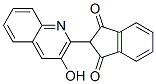
- 75216-45-4
- C18H11NO3
- 289.28
- All (0)
- China (0)
- (0)
- 64742-94-5
- C9
- 0
- All (22)
- China (4)
- (22)
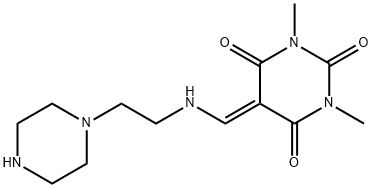
- 299935-15-2
- C13H21N5O3
- 295.34
- All (0)
- China (0)
- (0)
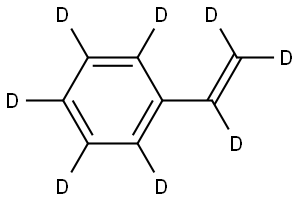
- 19361-62-7
- C8D8
- 112.2
- All (0)
- China (0)
- (0)
Related Products More >

- CNY Request For Quotation
- CNY Request For Quotation
- CNY Request For Quotation
- CNY Request For Quotation


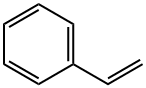
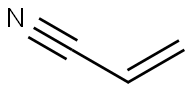
From a medical perspective, when painting ABS plastic, it’s important to consider the chemical exposure risks. ABS (Acrylonitrile Butadiene Styrene) contains styrene and acrylonitrile, both of which can release volatile organic compounds (VOCs) during painting, especially with spray paints or solvents. Inhalation of these VOCs can irritate the respiratory tract and, with prolonged exposure, may cause headaches, dizziness, or more serious effects on the nervous system. Therefore, adequate ventilation and personal protective equipment (PPE) such as masks or respirators are recommended to reduce exposure. Skin contact with certain primers or paints may cause irritation or allergic reactions in sensitive individuals.
Clinically, patients with respiratory conditions like asthma or chemical sensitivities should be particularly cautious when handling paints or solvents. Using water-based or low-VOC paints is a safer alternative. Also, allowing adequate drying time before use reduces the risk of residual fumes. Proper disposal of paint materials is essential to prevent environmental contamination and potential indirect health risks.
For managing such situations, patients should work in well-ventilated areas or outdoors, wear gloves, and avoid prolonged exposure. If symptoms such as coughing, eye irritation, or headaches occur, moving to fresh air immediately and seeking medical advice is important.
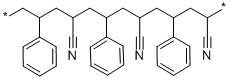
When painting ABS, understanding its chemical nature is important. The polymer's surface is relatively nonpolar due to the styrene and butadiene segments, which makes adhesion of paint challenging without proper surface treatment. Paints typically contain solvents that slightly swell or soften the plastic surface, allowing mechanical interlocking and chemical bonding between the paint and ABS. The key chemical interactions here are primarily Van der Waals forces and some polar interactions with acrylonitrile sites.
Primers designed for plastics often contain solvents or adhesion promoters to enhance this bonding. For example, methyl ethyl ketone (MEK) or acetone can slightly dissolve the ABS surface, increasing paint adhesion. The bonds involved in ABS—mainly covalent C–C and C–H bonds—are quite stable, but the surface layer can be temporarily altered by solvents to improve paint uptake. The polarity difference between paint components and ABS surface is crucial; more polar primers interact better with acrylonitrile units, while less polar paints adhere more effectively to styrene/butadiene regions.
In daily or industrial applications, surface preparation often involves cleaning, light sanding to increase surface roughness, and application of a suitable plastic primer before painting. This improves the paint’s ability to adhere, preventing peeling or cracking due to mechanical stresses or environmental exposure.
From a biological perspective, although ABS is inert and stable, improper handling of solvents and paints poses health risks, such as inhalation of VOCs affecting respiratory health. In lab conditions, ventilation and protective equipment are essential.
Think of ABS plastic like a non-stick pan: If you try to paint it straight out of the box, the paint will slide right off (just like scrambled eggs on an unseasoned skillet). My cousin once tried to customize his ABS drone frame with regular spray paint—it looked great for a day, then flaked off during his first flight. After sanding and priming, though, his new design stuck like glue!
Here’s the science: ABS (acrylonitrile butadiene styrene) is a tough, smooth plastic with a low surface energy, meaning paint doesn’t “grip” it easily. Sanding roughs up the surface, creating microscopic grooves for paint to cling to. A plastic-specific primer (like Krylon Fusion or Rust-Oleum Plastic Primer) adds a chemical bond layer, while flexible paints (like acrylics or enamel sprays) move with the plastic without cracking.
Here’s how to paint ABS plastic step-by-step:
Clean the surface: Wipe the ABS with isopropyl alcohol (rubbing alcohol) and a lint-free cloth to remove oils, dust, or fingerprints. Let it dry completely.
Sand it smooth (but rough!): Use 220–400 grit sandpaper to lightly scuff the entire surface. Focus on edges and curves—these are paint-chipping hotspots. Wipe away dust with a tack cloth or damp rag.
Prime time: Shake a plastic-specific primer can vigorously for 1–2 minutes. Spray in thin, even coats (2–3 light layers are better than 1 thick one), holding the can 8–12 inches away. Let each coat dry 10–15 minutes.
Paint it up: Once the primer is fully dry (check the can for cure time, usually 30 mins–1 hour), apply your topcoat. For hand-painting, use acrylic paints mixed with a plastic adhesion promoter (like Liquitex Flow Aid). For sprays, choose enamels labeled “for plastic” (like Rust-Oleum Painter’s Touch). Apply 2–3 thin coats, letting each dry fully.
Seal the deal (optional): For extra durability, add a clear topcoat (like Krylon Crystal Clear) to protect against scratches and UV fading.
Pro tip: Avoid painting ABS in humid or cold conditions—moisture can cause bubbling, and low temps slow drying. And if you’re painting something that’ll bend (like a toy or tool handle), opt for flexible paints (like acrylics) over rigid ones (like oil-based enamel) to prevent cracking!
Bottom line: Painting ABS plastic isn’t rocket science, but it’s not “slap-and-go” either. A little sanding, the right primer, and flexible paint will turn your bland plastic into a masterpiece that lasts. Now go paint that drone, game controller, or cosplay prop—and flex your creativity! ??️
A lot of people make simple mistakes here. Skipping the cleaning step is a big one—they just start painting, but oils from your hands or factory residues on new ABS will make the paint lift. Others use sandpaper that’s too rough (like 120 grit), which scratches the plastic instead of just roughing it up, leaving visible marks under the paint. And rushing between coats is common—adding a second coat before the first is dry causes bubbling or smudging, ruining the finish. Oh, and some think primer isn’t necessary, but without it, even good paint can chip off easily.
For a home-friendly approach, start with cleaning. Wipe the ABS with warm, soapy water (dish soap works) to remove oils and dust. Rinse it, then dry with a lint-free cloth—any leftover moisture will mess with the paint. Next, lightly sand the surface with fine-grit sandpaper (400 to 600 grit). You’re not trying to remove plastic, just create a tiny texture so the paint can grip. Wipe away sanding dust with a tack cloth or damp cloth, then let it dry completely.
Primer is key here—use a plastic-specific primer (you can find small cans at craft stores). Spray or brush on a thin coat, holding the can 6-8 inches away if spraying. Let it dry for at least an hour (check the can for exact times). This creates a base that paint adheres to much better than bare ABS.
Once the primer’s dry, apply your paint. Acrylic craft paint works for small projects—use a soft brush and thin coats. For larger items, spray paint (acrylic or enamel) gives a smoother finish. Again, thin coats are better—let each dry 30 minutes to an hour before adding the next. If you’re painting something that gets handled a lot (like a tool handle), add a clear topcoat (acrylic sealer) after the final paint coat dries. It adds durability without yellowing.
Avoid painting in humid or cold rooms—moisture or low temps can make paint take forever to dry or look blotchy. And if you make a mistake, let the paint dry, sand the spot lightly, and touch up with primer and paint.
With a little prep—cleaning, sanding, priming—ABS plastic takes paint really well. It’s not about rushing; it’s about giving each step time to work. Even if you’re new to painting, taking it slow will give you a smooth, long-lasting finish that won’t peel or chip.