


 Home
Home
Hello, I’m wondering—does fiber count as a type of sugar? Can it raise blood sugar levels? And how does fiber actually interact with the digestive system?
Is Fiber a Monosaccharide or Something Else Entirely?
Related Encyclopedia
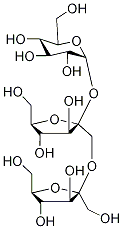
- 9005-80-5
- C18H32O16
- 504.43708
- All (24)
- China (14)
- (24)
- 9000-69-5
- C6H12O6
- 0
- All (31)
- China (15)
- (31)
- 9005-53-2
- unspecified
- 0
- All (8)
- China (7)
- (8)
- 9004-36-8
- N/A
- 0
- All (3)
- China (1)
- (3)
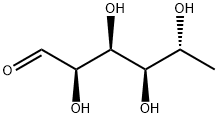
- 7658-08-4
- C6H12O5
- 164.16
- All (0)
- China (0)
- (0)
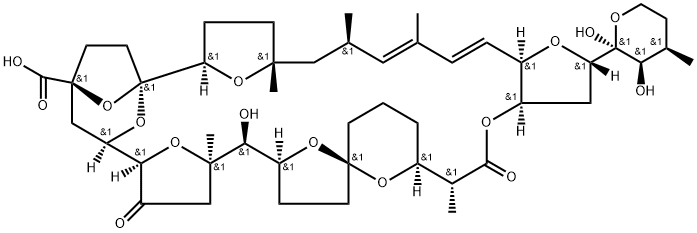
- 124843-18-1
- C47H68O16
- 889.05
- All (0)
- China (0)
- (0)
- 13405-60-2
- C13H16O10
- 332.26
- All (0)
- China (0)
- (0)
- 8068-05-1
- C30H25ClN6
- 505.01
- All (0)
- China (0)
- (0)
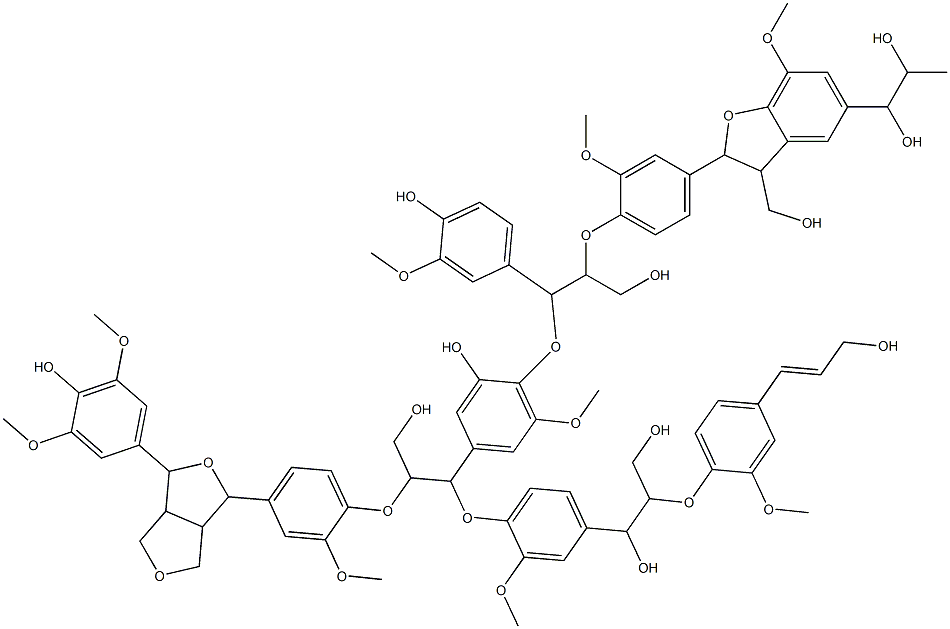
- 8068-03-9
- C81H92O28
- 1513.58038
- All (0)
- China (0)
- (0)
- 42613-30-9
- 0
- All (4)
- China (4)
- (4)
Related Products More >

- CNY Request For Quotation
- CNY Request For Quotation
- CNY Request For Quotation
- CNY Request For Quotation
- CNY Request For Quotation
- CNY Request For Quotation
- CNY Request For Quotation
- CNY Request For Quotation


From a physiological perspective, dietary fiber refers to plant-based carbohydrates such as cellulose, hemicellulose, pectin, and lignin, which resist enzymatic breakdown in the small intestine. Unlike monosaccharides, which are single sugar units absorbed directly into the bloodstream, fiber remains mostly intact as it passes through the digestive tract. This distinction is key to how fiber influences metabolism, blood sugar levels, and gut health.
Clinically, a lack of dietary fiber can contribute to constipation, poor glycemic control, and increased cardiovascular risk. Soluble fiber (like pectin and inulin) forms a gel in the gut, slowing glucose absorption and improving cholesterol levels, while insoluble fiber (like cellulose) adds bulk to stool and supports regular bowel movements. Fiber also promotes a healthy gut microbiota by acting as a prebiotic—certain fibers are fermented by bacteria in the colon to produce beneficial short-chain fatty acids like butyrate.
Some patients misunderstand fiber as a sugar, possibly fearing it will spike blood sugar levels. But in fact, fiber can help stabilize blood glucose, especially in people with diabetes or metabolic syndrome. Still, for those with certain gastrointestinal conditions like IBS or Crohn’s disease, specific types of fiber (e.g., fermentable oligosaccharides) may cause bloating or discomfort and should be adjusted under medical guidance.
The best way to manage fiber intake is through a balanced diet rich in whole grains, fruits, vegetables, and legumes. Patients should gradually increase fiber to avoid digestive upset and drink plenty of water to support its function.
Think of it like Legos: a monosaccharide is one small Lego brick, easy to pick up and use. Fiber is a huge, complicated Lego structure—too big and tangled for your body to take apart, so it passes through, doing its job as it goes.
If you’re tracking carbs, remember fiber doesn’t act like sugar (those monosaccharides) in your body. That’s why high-fiber foods like oats or veggies don’t spike your energy the way candy (loaded with simple sugars) does. Good to know, right?
From a chemical perspective, dietary fiber includes compounds like cellulose, hemicellulose, and pectin. Take cellulose for example: it’s made of thousands of β-D-glucose molecules linked by β-1,4-glycosidic bonds. These bonds are different from the α-1,4-glycosidic bonds found in starch, which our enzymes can break. Humans lack the enzyme cellulase, so cellulose passes through the small intestine undigested.
Structurally, fiber is highly stable because of extensive hydrogen bonding between hydroxyl (–OH) groups on adjacent polymer chains. This contributes to its rigidity and insolubility in water, especially in the case of insoluble fiber. Soluble fiber, like pectin or inulin, has different branching structures and can form gels in water due to the polar functional groups that interact with water molecules.
The polarity of fiber components makes them hydrophilic, allowing soluble types to absorb water and expand. This property plays an important role in digestion by slowing gastric emptying and promoting satiety. It also helps regulate blood sugar and cholesterol levels by trapping sugars and fats in the gel matrix formed in the gut.
In biology and industry, fiber has practical uses beyond nutrition. For instance, cellulose is used to make paper and textiles, while pectin is a gelling agent in food processing. In the lab, fiber stability can be tested under acidic or enzymatic conditions to evaluate breakdown and solubility.
So if fiber is not a sugar, and we can't digest it, why is it still so important for health? What would happen if humans evolved the ability to fully digest cellulose?
First, fiber is a type of carbohydrate your body can’t digest, while monosaccharides are simple sugars your body absorbs quickly for energy. Monosaccharides include glucose (found in fruits), fructose (in honey), and galactose (in dairy). Fiber, on the other hand, comes from plant foods like veggies, whole grains, and beans. It passes through your system mostly intact, helping with digestion and keeping you full.
How your family uses fiber vs. monosaccharides depends on their health goals. If you’ve got kids who crash after sugary snacks, focus on fiber-rich foods (like apples with the skin or oatmeal) to slow sugar absorption. For active teens or adults, monosaccharides from fruits can provide quick energy before a workout. But here’s the catch: too many processed monosaccharides (like in soda or candy) can spike blood sugar, while fiber helps stabilize it.
A common mistake families make is assuming all carbs are “bad” or lumping fiber with sugars. Another误区 (Chinese for “misconception”) is thinking fiber is only for adults—kids need it too for growing guts! Also, avoid overcooking veggies; it can destroy some fiber. Instead, steam or roast them to keep nutrients intact.
For a family-friendly approach, aim to fill half your plate with fiber-rich foods at meals. Try adding chia seeds to smoothies, swapping white bread for whole-grain, or snacking on raw veggies with hummus. When reading labels, look for “dietary fiber” (good!) and limit added sugars (often listed as sucrose, corn syrup, etc.). Teach kids that fiber is like a “broom” for their insides—it keeps things moving smoothly!
By understanding the difference between fiber and monosaccharides, your family can make choices that fuel bodies well without the sugar crashes. Plus, you’ll all feel fuller longer—no more “hangry” moments between meals!