


 Home
Home
When exploring the safety of silicon dioxide and its relation to silicon, you might ask: In what common products do we find silicon dioxide? How does the form of silicon dioxide (like powder or solid) impact its safety? Are there any long - term health effects associated with exposure to silicon - based substances? And how does the chemical structure of silicon dioxide contribute to its safety profile?
Is Silicon Dioxide Safe? An Exploration of the Safety of Silicon and Silicon Dioxide
Related Encyclopedia

- 7631-86-9
- O2Si
- 60.08
- All (126)
- China (40)
- (126)
- 83957-02-2
- O2Si
- 64.08380
- All (126)
- China (40)
- (126)
- 23382-09-4
- H2O3Si
- 78.09960
- All (1)
- China (0)
- (1)

- 15092-72-5
- H4Si
- 36.00590
- All (0)
- China (0)
- (0)

- 7440-21-3
- H4Si
- 32.12
- All (5)
- China (5)
- (5)

- 90337-93-2
- H4Si
- 32.11730
- All (5)
- China (5)
- (5)

- 13569-32-9
- Cl2Si
- 98.99150
- All (0)
- China (0)
- (0)

- 16726-63-9
- C4N4O4Si
- 196.15300
- All (0)
- China (0)
- (0)
- 58500-40-6
- H6OSiSn
- 168.83400
- All (0)
- China (0)
- (0)
- 39467-15-7
- H6OSiW
- 233.97300
- All (0)
- China (0)
- (0)
Related Products More >

- 9016-00-6
- CNY Request For Quotation
- 9016-00-6
- CNY Request For Quotation
- 112945-52-5
- Request For Quotation
- 112945-52-5
- Request For Quotation
- 112945-52-5
- Request For Quotation
- 112945-52-5
- Request For Quotation
- 112945-52-5
- Request For Quotation
- 112945-52-5
- Request For Quotation


Now, let's talk about how the form of silicon dioxide impacts its safety. When it's in powder form, there can be some concerns. If the powder is fine enough, like in the case of certain industrial - grade silica dust, inhaling it can be dangerous. Long - term exposure to silica dust can lead to a lung disease called silicosis. The small particles can get deep into the lungs and cause inflammation and scarring. But when silicon dioxide is in a solid form, like in a piece of glass (which is mainly silicon dioxide), it's generally much safer. Solid silicon dioxide doesn't pose the same inhalation risk, and it's not easily absorbed into the body through normal contact.
Regarding long - term health effects of exposure to silicon - based substances, it really depends on the type of exposure. As I mentioned, silica dust is a big concern. But for most people, the silicon dioxide we encounter in our daily lives, like in food or cosmetics, is considered safe. The amounts used in food are carefully regulated, and the body doesn't really absorb it in significant amounts. However, if you work in an industry where you're constantly exposed to high levels of silicon - containing substances, like in some mining or glass - making jobs, there could be risks. Over time, repeated exposure to these substances might potentially lead to respiratory problems or other health issues.
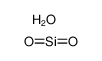
Finally, the chemical structure of silicon dioxide plays a role in its safety. Silicon dioxide has a very stable structure. The silicon and oxygen atoms are bonded together in a way that makes it relatively inert. In most cases, it doesn't react with the body's tissues easily. This stability is why it can be used in so many products without causing immediate harm. But again, the physical form, like the particle size in the case of powders, can override this chemical stability and introduce safety concerns. So, in conclusion, the safety of silicon dioxide varies depending on these different factors.
Silicon dioxide, often referred to as silica, is a common compound found in various products we use daily. You can find it in things like sand, glass, ceramics, and even some food additives. It's also used in cosmetics and personal care products for its abrasive and absorbent properties.
The form of silicon dioxide, whether it's a powder or a solid, can impact its safety. Inhaling silicon dioxide powder can be harmful, especially if the particles are small enough to reach the lungs. This can cause respiratory issues and other health problems. Solid forms, on the other hand, are generally safer as they're less likely to be inhaled.
As for long-term health effects, exposure to silicon-based substances, including silicon dioxide, can have varying impacts. High levels of exposure over a long period can lead to conditions like silicosis, a serious lung disease. However, in everyday products and at typical usage levels, the risk is generally low.
The chemical structure of silicon dioxide contributes to its safety profile. Silicon dioxide is a highly stable compound with a strong silicon-oxygen bond. This stability makes it resistant to chemical reactions and degradation, which is why it's so widely used in various applications.
In summary, silicon dioxide is a common compound with a range of uses. Its safety depends on the form and level of exposure. While high levels of exposure can be harmful, typical usage in everyday products is generally considered safe.
Now, the form of silicon dioxide definitely matters when it comes to safety. In its natural, solid form—like sand or quartz—it’s generally harmless unless you’re inhaling large amounts of dust, which can irritate your lungs. But in its powdered form, like the stuff added to food or cosmetics, it’s processed to be super fine and non-reactive. This type is considered safe for consumption and use on the skin because it doesn’t get absorbed into your body. However, if you’re talking about crystalline silica, which is a specific form of silicon dioxide found in industrial settings, that’s a different story. Inhaling crystalline silica dust over time can lead to serious lung issues like silicosis, so it’s heavily regulated in workplaces.
When it comes to long-term health effects, the silicon dioxide used in everyday products is generally recognized as safe by organizations like the FDA. It passes through your body without being absorbed, so it doesn’t build up or cause harm. That said, if you’re exposed to high levels of crystalline silica dust over many years, like in mining or construction, that’s where you’d see health risks. But for the average person using consumer products, the risk is minimal.
The chemical structure of silicon dioxide plays a big role in its safety. It’s made up of silicon and oxygen atoms arranged in a tight, stable lattice. This structure makes it inert, meaning it doesn’t react easily with other substances. That’s why it’s safe to eat or put on your skin—it just doesn’t interact much with your body. Even when it’s ground into a fine powder for food or cosmetics, the particles are too large to be absorbed into your bloodstream, so they just pass right through you.
So, to wrap it up: silicon dioxide is super common in everyday products, and its safety depends on the form. The stuff in food and cosmetics is generally safe because it’s non-reactive and doesn’t get absorbed. Long-term health risks are mostly tied to inhaling crystalline silica dust in industrial settings, not from consumer products. And its stable chemical structure is what makes it so safe for everyday use. As long as you’re not working in a sandblasting factory, you’re probably good!