


 Home
Home
Hi, I'd like to ask—Is sucrose an ionic or covalent compound? What are the main factors to determine its type of bonding? Are there any easy - to - understand ways to figure it out? Do ionic and covalent compounds of sucrose have different properties? How does the bonding type affect the uses of sucrose? Thanks!
Is Sucrose an Ionic or Covalent Compound? How Can We Tell?
Related Encyclopedia
- 27641-21-0
- C12H22O11
- 342.29600
- All (17)
- China (10)
- (17)
- 57-50-1
- C12H22O11
- 342.3
- All (17)
- China (10)
- (17)
- 95152-84-4
- C11H20O10
- 312.27100
- All (17)
- China (10)
- (17)
- 18304-13-7
- C36H46N8O11
- 766.80000
- All (0)
- China (0)
- (0)
- 37266-93-6
- C24H44O12
- 524.59896
- All (0)
- China (0)
- (0)
- 115094-71-8
- C13H24O10
- 340.32400
- All (0)
- China (0)
- (0)
- 31835-06-0
- C22H40O12
- 496.55
- All (0)
- China (0)
- (0)
- 875515-34-7
- C16H26O14
- 442.36900
- All (0)
- China (0)
- (0)
- 126-14-7
- C28H38O19
- 678.59
- All (5)
- China (0)
- (5)
- 758-65-6
- C28H38O19
- 678.59000
- All (5)
- China (0)
- (5)
Related Products More >

- 56038-13-2
- CNY 20.0000
- 25kg
- 34482-63-8
- Request For Quotation
- 1ton
- 34482-63-8
- Request For Quotation
- 25kg
- 25168-73-4
- Request For Quotation
- 25kg
- 25168-73-4
- Request For Quotation
- 500g
- 25168-73-4
- Request For Quotation
- 1kg
- 37318-31-3
- Request For Quotation
- 10kg


To further illustrate this concept, let's consider an example. Take sodium chloride (NaCl), a classic example of an ionic compound. Sodium has an electronegativity of about 0.93, while chlorine has an electronegativity of approximately 3.16. The difference in electronegativity is significant, around 2.23, which leads to the transfer of an electron from sodium to chlorine, forming ions. This results in an ionic bond. In contrast, sucrose does not exhibit this behavior. The bonds within the sucrose molecule are formed through the sharing of electrons between carbon, hydrogen, and oxygen atoms. This sharing of electrons is characteristic of covalent bonding.
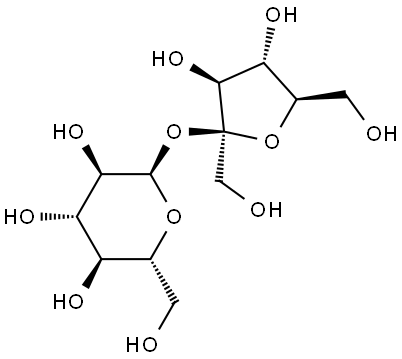
Another way to understand the nature of sucrose's bonding is to examine its structure. Sucrose is composed of two monosaccharides, glucose and fructose, linked together by a glycosidic bond. The bonds within the glucose and fructose units, as well as the bond connecting them, are all covalent. This covalent structure is due to the relatively small differences in electronegativity between the atoms involved. The carbon atoms in sucrose form covalent bonds with other carbon atoms, as well as with hydrogen and oxygen atoms. These bonds are strong and stable, contributing to the overall stability of the sucrose molecule.
When considering the properties of ionic and covalent compounds, it is important to note that sucrose, being a covalent compound, exhibits properties typical of covalent substances. Covalent compounds generally have lower melting and boiling points compared to ionic compounds. This is because the forces holding the molecules together in a covalent compound are weaker than the electrostatic forces between ions in an ionic compound. Sucrose has a melting point of around 186 degrees Celsius, which is relatively low compared to many ionic compounds. Additionally, covalent compounds like sucrose are often less reactive than ionic compounds. This stability is due to the nature of covalent bonding, where electrons are shared rather than transferred completely.
The covalent bonding in sucrose also affects its solubility. While both ionic and covalent compounds can dissolve in water, they do so in different ways. Ionic compounds dissolve to form ions, whereas covalent compounds dissolve to form molecules. Sucrose dissolves in water to form individual sucrose molecules, rather than ions. This behavior is consistent with its covalent nature. The hydrogen bonds between the hydroxyl groups of sucrose and water molecules facilitate its solubility in water.
The uses of sucrose are also influenced by its covalent bonding. Covalent compounds like sucrose are generally stable under normal conditions. This stability makes sucrose an ideal sweetener for food products. It remains stable during cooking and storage, maintaining its sweet taste without undergoing significant chemical changes. The covalent bonds within sucrose ensure that it does not readily decompose or react with other substances in the food. This stability is crucial for its widespread use in the food industry.
In addition to its use as a sweetener, the covalent nature of sucrose also affects its behavior in chemical reactions. Covalent compounds typically participate in reactions through the sharing or breaking of covalent bonds. Sucrose can undergo hydrolysis, a reaction in which the glycosidic bond is broken by the addition of water, resulting in the separation of glucose and fructose. This reaction is facilitated by the presence of an acid or an enzyme. The covalent bonds within sucrose allow it to participate in such reactions while maintaining its overall structure.
The stability and properties of sucrose due to its covalent bonding also have implications for its storage and handling. Unlike some ionic compounds that may be sensitive to moisture or air, sucrose remains relatively stable in its solid form. It does not readily absorb moisture from the air, which is important for its long-term storage. This stability is again due to the covalent bonds that hold the sucrose molecules together.
In the con of industrial applications, the covalent nature of sucrose also plays a role. For example, in the production of confectionery, the stability of sucrose ensures that it can withstand the various processing steps involved, such as heating, mixing, and shaping. The covalent bonds within sucrose molecules allow it to maintain its structure and sweetness throughout these processes.
The covalent bonding in sucrose also affects its interaction with other substances. For instance, when sucrose is used in combination with other ingredients in food products, its covalent nature ensures that it does not readily react with these substances. This allows it to maintain its sweet taste and functionality without interfering with the other components of the food. The covalent bonds within sucrose molecules provide a level of chemical stability that is essential for its use in a wide range of applications.
In the realm of biochemistry, the covalent structure of sucrose is also significant. Sucrose is a disaccharide, and its covalent bonds are essential for its biological function. When ingested, sucrose is broken down into glucose and fructose through hydrolysis, facilitated by enzymes in the digestive system. The covalent bonds within the sucrose molecule ensure that it remains intact until it reaches the appropriate environment for this reaction to occur. This stability is crucial for the proper absorption and utilization of sucrose in the body.
The covalent nature of sucrose also has implications for its potential modifications. For example, chemists can modify the structure of sucrose through various chemical reactions to create different derivatives. These modifications involve breaking and forming covalent bonds within the sucrose molecule. The stability and reactivity of the covalent bonds in sucrose allow for such modifications, which can lead to the development of new sweeteners or other functional compounds.
In the con of environmental chemistry, the covalent bonding in sucrose also plays a role. Sucrose is a natural compound that is readily biodegradable. Its covalent bonds are broken down by microorganisms in the environment, leading to its decomposition. This natural process is facilitated by the covalent structure of sucrose, which allows it to be broken down into simpler compounds that can be further metabolized by microorganisms. This biodegradability is an important aspect of sucrose's environmental impact.
The covalent bonding in sucrose also affects its physical properties. For example, the crystalline structure of sucrose is due to the arrangement of its covalent bonds. Sucrose forms crystals that are stable and have a specific melting point. This crystalline structure is important for its use in various applications, such as in the production of sugar cubes or in the coating of confectionery. The covalent bonds within the sucrose molecules ensure that the crystals maintain their structure and properties.
In the con of food science, the covalent nature of sucrose also influences its flavor and ure. The sweetness of sucrose is due to its molecular structure, which is stabilized by covalent bonds. The covalent bonds within the sucrose molecule also affect its ure. For example, the crystalline structure of sucrose contributes to its granular ure, which is important for its use in baking and other culinary applications. The covalent bonds ensure that the sucrose molecules maintain their structure and properties, contributing to its overall sensory characteristics.
The covalent bonding in sucrose also has implications for its potential health effects. Sucrose is metabolized in the body through the breakdown of its covalent bonds. The glucose and fructose units are absorbed and utilized for energy. The stability of the covalent bonds in sucrose ensures that it is metabolized in a controlled manner, providing a steady source of energy. This is in contrast to some other compounds that may be more reactive or unstable, leading to different metabolic effects.
The primary factor in determining the type of bonding in a compound is the electronegativity difference between the atoms involved. Electronegativity is a measure of an atom's ability to attract electrons in a chemical bond. In ionic compounds, there is a large electronegativity difference between the atoms, typically greater than 1.7 on the Pauling scale. This significant difference causes one atom to completely transfer electrons to another, resulting in the formation of positively and negatively charged ions. These ions are then held together by strong electrostatic forces. For example, in sodium chloride (NaCl), sodium has an electronegativity of 0.9, while chlorine has an electronegativity of 3.0. The large difference in electronegativity means that sodium donates an electron to chlorine, forming Na+ and Cl- ions, which bond ionically.
In contrast, covalent bonding occurs when the electronegativity difference between atoms is relatively small, usually less than 1.7. In this case, atoms share electrons to achieve a stable electron configuration. Sucrose, with the chemical formula C12H22O11, is composed of carbon (C), hydrogen (H), and oxygen (O). The electronegativity values of these elements are as follows: carbon has an electronegativity of about 2.5, hydrogen has an electronegativity of 2.1, and oxygen has an electronegativity of 3.5. The differences in electronegativity between these elements are not significant enough to cause electron transfer. Instead, the atoms in sucrose share electrons to form covalent bonds. For instance, carbon and hydrogen atoms share electrons to form C-H bonds, and carbon and oxygen atoms share electrons to form C-O bonds. Through this sharing of electrons, the atoms in sucrose are able to complete their outer electron shells and attain a more stable state, creating a molecular structure rather than an ionic lattice.
Another important factor in determining bonding type is the nature of the elements themselves. Ionic compounds are commonly formed by the combination of metals and nonmetals. Metals tend to lose electrons easily, while nonmetals have a greater tendency to gain electrons. When they combine, the electron transfer from metal to nonmetal leads to the formation of ions and ionic bonds. However, covalent compounds are typically composed of only nonmetallic elements. Since sucrose consists solely of nonmetals - carbon, hydrogen, and oxygen - this is a strong indication that its bonding is covalent.
There are several easy - to - understand ways to figure out the type of bonding in a compound. One simple approach is to look at the elements that make up the compound. If the compound contains both metals and nonmetals, it is likely to be ionic. For example, calcium carbonate (CaCO3), which contains the metal calcium and the nonmetals carbon and oxygen, is an ionic compound. On the other hand, if the compound is made up of only nonmetals, it is more likely to be covalent. Water (H2O), composed of hydrogen and oxygen, is a good example of a covalent compound. Additionally, observing the physical properties of a compound can provide clues. Ionic compounds generally have high melting and boiling points due to the strong electrostatic forces holding the ions together. They also conduct electricity when dissolved in water or in a molten state because the ions are free to move and carry an electric charge. Ionic compounds often have a hard and brittle structure. Covalent compounds, especially molecular ones like sucrose, usually have lower melting and boiling points. They do not conduct electricity well because they do not dissociate into ions in their normal state. Sucrose, for example, has a melting point of around 186°C, which is relatively low compared to many ionic compounds. It is a solid at room temperature and does not conduct electricity in its solid or molten state, characteristics that are typical of covalent compounds.
It's crucial to note that sucrose exists only as a covalent compound and does not have an "ionic form." Its covalent bonding determines its properties, which in turn dictate its uses. Because sucrose is a covalent compound, it dissolves in water as neutral molecules rather than dissociating into ions. This property makes it an ideal sweetener for food and beverages. When added to water, it disperses evenly, providing sweetness without altering the electrical properties of the solution. Its relatively low melting point also makes it useful in cooking and baking. When heated, sucrose melts and undergoes chemical changes, such as caramelization, which gives foods like candies, cookies, and cakes their characteristic flavors and ures. In contrast, ionic compounds like sodium chloride have very different properties and uses. Sodium chloride dissolves in water to release ions, which can affect the electrical conductivity of the solution. It has a high melting point and is used mainly for seasoning and preserving food rather than for creating the complex flavors and ures that sucrose can provide through processes like caramelization. Overall, the covalent bonding of sucrose gives it unique characteristics that are highly valued in the food industry and other applications where its sweetening and urizing properties are desired.
Ionic bonds are formed through the complete transfer of electrons from one atom to another. This process typically occurs between a metal and a nonmetal, as metals have a tendency to lose electrons while nonmetals tend to gain them. The result is the creation of positively charged cations and negatively charged anions, which are held together by strong electrostatic forces. A classic example is sodium chloride (NaCl), where sodium (a metal) donates an electron to chlorine (a nonmetal), forming Na⁺ and Cl⁻ ions. In contrast, covalent bonds involve the sharing of electrons between atoms, a phenomenon predominantly observed among nonmetallic elements. When two nonmetals interact, neither has a sufficient electronegative advantage to completely strip electrons from the other, leading to a mutual sharing of electron pairs to fulfill their valence shell requirements. This sharing can be either equal (nonpolar covalent) or unequal (polar covalent), depending on the difference in electronegativity between the atoms involved.
Examining sucrose’s composition provides clarity on its bonding type. With the chemical formula C₁₂H₂₂O₁₁, sucrose is composed exclusively of carbon (C), hydrogen (H), and oxygen (O)—all nonmetallic elements. Carbon, with four valence electrons, seeks to achieve a stable octet by forming four covalent bonds. It accomplishes this by sharing electrons with both hydrogen and oxygen atoms. Oxygen, possessing six valence electrons, shares electrons with carbon and hydrogen to complete its outer shell, while hydrogen, requiring only two electrons for stability, forms single covalent bonds by sharing one electron with carbon or oxygen. The key determinant of bond type is the electronegativity difference between the atoms. As a general guideline, an electronegativity difference greater than 1.7 is indicative of an ionic bond, whereas a difference below this threshold suggests a covalent bond. In sucrose, the electronegativity differences are as follows: between carbon and oxygen (3.5 – 2.5 = 1.0), carbon and hydrogen (2.5 – 2.1 = 0.4), and oxygen and hydrogen (3.5 – 2.1 = 1.4). All these values fall below 1.7, firmly establishing the bonds within sucrose as covalent.
An accessible method to determine the bonding type of a compound is to analyze its constituent elements. Compounds composed solely of nonmetals are typically covalent, while ionic compounds usually include at least one metal and one nonmetal (or polyatomic ion). For instance, compounds like potassium nitrate (KNO₃) or magnesium oxide (MgO), which contain metals, are ionic, whereas substances like ethanol (C₂H₅OH), ammonia (NH₃), and sucrose, which consist only of nonmetals, are covalent. This elemental observation serves as a straightforward initial indicator, though verifying electronegativity differences provides a more precise confirmation.
It is important to clarify that sucrose does not exist in both ionic and covalent forms; it is uniformly covalent in its bonding. The distinction between bonding types becomes evident when comparing the properties of sucrose with those of ionic compounds. Ionic compounds are characterized by high melting and boiling points due to the strong electrostatic forces between ions, which require significant energy to overcome. For example, sodium chloride melts at 801°C, while calcium oxide (CaO) has a melting point of 2572°C. In contrast, covalent compounds like sucrose exhibit much lower melting points, as they are held together by weaker intermolecular forces such as hydrogen bonds or van der Waals forces. Sucrose melts at approximately 186°C, and when heated further, it undergoes decomposition rather than boiling.
Another critical difference lies in electrical conductivity. Ionic compounds conduct electricity when melted or dissolved in water because the ions become free to move and carry an electric charge. A solution of NaCl in water, for instance, is a good conductor. Covalent compounds, however, lack freely moving ions, and thus sucrose dissolved in water remains a non-conductive solution. The neutral molecules of sucrose do not dissociate into ions, preventing the flow of electric current.
The covalent nature of sucrose profoundly influences its practical applications. Its ability to dissolve in water—owing to the polar covalent bonds within its molecules, which allow it to interact with polar water molecules—makes it an ideal sweetener in a wide range of food and beverage products. From soft drinks to baked goods, sucrose’s solubility ensures uniform distribution of sweetness. Its relatively low melting point is crucial in cooking and confectionery, enabling processes such as caramelization, where heating sucrose causes it to melt, darken, and develop complex flavors. In contrast, ionic compounds like salts are valued for their stability and ability to enhance flavors or preserve food, properties directly tied to their ionic bonding.
In summary, sucrose’s classification as a covalent compound is rooted in its composition of nonmetallic elements, the electronegativity differences between its atoms, and its observable physical properties. The sharing of electrons in covalent bonds gives sucrose its characteristic solubility, moderate thermal behavior, and non-conductive nature, all of which contribute to its ubiquitous use as a sweetener and ingredient in various industries. Understanding the basis of its bonding not only clarifies its chemical identity but also explains why it behaves so differently from ionic compounds in both scientific and everyday cons.