


 Home
Home
Hi, I'd like to ask—Where exactly does vitamin C participate in collagen production? Does it work with compounds like proline or hydroxyproline during this process? How does this interaction affect the formation of stable collagen fibers? Is there a difference in its role between type I and type II collagen? Thanks!
Where does vitamin C help in collagen synthesis and which key compounds does it interact with?
Related Encyclopedia
- 9007-34-5
- 0
- All (14)
- China (1)
- (14)
- 9064-67-9
- C4H6N2O3R2.(C7H9N2O2R)n
- 0
- All (14)
- China (1)
- (14)
- 78619-96-2
- C6H8O6
- 176.12400
- All (24)
- China (1)
- (24)
- 92113-31-0
- CO(NH2)2,Fe+++
- 0
- All (3)
- China (0)
- (3)
- 51-35-4
- C5H9NO3
- 131.13
- All (84)
- China (23)
- (84)
- 41672-81-5
- C37H69NO5
- 607.95
- All (1)
- China (0)
- (1)
- 147028-80-6
- C5H9NO3
- 131.13000
- All (84)
- China (23)
- (84)
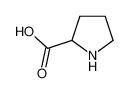
- 29795-82-2
- C5H9NO2
- 115.13000
- All (19)
- China (0)
- (19)
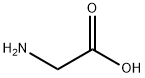
- 56-40-6
- C2H5NO2
- 75.07
- All (308)
- China (62)
- (308)
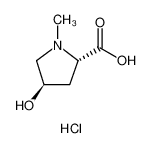
- 89771-43-7
- C6H12ClNO3
- 181.61700
- All (0)
- China (0)
- (0)
Related Products More >

- 147-85-5
- CNY Request For Quotation
- 147-85-4
- CNY Request For Quotation
- 147-85-3
- CNY Request For Quotation
- CNY Request For Quotation
- CNY Request For Quotation
- CNY Request For Quotation
- CNY Request For Quotation
- CNY Request For Quotation


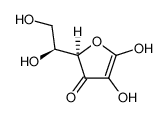
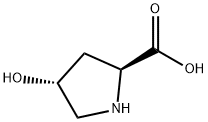
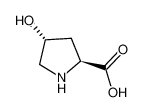
Vitamin C does not directly interact with proline or hydroxyproline but supports the enzyme that turns proline into hydroxyproline. Hydroxyproline, a product of this process, is needed to keep the triple helix stable under the body’s normal conditions.
In terms of type I and type II collagen, vitamin C’s core role in hydroxylation is similar, as both types rely on proline and lysine hydroxylation for stability. However, type I collagen, found in skin and bones, has higher proline content, making vitamin C’s support for prolyl hydroxylase particularly impactful for its fiber strength. Type II collagen, present in cartilage, has slightly different amino acid ratios, but vitamin C still ensures proper helix formation, though its influence on fiber rigidity may be less pronounced compared to type I.
A relevant case involves the production of type I collagen for wound care products. Type I collagen, predominant in skin and bone, requires precise hydroxylation of its alpha chains to ensure proper cross-linking. Vitamin C deficiency disrupts this process, leading to defective fibers that fail to provide structural support. This is particularly problematic in countries with limited access to fresh produce, where vitamin C deficiency remains a public health concern. The solution lies in fortifying collagen products with stabilized vitamin C derivatives or ensuring raw material sourcing from regions with consistent vitamin C availability.
Type II collagen, found in cartilage, presents a different challenge. While it also depends on vitamin C for hydroxylation, the structural requirements of cartilage demand a balance between flexibility and strength. Recent studies highlight that vitamin C's role extends beyond hydroxylation, as it also protects collagen from oxidative degradation during extracellular matrix assembly. This is critical for industries manufacturing joint health supplements, where oxidative stress during processing can compromise product efficacy. The difference in vitamin C's role between type I and type II collagen underscores the need for tailored formulations in global trade, where product specifications must align with biochemical requirements.
A practical example is the export of collagen peptides from the U.S. to Asia, where regulatory agencies require detailed documentation of vitamin C content and its impact on collagen stability. Companies address this by implementing quality control measures, such as HPLC analysis to verify hydroxyproline levels, ensuring compliance with international standards. This highlights the intersection of chemistry, trade, and health, where biochemical knowledge directly influences global market dynamics.
They take proline, a common amino acid in the collagen building block procollagen, and turn it into hydroxyproline. The same happens with lysine, becoming hydroxylysine. These changes are key because they help the three strands of procollagen twist into a strong triple helix, using hydrogen bonds. Without enough hydroxyproline, that helix is weak and breaks down before it even leaves the cell.
Once that stable structure is made, it exits the cell and forms the fibers we know as collagen. For type I and type II collagen, the way vitamin C acts doesn’t really differ. Both need those hydroxylated amino acids to form their tough, insoluble fibers, even though type I is in skin and bones, and type II is in cartilage.
The interaction between vitamin C and proline or hydroxyproline directly influences how collagen fibers assemble. Hydroxyproline residues form hydrogen bonds within and between collagen molecules, stabilizing the triple helix and enabling the formation of fibrils. These fibrils then aggregate into larger fibers that provide structural support in tissues like skin, tendons, and bones. Vitamin C ensures that enough hydroxyproline is produced during collagen synthesis, allowing the triple helix to form correctly. If vitamin C is deficient, the collagen molecules may misfold or fail to cross-link properly, resulting in weaker fibers that break down more easily under mechanical stress.
The role of vitamin C in collagen production is similar for both type I and type II collagen, though the tissues where these collagen types are found experience different mechanical demands. Type I collagen, which is the most abundant form in the human body, is found in skin, bones, tendons, and ligaments. It provides tensile strength to withstand stretching forces. Type II collagen, on the other hand, is primarily found in cartilage and is optimized for compressive resilience rather than tensile strength. In both cases, vitamin C is required for the hydroxylation of proline and lysine, ensuring that the collagen molecules can form stable structures. However, the consequences of impaired collagen synthesis may manifest differently depending on the tissue. For example, a deficiency in type I collagen can lead to fragile skin and bone fractures, while a deficiency in type II collagen may contribute to joint degeneration and cartilage breakdown.
Environmental factors such as smoking, UV radiation, and aging can further disrupt collagen synthesis by increasing oxidative stress and depleting vitamin C levels. Smoking, in particular, has been shown to reduce vitamin C availability in the body, exacerbating collagen damage in the skin and blood vessels. Additionally, as people age, their ability to synthesize collagen naturally declines, making dietary vitamin C intake even more important for maintaining tissue integrity. While vitamin C supplementation can help mitigate some of these effects, excessive intake does not necessarily lead to proportional increases in collagen production, since the enzymes involved in hydroxylation have a limited capacity to utilize the vitamin.