


 Home
Home
Hi, I'd like to ask—Does collagen improve skin elasticity by increasing elastin production via fibroblasts? How do collagen peptides affect the structure of skin fibers to enhance elasticity? How long does it take for collagen to visibly boost skin elasticity? Is hydrolyzed collagen more effective for skin elasticity than other forms? Can collagen work with antioxidants to further improve skin elasticity? Thanks!
Can collagen peptides stimulate fibroblasts to produce more elastin, thereby making the skin more elastic?
Related Encyclopedia
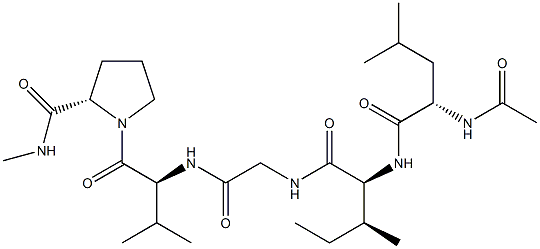
- 9007-58-3
- C27H48N6O6
- 552.70662
- All (0)
- China (0)
- (0)
- 9007-34-5
- 0
- All (14)
- China (1)
- (14)
- 9064-67-9
- C4H6N2O3R2.(C7H9N2O2R)n
- 0
- All (14)
- China (1)
- (14)
- 92113-31-0
- CO(NH2)2,Fe+++
- 0
- All (3)
- China (0)
- (3)
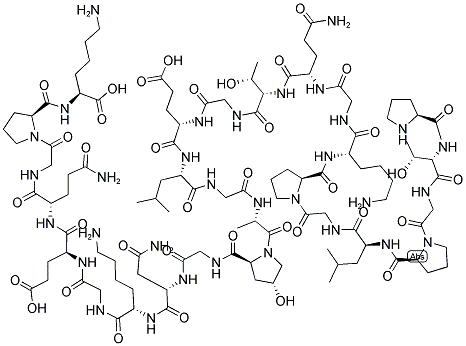
- 144703-90-2
- C106H174N32O37
- 2488.71
- All (0)
- China (0)
- (0)
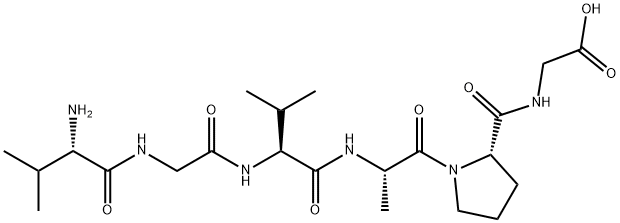
- 92899-39-3
- C22H38N6O7
- 498.57
- All (0)
- China (0)
- (0)
Related Products More >

- 92113-31-0
- Request For Quotation
- 25kg/Cardboard Drum
- 92113-31-0
- Request For Quotation
- 1g,50g,100g,1000g
- 92113-31-0
- Request For Quotation
- 92113-31-0
- Request For Quotation
- 25kg/drum
- 92113-31-0
- Request For Quotation
- 92113-31-0
- Request For Quotation
- 92113-31-0
- Request For Quotation
- 92113-31-0
- Request For Quotation
- 100g;1kg;25g


These peptides influence the structure of skin fibers by promoting the growth of new collagen and elastin fibers and improving their arrangement. Once absorbed into the body, they send signals to fibroblasts to ramp up protein production, resulting in a denser and more organized network of fibers. This stronger, better-structured matrix helps reduce sagging and makes the skin more resilient, able to bounce back after being stretched.
The time it takes to see visible improvements in skin elasticity from collagen varies, typically ranging from 4 to 12 weeks. This depends on factors like age, existing skin condition, and the dosage used, as the body needs time to generate new fibers and for these changes to become noticeable.
Hydrolyzed collagen is generally more effective for skin elasticity than other forms because its smaller molecular size allows for better absorption and delivery to the skin. Unlike larger collagen molecules, which may not be fully broken down, hydrolyzed peptides can reach the fibroblasts more easily to exert their effects.
Additionally, collagen can work alongside antioxidants to further boost skin elasticity. Antioxidants fight free radicals that damage collagen and elastin fibers, protecting the integrity of the skin’s structure.
How long it takes to see a difference varies, but it’s usually several weeks to months, since skin cells renew slowly. Hydrolyzed collagen might work better because its smaller peptide size makes them easier to absorb, so more can reach those fibroblasts. Pairing collagen with antioxidants might boost results too. Antioxidants fight off free radicals that break down skin fibers, so they help protect the new collagen and elastin that’s being made, letting the elasticity last longer.
From a molecular perspective, collagen peptides don't directly increase elastin production, but they may influence fibroblast behavior through signaling mechanisms. Fibroblasts produce both collagen and elastin, though their synthesis rates differ significantly. Type I and III collagen provide tensile strength, while elastin contributes to recoil. The TGF-β signaling pathway plays a crucial role here, as it regulates fibroblast activity and ECM production. Some in vitro studies suggest that collagen peptides can upregulate this pathway, potentially creating conditions favorable for both collagen and elastin maintenance, though direct elastin stimulation remains less well-documented.
The structural impact on skin fibers occurs through several mechanisms. When hydrolyzed collagen is absorbed (typically as peptides <3 kDa), it may stimulate fibroblasts to produce new collagen fibers, reinforcing the dermal matrix. This reinforcement improves resistance to deformation, contributing to perceived elasticity. Additionally, collagen peptides may downregulate MMPs, enzymes that degrade ECM components, thereby preserving existing collagen and elastin structures.
Clinical evidence indicates visible improvements typically require 4-12 weeks of consistent supplementation. A 2021 meta-analysis in the Journal of Cosmetic Dermatology analyzed 19 randomized controlled trials and found statistically significant increases in skin elasticity measures after 8 weeks of 5-10 g/day hydrolyzed collagen intake. The bioavailability of hydrolyzed forms is superior to intact collagen due to their reduced molecular weight, allowing for better gastrointestinal absorption and systemic distribution.
Antioxidants demonstrate synergistic effects with collagen supplementation. Vitamin C, for instance, is essential for collagen hydroxylation during synthesis. Oxidative stress accelerates ECM degradation, and compounds like polyphenols or astaxanthin may help mitigate this process. Some commercial formulations combine hydrolyzed collagen with antioxidant complexes specifically for this purpose.
This topic provides valuable teaching material for understanding protein biochemistry, ECM dynamics, and the challenges of translating in vitro findings to clinical outcomes. The interplay between different ECM components and the systemic effects of dietary supplements offer excellent case studies for biochemistry and nutrition courses.
The mechanism by which collagen peptides affect skin fibers involves signaling pathways that promote fibroblast proliferation and extracellular matrix remodeling. When consumed, these peptides are broken down into amino acids like glycine, proline, and hydroxyproline, which serve as building blocks for new collagen and elastin production. Additionally, they may upregulate the expression of genes involved in skin repair, leading to thicker dermal layers and improved elasticity over time.
Visible improvements in skin elasticity from collagen supplementation typically require consistent use over several weeks. Clinical studies suggest that noticeable changes, such as reduced wrinkles and increased skin firmness, often appear after 4 to 12 weeks of daily intake. The exact timeline varies depending on individual factors like age, diet, and overall skin health, with older individuals or those with significant collagen depletion potentially requiring longer supplementation periods.
Hydrolyzed collagen is generally considered more effective than other forms, such as gelatin or native collagen, due to its bioavailability. The hydrolysis process breaks down collagen into smaller peptides, making it easier for the body to absorb and utilize. Some studies indicate that hydrolyzed collagen can increase skin hydration and elasticity more efficiently than non-hydrolyzed forms, though results may differ based on the product's quality and dosage.
Combining collagen with antioxidants, such as vitamin C, may further enhance its benefits for skin elasticity. Antioxidants protect existing collagen and elastin from oxidative damage caused by free radicals, environmental pollutants, and UV exposure. Vitamin C, in particular, is essential for collagen synthesis, as it acts as a cofactor for enzymes involved in stabilizing collagen molecules. Thus, a synergistic approach—using collagen peptides alongside antioxidants—may yield better results than either supplement alone.
Other factors influencing collagen's effectiveness include dosage, consistency, and overall lifestyle. Higher daily doses (typically 10 grams or more) tend to show more pronounced effects, while smoking, excessive sun exposure, and poor nutrition can counteract the benefits. Regular exercise, adequate sleep, and a balanced diet further support collagen production and skin health.