


 Home
Home
When exploring the characteristics of ethylene glycol in terms of its compound properties, we can pose several related questions. What are its physical properties like melting point, boiling point, and solubility in water? Does its chemical structure, with two - OH groups attached to an ethylene backbone, influence how it reacts with other substances? For instance, how does it interact with acids or bases? Also, in industrial applications, how do these properties make it suitable for use in antifreeze or as a solvent? Are there any unique properties that set it apart from other similar compounds? Understanding these aspects will help us comprehensively understand ethylene glycol's compound characteristics.
What Exactly Are the Characteristics of Ethylene Glycol in Terms of Its Compound Properties?
Related Encyclopedia
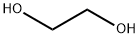
- 107-21-1
- C2H6O2
- 62.07
- All (551)
- China (111)
- (551)
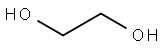
- 15054-86-1
- C2H6O2
- 62.07
- All (551)
- China (111)
- (551)
- 29928-00-5
- C72H146O37
- 1603.91000
- All (0)
- China (0)
- (0)
- 148571-67-9
- C2H4Cl4O2Ti
- 249.73100
- All (0)
- China (0)
- (0)
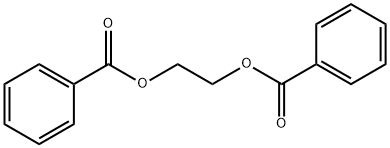
- 94-49-5
- C16H14O4
- 270.28
- All (0)
- China (0)
- (0)

- 67353-85-9
- C2H4O
- 44.05260
- All (0)
- China (0)
- (0)
- 60289-60-3
- C2H7BO4
- 105.88600
- All (0)
- China (0)
- (0)
- 108868-26-4
- C2H4D2O2
- 64.08020
- All (0)
- China (0)
- (0)
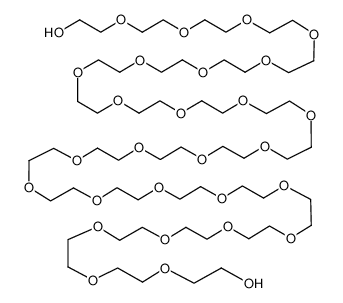
- 1053658-70-0
- C56H114O29
- 1251.49000
- All (0)
- China (0)
- (0)
- 864518-09-2
- C26H44O6
- 452.62400
- All (0)
- China (0)
- (0)
Related Products More >

- 143-24-8
- Request For Quotation
- 25322-68-3
- Request For Quotation
- 107-21-1
- CNY 15.0000
- 25kg
- 112-27-6
- CNY 10.0000
- 25kg
- 55589-62-3
- CNY 9.0000
- 25kg
- 26048-69-1
- CNY 5.0000
- 25kg
- 127-21-1
- CNY Request For Quotation
- 23601-40-3
- Request For Quotation
- 10g


Now, solubility. Ethylene glycol is highly soluble in water. This is because of those two - OH groups in its structure. These - OH groups can form hydrogen bonds with water molecules. So, when you mix ethylene glycol and water, they blend together really well.
Moving on to its chemical structure, with those two - OH groups attached to an ethylene backbone. This structure has a big impact on how it reacts with other substances. When it comes to acids, ethylene glycol can undergo esterification reactions. For example, if you react it with a carboxylic acid in the presence of a catalyst, you'll get an ester. This is an important reaction in the production of some polymers. With bases, ethylene glycol can also react. It can form salts in certain cases, especially when reacting with strong bases.
In industrial applications, ethylene glycol's properties make it a star in antifreeze. Its low melting point and high boiling point, along with its solubility in water, mean that when you mix it with water in a car's radiator, it lowers the freezing point of the water and raises its boiling point. This prevents the water in the radiator from freezing in cold weather or boiling over in hot weather. As a solvent, its ability to dissolve a wide range of substances, both polar and non - polar to some extent, makes it useful. It can dissolve things like dyes, resins, and some organic compounds, which is handy in industries like paint manufacturing.
Compared to other similar compounds, ethylene glycol has a few unique properties. One is its relatively high boiling point for a compound of its size. Also, the fact that it has two - OH groups gives it more hydrogen - bonding capabilities compared to compounds with only one - OH group. This affects its solubility and reactivity. So, all in all, understanding these physical and chemical properties helps us see why ethylene glycol is so useful in various industrial and everyday applications.
Speaking of its chemical structure, with two -OH (hydroxyl) groups attached to an ethylene backbone, it's quite reactive. The hydroxyl groups make it a polar molecule. When it comes to reacting with acids or bases, it can undergo various reactions. For example, with acids, it can form esters under certain conditions. With strong bases, it can undergo saponification - like reactions in the presence of heat.
In industrial applications, its properties make it very suitable for use in antifreeze. Its low freezing point (due to the hydrogen bonding between its molecules and water molecules) helps prevent the coolant in engines from freezing in cold weather. And its high boiling point means it can remain in a liquid state at relatively high temperatures, which is important for the proper functioning of the cooling system. As a solvent, its polarity allows it to dissolve a wide range of substances.
What sets ethylene glycol apart from other similar compounds is its combination of properties. Some compounds might have a low freezing point but a much lower boiling point, or vice versa. Also, its ability to form strong hydrogen bonds with water gives it an edge in applications where water - based solutions are required. It's also relatively non - volatile compared to some other solvents, which is beneficial in many industrial processes. Overall, these unique properties of ethylene glycol make it a very valuable compound in various industries.
Its structure, two hydroxys on an ethylene chain (HOCH₂CH₂OH), is key. Those -OH groups aren’t just for solubility; they’re reactive. Ethylene glycol acts as a weak acid—those hydroxys can lose protons (though not as eagerly as, say, acetic acid). It’s also got a lone pair on each oxygen, so it can accept protons from strong acids, making it amphoteric. But in most cases, it’s happier donating protons than snatching them.
In industry, its high boiling point and low freezing point make it antifreeze gold. When mixed with water, it lowers the freezing point way below what water alone can do, which is why your car’s coolant doesn’t turn into a block of ice in winter. It’s also a beast as a solvent. Its polarity and ability to dissolve both organic and inorganic stuff mean it’s used in inks, paints, and even brake fluids.
What sets it apart? Well, compared to other glycols like propylene glycol, ethylene glycol is smaller and has a lower viscosity, so it flows easier. But here’s the kicker: it’s way more toxic. Swallow it, and your body metabolizes it into stuff that’ll trash your kidneys. That’s a big red flag vs. similar compounds.
So, ethylene glycol’s a double-edged sword. Its physical traits and reactive -OH groups make it industrial magic, but its toxicity means you’ve gotta handle it with care. Its uniqueness lies in that dangerous combo of usefulness and poison—a chemical identity crisis if ever there was one.