Home
Home

1.Identification
1.1 GHS Product identifier
| Product name | camphor |
|---|
1.2 Other means of identification
| Product number | - |
|---|---|
| Other names | (1S,4S)-1,7,7-Trimethylbicyclo[2.2.1]heptan-2-one |
1.3 Recommended use of the chemical and restrictions on use
| Identified uses | For industry use only. Flavouring Agent: FLAVOURING_AGENT |
|---|---|
| Uses advised against | no data available |
1.4 Supplier's details
| Company | MOLBASE (Shanghai) Biotechnology Co., Ltd. |
|---|---|
| Address | Floor 4 & 5, Building 12, No. 1001 North Qinzhou Road, Xuhui District, Shanghai, China |
| Telephone | +86(21)64956998 |
| Fax | +86(21)54365166 |
1.5 Emergency phone number
| Emergency phone number | +86-400-6021-666 |
|---|---|
| Service hours | Monday to Friday, 9am-5pm (Standard time zone: UTC/GMT +8 hours). |
2.Hazard identification
2.1 Classification of the substance or mixture
Germ cell mutagenicity, Category 2
2.2 GHS label elements, including precautionary statements
| Pictogram(s) | 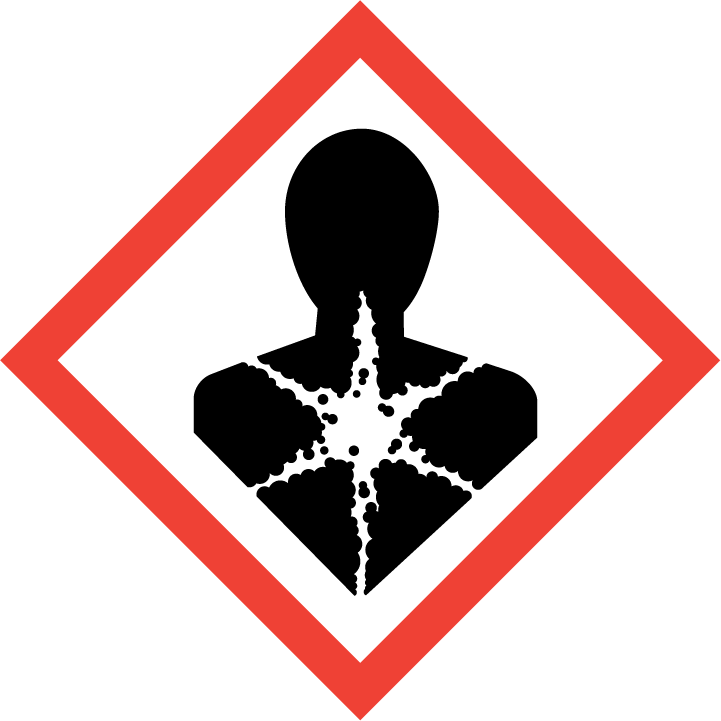 |
|---|---|
| Signal word | Warning |
| Hazard statement(s) | H341 Suspected of causing genetic defects |
| Precautionary statement(s) | |
| Prevention | P201 Obtain special instructions before use. P202 Do not handle until all safety precautions have been read and understood. P280 Wear protective gloves/protective clothing/eye protection/face protection. |
| Response | P308+P313 IF exposed or concerned: Get medical advice/ attention. |
| Storage | P405 Store locked up. |
| Disposal | P501 Dispose of contents/container to ... |
2.3 Other hazards which do not result in classification
none
3.Composition/information on ingredients
3.1 Substances
| Chemical name | Common names and synonyms | CAS number | EC number | Concentration |
|---|---|---|---|---|
| camphor | camphor | 464-48-2 | none | 100% |
4.First-aid measures
4.1 Description of necessary first-aid measures
General advice
Consult a physician. Show this safety data sheet to the doctor in attendance.
If inhaled
Fresh air, rest. Artificial respiration may be needed. Refer for medical attention.
In case of skin contact
Remove contaminated clothes. Rinse skin with plenty of water or shower.
In case of eye contact
First rinse with plenty of water for several minutes (remove contact lenses if easily possible), then refer for medical attention.
If swallowed
Rinse mouth. Give a slurry of activated charcoal in water to drink. Artificial respiration may be needed. Refer for medical attention .
4.2 Most important symptoms/effects, acute and delayed
SYMPTOMS: Ingestion of this compound may cause nausea, vomiting, vertigo, mental confusion, delirium, convulsions, coma, respiratory failure or death. It may also cause a burning sensation, coughing, wheezing, laryngitis, shortness of breath, headache, severe irritation and possible destruction to the tissues of the mucous membranes, upper respiratory tract, eyes and skin. Other symptoms may include congestion and edematous changes in the gastrointestinal tract, kidneys and brain. Ingestion may result in burning in the mouth and throat, epigastric pain, thirst, feeling of tension, dizziness, irrational behavior, unconsciousness, rigidity, rapid pulse, slow respiration, twitching of the facial muscles and muscular spasms. Other symptoms may include flickering, darkening or veiling of vision, noises in the ears and weakness. Exposure to this compound may also result in a feeling of warmth, depression of the central nervous system, difficult breathing, a characteristic breath odor and anuria. Colic may also be a symptom of exposure. Other symptoms may include eye irritation, sore throat, excitement, fever, bluish lips, pale face, loss of sense of smell and agitation. ACUTE/CHRONIC HAZARDS: When heated to decomposition this compound emits toxic fumes of carbon monoxide and carbon dioxide. It is harmful if swallowed, inhaled or absorbed through the skin. It can be absorbed through mucous membranes.
Within 5 to 90 minutes after swallowing, the following may be noted: nausea and vomiting; feeling of warmth; headache; confusion, vertigo, excitement, restlessness, delirium, and hallucinations; increased muscular excitability, tremors, and jerky movements; epileptiform convulsions, followed by depression (convulsions sometimes occur early in the syndrome and may be severe, but they do not have the grave prognosis of strychnine convulsions); coma; central nervous depression may at times be the primary clinical response; death results from respiratory failure or from status epilepticus; slow convalescence (days or weeks), often with persistent gastric distress. (USCG, 1999)
Excerpt from ERG Guide 133 [Flammable Solids]: Fire may produce irritating and/or toxic gases. Contact may cause burns to skin and eyes. Contact with molten substance may cause severe burns to skin and eyes. Runoff from fire control may cause pollution. (ERG, 2016)
4.3 Indication of immediate medical attention and special treatment needed, if necessary
Treatment of camphor intoxication is primarily supportive with a focus on airway management and seizure control. No antidotes are available. Activated charcoal should be administered for gastrointestinal decontamination, although its efficacy is doubtful. Due to prominent CNS effects, the induction of emesis is contraindicated. If liquid camphor is ingested, a nasogastric tube can be used to aspirate gastric contents before instillation of activated charcoal. Alcohols and oil solutions should be avoided because they have been reported to enhance absorption of camphor. Although not readily available, lipid hemodialysis and resin hemoperfusion have been reported to lower blood camphor concentrations in severely poisoned patients. Benzodiazepines such as lorazepam or diazepam are indicated for symptoms of CNS hyperactivity, such as agitation, tremors, and seizures. Phenobarbital can be used for recurrent or prolonged seizures.
5.Fire-fighting measures
5.1 Extinguishing media
Suitable extinguishing media
To fight fire, use foam, carbon dioxide, dry chemical
5.2 Specific hazards arising from the chemical
This chemical is flammable.
Behavior in Fire: The solid often evaporates without first melting. (USCG, 1999)
Excerpt from ERG Guide 133 [Flammable Solids]: Flammable/combustible material. May be ignited by friction, heat, sparks or flames. Some may burn rapidly with flare-burning effect. Powders, dusts, shavings, borings, turnings or cuttings may explode or burn with explosive violence. Substance may be transported in a molten form at a temperature that may be above its flash point. May re-ignite after fire is extinguished. (ERG, 2016)
5.3 Special protective actions for fire-fighters
Wear self-contained breathing apparatus for firefighting if necessary.
6.Accidental release measures
6.1 Personal precautions, protective equipment and emergency procedures
Use personal protective equipment. Avoid dust formation. Avoid breathing vapours, mist or gas. Ensure adequate ventilation. Evacuate personnel to safe areas. Avoid breathing dust. For personal protection see section 8.
6.2 Environmental precautions
Personal protection: filter respirator for organic gases and particulates adapted to the airborne concentration of the substance. Ventilation. Remove all ignition sources. Sweep spilled substance into covered containers. If appropriate, moisten first to prevent dusting.
6.3 Methods and materials for containment and cleaning up
Methods and materials for containment and cleaning up: sweep up and shovel. Contain spillage, and then collect with an electrically protected vacuum cleaner or by wet-brushing and place in container for disposal according to local regulation... Keep in suitable, closed containers for disposal...
7.Handling and storage
7.1 Precautions for safe handling
Avoid contact with skin and eyes. Avoid formation of dust and aerosols. Avoid exposure - obtain special instructions before use.Provide appropriate exhaust ventilation at places where dust is formed. For precautions see section 2.2.
7.2 Conditions for safe storage, including any incompatibilities
Separated from strong oxidants, strong reducing agents, chlorinated solvents and food and feedstuffs. Well closed. Ventilation along the floor.Conditions for safe storage, including any incompatibilities: keep container tightly closed in a dry and well-ventilated place.
8.Exposure controls/personal protection
8.1 Control parameters
Occupational Exposure limit values
Recommended Exposure Limit: 10 Hour Time-Weighted Average: 2 mg/cu m.
Biological limit values
no data available
8.2 Appropriate engineering controls
Handle in accordance with good industrial hygiene and safety practice. Wash hands before breaks and at the end of workday.
8.3 Individual protection measures, such as personal protective equipment (PPE)
Eye/face protection
Safety glasses with side-shields conforming to EN166. Use equipment for eye protection tested and approved under appropriate government standards such as NIOSH (US) or EN 166(EU).
Skin protection
Wear impervious clothing. The type of protective equipment must be selected according to the concentration and amount of the dangerous substance at the specific workplace. Handle with gloves. Gloves must be inspected prior to use. Use proper glove removal technique(without touching glove's outer surface) to avoid skin contact with this product. Dispose of contaminated gloves after use in accordance with applicable laws and good laboratory practices. Wash and dry hands. The selected protective gloves have to satisfy the specifications of EU Directive 89/686/EEC and the standard EN 374 derived from it.
Respiratory protection
Wear dust mask when handling large quantities.
Thermal hazards
no data available
9.Physical and chemical properties
| Physical state | white crystals |
|---|---|
| Colour | Colorless or white crystals, granules, or crystalline masses; or as colorless to white, translucent, tough masses |
| Odour | Fragrant and penetrating odor |
| Melting point/ freezing point | 174°C(lit.) |
| Boiling point or initial boiling point and boiling range | 129°C/15mmHg(lit.) |
| Flammability | Combustible SolidCombustible. Gives off irritating or toxic fumes (or gases) in a fire. |
| Lower and upper explosion limit / flammability limit | Lower flammable limit: 0.6% by volume; Upper flammable limit: 3.5% by volume |
| Flash point | 65°C |
| Auto-ignition temperature | 466.11°C |
| Decomposition temperature | no data available |
| pH | no data available |
| Kinematic viscosity | no data available |
| Solubility | 1 g/800 mL at 25°C |
| Partition coefficient n-octanol/water (log value) | no data available |
| Vapour pressure | 0.225mmHg at 25°C |
| Density and/or relative density | 0.982 g/cm3 |
| Relative vapour density | 5.24 (Relative to Air) |
| Particle characteristics | no data available |
10.Stability and reactivity
10.1 Reactivity
no data available
10.2 Chemical stability
Stable under recommended storage conditions.
10.3 Possibility of hazardous reactions
Evolves flammable and explosive vapors when heated.Dust explosion possible if in powder or granular form, mixed with air.L-CAMPHOR may be sensitive to heat and direct sunlight. Incompatible with strong oxidizing agents, strong reducing agents and chlorinated solvents. Also incompatible with potassium permanganate. Salts of any kind should not be added to it in water. Reacts violently with chromic anhydride .
10.4 Conditions to avoid
no data available
10.5 Incompatible materials
Reacts violently with ...strong reducing agents and chlorinated solvents, causing fire and explosion hazard.
10.6 Hazardous decomposition products
The substance decomposes on burning producing toxic gases and irritating fumes.
11.Toxicological information
Acute toxicity
- Oral: LD50 Mouse oral 1310 mg/kg
- Inhalation: no data available
- Dermal: no data available
Skin corrosion/irritation
no data available
Serious eye damage/irritation
no data available
Respiratory or skin sensitization
no data available
Germ cell mutagenicity
no data available
Carcinogenicity
A4; Not classifiable as a human carcinogen. /Camphor, synthetic/
Reproductive toxicity
no data available
STOT-single exposure
no data available
STOT-repeated exposure
no data available
Aspiration hazard
no data available
12.Ecological information
12.1 Toxicity
- Toxicity to fish: LC50; Species: Pimephales promelas (Fathead minnow); Conditions: static bioassay; Concentration: 145 mg/L for 1 hr; 112 mg/L/24 hr; 111 mg/L/48 hr; 110 mg/L/72 hr; 110 mg/L/96 hr
- Toxicity to daphnia and other aquatic invertebrates: no data available
- Toxicity to algae: no data available
- Toxicity to microorganisms: no data available
12.2 Persistence and degradability
AEROBIC: Camphor, at an influent concentration of 4.08 mg/L, was degraded to below detection limits (not specified) during a 20 hour aeration period in an aerobic activated sludge system(1). Camphor did not concentrate in the activated sludge solids. However, the loss of camphor in this process cannot be definitely attributed to biodegradation since there may have been loss due to volatilization(1). Monoterpine ketones were more resistant to biodegradation in aerated lagoon samples than monoterpine hydrocarbons or alcohols(2). The concentration of camphor actually increased in some of the samples which suggests that camphor was being produced in the lagoon. Camphor was on the list of very difficult to biodegrade compounds in a study of organic chemicals found in effluents(3). Camphor, present at 100 mg/L, reached 94% of its theoretical BOD in 4 weeks using an activated sludge inoculum at 30 mg/L in the Japanese MITI test which classified the compound as readily biodegradable(4).
12.3 Bioaccumulative potential
An estimated BCF of 17 was calculated in fish for camphor(SRC), using a measured log Kow of 2.38(1) and a regression-derived equation(2). According to a classification scheme(2), this BCF suggests the potential for bioconcentration in aquatic organisms is low(SRC).
12.4 Mobility in soil
Using a structure estimation method based on molecular connectivity indices(1), the Koc of camphor can be estimated to be 117(SRC). According to a classification scheme(2), this estimated Koc value suggests that camphor is expected to have high mobility in soil.
12.5 Other adverse effects
no data available
13.Disposal considerations
13.1 Disposal methods
Product
The material can be disposed of by removal to a licensed chemical destruction plant or by controlled incineration with flue gas scrubbing. Do not contaminate water, foodstuffs, feed or seed by storage or disposal. Do not discharge to sewer systems.
Contaminated packaging
Containers can be triply rinsed (or equivalent) and offered for recycling or reconditioning. Alternatively, the packaging can be punctured to make it unusable for other purposes and then be disposed of in a sanitary landfill. Controlled incineration with flue gas scrubbing is possible for combustible packaging materials.
14.Transport information
14.1 UN Number
| ADR/RID: UN2717 | IMDG: UN2717 | IATA: UN2717 |
14.2 UN Proper Shipping Name
| ADR/RID: CAMPHOR, synthetic |
| IMDG: CAMPHOR, synthetic |
| IATA: CAMPHOR, synthetic |
14.3 Transport hazard class(es)
| ADR/RID: 4.1 | IMDG: 4.1 | IATA: 4.1 |
14.4 Packing group, if applicable
| ADR/RID: III | IMDG: III | IATA: III |
14.5 Environmental hazards
| ADR/RID: no | IMDG: no | IATA: no |
14.6 Special precautions for user
no data available
14.7 Transport in bulk according to Annex II of MARPOL 73/78 and the IBC Code
no data available
15.Regulatory information
15.1 Safety, health and environmental regulations specific for the product in question
| Chemical name | Common names and synonyms | CAS number | EC number |
|---|---|---|---|
| camphor | camphor | 464-48-2 | none |
| European Inventory of Existing Commercial Chemical Substances (EINECS) | Listed. | ||
| EC Inventory | Listed. | ||
| United States Toxic Substances Control Act (TSCA) Inventory | Listed. | ||
| China Catalog of Hazardous chemicals 2015 | Not Listed. | ||
| New Zealand Inventory of Chemicals (NZIoC) | Listed. | ||
| Philippines Inventory of Chemicals and Chemical Substances (PICCS) | Listed. | ||
| Vietnam National Chemical Inventory | Listed. | ||
| Chinese Chemical Inventory of Existing Chemical Substances (China IECSC) | Not Listed. | ||
16.Other information
Information on revision
| Creation Date | Aug 11, 2017 |
|---|---|
| Revision Date | Aug 11, 2017 |
Abbreviations and acronyms
- CAS: Chemical Abstracts Service
- ADR: European Agreement concerning the International Carriage of Dangerous Goods by Road
- RID: Regulation concerning the International Carriage of Dangerous Goods by Rail
- IMDG: International Maritime Dangerous Goods
- IATA: International Air Transportation Association
- TWA: Time Weighted Average
- STEL: Short term exposure limit
- LC50: Lethal Concentration 50%
- LD50: Lethal Dose 50%
- EC50: Effective Concentration 50%
References
- IPCS - The International Chemical Safety Cards (ICSC), website: http://www.ilo.org/dyn/icsc/showcard.home
- HSDB - Hazardous Substances Data Bank, website: https://toxnet.nlm.nih.gov/newtoxnet/hsdb.htm
- IARC - International Agency for Research on Cancer, website: http://www.iarc.fr/
- eChemPortal - The Global Portal to Information on Chemical Substances by OECD, website: http://www.echemportal.org/echemportal/index?pageID=0&request_locale=en
- CAMEO Chemicals, website: http://cameochemicals.noaa.gov/search/simple
- ChemIDplus, website: http://chem.sis.nlm.nih.gov/chemidplus/chemidlite.jsp
- ERG - Emergency Response Guidebook by U.S. Department of Transportation, website: http://www.phmsa.dot.gov/hazmat/library/erg
- Germany GESTIS-database on hazard substance, website: http://www.dguv.de/ifa/gestis/gestis-stoffdatenbank/index-2.jsp
- ECHA - European Chemicals Agency, website: https://echa.europa.eu/