


 Home
Home
If helium is known as the most chemically inert element, could it actually bond with fluorine under certain conditions? I came across information suggesting that at pressures about 10 times greater than those at Earth’s core, a compound called He₃F₂ might form, where helium atoms create polar covalent bonds with fluorine. How could extreme pressure make this possible, and what does it mean for our understanding of noble gases? Could such compounds really exist deep inside giant planets?
Can Helium Really Form Bonds with Fluorine Under Extreme Pressure?
Related Encyclopedia

- 14762-94-8
- F
- 18.99840
- All (0)
- China (0)
- (0)
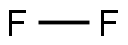
- 7782-41-4
- F2
- 38
- All (0)
- China (0)
- (0)

- 12596-22-4
- He3+
- 12.00780
- All (2)
- China (2)
- (2)

- 71086-78-7
- He2
- 4.00260
- All (2)
- China (2)
- (2)

- 7440-59-7
- He
- 4
- All (2)
- China (2)
- (2)
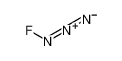
- 14986-60-8
- FN3
- 61.01850
- All (0)
- China (0)
- (0)

- 14701-13-4
- F+
- 18.99840
- All (0)
- China (0)
- (0)
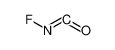
- 42088-15-3
- CFNO
- 61.01520
- All (0)
- China (0)
- (0)
- 83620-44-4
- CFNS
- 77.08080
- All (0)
- China (0)
- (0)
- 67249-89-2
- CFNO
- 61.01520
- All (0)
- China (0)
- (0)
Related Products More >

- 82419-35-0
- Request For Quotation
- 82419-35-0
- Request For Quotation
- 82419-35-0
- Request For Quotation
- 80-62-6
- Request For Quotation
- 7440-59-7
- Request For Quotation
- High pressure Cylinder
- 52623-00-4
- Request For Quotation
- Bottle,barrel,cargo,container,etc.
- 3952-78-1
- Request For Quotation
- 3952-78-1
- Request For Quotation


This challenges the long - held view of noble gas inertness. Unlike heavier noble gases like xenon, which can form various fluorides under non - ambient conditions, helium compounds are extremely rare and unstable under normal circumstances. The formation of He₃F₂ implies that in the high - pressure interiors of giant planets, similar helium - containing compounds may exist, altering our understanding of planetary composition and chemistry.
In professional fields, this is crucial for planetary science and high - pressure chemistry. It helps in modeling the internal structures and chemical processes of giant planets. A potential misunderstanding is that all noble gases have similar reactivity under pressure. In fact, the reactivity varies greatly among them, depending on factors like atomic size and electron configuration. This new finding expands the boundaries of chemical bonding theory and encourages further exploration of high - pressure chemical reactions.
This challenges the traditional view of noble gases as chemically unreactive. While heavier noble gases like xenon form fluorides under less extreme conditions, helium’s reactivity under such pressure expands our understanding of chemical bonding—showing that even the most inert elements can participate in bonding when atomic orbitals are forced into overlap by intense pressure.
Such compounds could exist in the interiors of giant planets, where extreme pressures are naturally present. Though lab synthesis is limited to specialized facilities, this insight bridges planetary science and chemistry, revealing how environmental conditions redefine elemental behavior. It underscores that chemical reactivity is not absolute but depends on external factors like pressure, opening new avenues for studying extreme-state chemistry.