


 Home
Home
Hi, I'd like to ask—what types of pigments or dyes work best for coloring epoxy resin? Can I use titanium dioxide to make epoxy resin white? How much pigment paste should be added to a liter of epoxy resin? Will adding too many colorants make the epoxy resin difficult to cure? How to mix colorants with epoxy resin to avoid streaks? Thanks!
How to color epoxy resin evenly with suitable colorants?
Related Encyclopedia
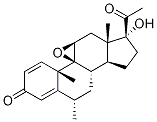
- 83873-16-9
- C22H28O4
- 356.46
- All (0)
- China (0)
- (0)

- 13463-67-7
- TiO2
- 79.8658
- All (639)
- China (108)
- (639)

- 1317-70-0
- O2Ti
- 79.87
- All (639)
- China (108)
- (639)
- 71135-14-3
- O2Ti
- 79.94670
- All (639)
- China (108)
- (639)
- 156915-13-8
- N2O2Ti
- 107.87900
- All (0)
- China (0)
- (0)
- 129316-41-2
- O2Ti+
- 79.86580
- All (0)
- China (0)
- (0)
- 309250-07-5
- O12Ti6
- 479.19500
- All (0)
- China (0)
- (0)
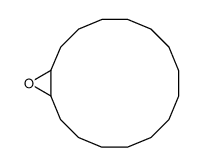
- 287-09-2
- C16H30O
- 238.40900
- All (0)
- China (0)
- (0)
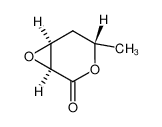
- 10299-24-8
- C6H8O3
- 128.12600
- All (0)
- China (0)
- (0)
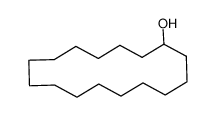
- 2565-90-4
- C16H32O
- 240.42500
- All (0)
- China (0)
- (0)
Related Products More >

- CNY Request For Quotation
- CNY Request For Quotation
- CNY Request For Quotation
- CNY Request For Quotation
- CNY Request For Quotation
- CNY Request For Quotation
- CNY Request For Quotation
- CNY Request For Quotation


Gasoline, a flammable liquid, when its vapor mixes with air in a certain proportion, can burn quickly or even explode when exposed to a small flame. When wood burns, it releases gases such as carbon monoxide and carbon dioxide. Carbon monoxide is toxic, and in enclosed spaces, its accumulation can easily cause people to become unconscious or even lose their lives.
Different combustion scenarios require different responses. For liquid fires, do not directly use water to put them out. Since water is denser than many liquids, it will sink to the bottom, which may spread the liquid and intensify the fire. Using a dry powder fire extinguisher is more appropriate here. Its powder can cover the liquid surface, isolating oxygen and thus extinguishing the fire.
In daily life, maintaining good ventilation can reduce the accumulation of flammable gases and lower the risk of explosion. Regularly checking the wires and connectors of electrical equipment can prevent fires caused by electric sparks from short circuits. Understanding this knowledge related to combustion allows us to take correct measures when accidents occur, minimizing losses as much as possible.
The amount of pigment paste added to epoxy resin should be carefully measured to prevent issues with curing. Typically, no more than 10% pigment by volume is recommended. This guideline helps ensure that the resin maintains its ability to cure properly. Adding excessive amounts of colorants can interfere with the chemical reactions necessary for curing, resulting in a sticky or incomplete cure., Therefore it is advisable to start with a small amount of pigment and gradually increase until the desired color intensity is achieved.
To mix colorants with epoxy resin effectively and avoid streaks, a systematic approach is necessary. First, the epoxy resin should be mixed according to the manufacturer's instructions, ensuring that the resin and hardener are thoroughly combined. Once the resin is ready, the colorant can be added slowly. For liquid pigments or pastes, it is best to stir them into the resin gently but thoroughly. This helps to distribute the color evenly and prevents streaks. If using powder pigments, sifting them through a fine mesh before adding them to the resin can help prevent clumping. After mixing, allowing the resin to sit for a few minutes can help any air bubbles rise to the surface, ensuring a smoother finish.
In addition to these considerations, it is important to note that different pigments and dyes may have varying effects on the viscosity and curing time of the epoxy resin. Therefore, it is always a good practice to perform a small test batch before starting a larger project. This allows for adjustments to be made if necessary, ensuring the best possible outcome.
Titanium dioxide can successfully turn epoxy resin white when used correctly. It is widely employed in industrial and artistic applications for its excellent opacity. The key is to use a form of titanium dioxide that is compatible with epoxy chemistry, typically labeled as a pigment additive for resins. Regular paint-grade titanium dioxide often contains additives that interfere with epoxy curing, leading to incomplete hardening or surface defects. When using titanium dioxide, it is best to pre-mix it into a small amount of resin to create a uniform paste before incorporating it into the full batch. This prevents clumping and ensures even color distribution.
The amount of pigment paste to add to a liter of epoxy resin should generally stay within 1-3% of the total resin weight. For a standard 1-liter mix (approximately 1.1 kg or 2.4 lbs of resin), this translates to roughly 11-33 grams of pigment. Exceeding this range can lead to problems such as thickening, extended curing times, or weakened mechanical properties. Titanium dioxide may require slightly less, around 2-5% by weight, to achieve full opacity without overloading the resin. Always check the manufacturer’s guidelines, as different pigments have varying densities and mixing requirements.
Adding excessive colorants can interfere with epoxy curing, particularly if the pigments are oil-based, water-containing, or poorly dispersed. Some pigments absorb UV light, which may cause yellowing over time. Water-based dyes should be avoided entirely because moisture disrupts the epoxy’s chemical reaction, leading to tacky or uncured spots. To prevent curing issues, use only epoxy-compatible pigments and ensure thorough mixing to distribute the color evenly without introducing air bubbles.
To mix colorants without streaks, start by thoroughly blending the epoxy resin before adding pigments. Gradually incorporate the pigment while scraping the container’s sides and bottom to ensure uniform distribution. For large batches, a high-shear mixer helps achieve consistency, while small amounts can be mixed by hand with careful attention. Testing the mix by spreading a small sample can reveal any unevenness. If streaks appear, mix longer or adjust the pigment amount slightly. Pre-mixing titanium dioxide into a resin slurry before adding it to the main batch helps avoid clumping and ensures smooth color integration.
Enzymes in the Calvin cycle, like RuBisCO, catalyze reactions that stitch carbon atoms into sugar molecules. It’s fascinating how these biological machines operate with such efficiency, even in varying light and temperature conditions. Small changes, like a drop in CO2 levels, can slow the cycle, showing how sensitive these chemical steps are to environmental shifts.
Studying this, one sees how chemistry drives life’s most fundamental processes. The way light energy transforms into food energy isn’t just a biological fact—it’s a series of intricate chemical reactions, each dependent on the right molecules and conditions aligning perfectly.