


 Home
Home
Hello, may I ask about the engineering and artistic considerations for creating functional resin dominoes?
What mold designs (e.g., silicone slab molds with precision cavities) ensure uniform domino thickness and sharp edges? How does mold material flexibility impact demolding and detail replication?
Why must density modifiers (e.g., glass microspheres, metal powders) be carefully calibrated? Could you explain how filler-to-resin ratios affect toppling kinematics and stack stability?
How can multi-stage polishing (e.g., wet sanding up to 3000 grit, diamond paste buffing) achieve a friction-optimized surface? Are there clear-coat formulations that enhance glide without compromising durability?
How to Make Resin Dominoes? Mold Design, Weight Balance & Surface Smoothing
Related Encyclopedia
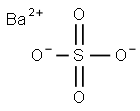
- 7727-43-7
- BaO4S
- 233.39
- All (261)
- China (18)
- (261)
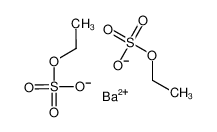
- 6509-22-4
- C4H10BaO8S2
- 387.57400
- All (0)
- China (0)
- (0)
- 130277-73-5
- C43H58BaO13S2
- 984.37000
- All (0)
- China (0)
- (0)
Related Products More >

- 13462-86-7
- Request For Quotation
- 100kg
- 13462-86-7
- Request For Quotation
- 1kg
- 13462-86-7
- Request For Quotation
- 1ton
- 13462-86-7
- Request For Quotation
- 25kg
- 13462-86-7
- Request For Quotation
- 25kg
- 13462-86-7
- Request For Quotation
- 1ton
- 13462-86-7
- Request For Quotation
- 25kg
- 13462-86-7
- Request For Quotation
- 1ton


1. Optimal Mold Design for Resin Dominoes
Geometric Specifications:
Standard domino dimensions: 45mm×28mm×6mm; mold cavities with 0.1mm tolerance for uniform size.
Incorporate recessed pips (1.5mm diameter, 0.5mm depth) for dot impressions; use 3D-printed ABS masters for accuracy.
Material Selection:
Platinum-cure silicone (Shore A 30) for molds; releases easily after curing, maintains detail over 100+ uses.
Add registration keys (10mm×5mm tabs) to two-part molds for precise alignment during casting.
2. Ensuring Weight & Balance in Dominoes
Material Homogeneity:
Mix resin with 5–10% barium sulfate filler (density 4.5g/cm³) to increase weight (standard domino ~25g). Stir at 200rpm for 3 minutes to prevent settling.
Casting Technique:
Pour resin into molds at 45° angle to eliminate air pockets; vibrate gently (50Hz) for 10 seconds to compact material.
Post-Cure Adjustment:
Drill 0.5mm holes in heavy ends (if unbalanced); fill with lead shot (density 11.3g/cm³) and seal with resin.
3. Achieving Smooth Surface Finishes
Abrasive Processing Stages:
600-grit wet sandpaper to remove mold lines; use circular motions (water lubrication reduces dust).
1200-grit sanding for submicron roughness (Ra <1μm); switch to linear strokes.
Diamond polishing compound (1μm) applied with a buffing wheel (1500rpm) for 镜面效果.
Protective Coatings:
Apply 2–3μm polyurethane topcoat; cures at 25°C for 24h, enhancing scratch resistance (pencil hardness 2H).
Scientific Basis:
Dominoes must adhere to standard size (1.5"×2.5"×0.75") for game compatibility
Mold must account for resin shrinkage (typically 2-3% during curing)
Parting lines should align with domino's natural divide line
Three Critical Compound Tags:
PDMS (Polydimethylsiloxane) - High-precision silicone mold material with 0.01mm tolerance
Epoxy Resin (e.g., ArtResin) - Low-viscosity resin ideal for detailed molding
Mold Release Agent (e.g., Ease Release 200) - Prevents resin adhesion during demolding
Mold Design Essentials:
Two-Part Construction: Upper/lower halves with precise alignment pins
Registration Marks: Ensures consistent parting line positioning
Vent Channels: Prevents air bubble trapping at domino edges
2. Ensuring Proper Weight and Balance
Critical Factors:
Material Density Control: Mix resin at exact ratio (typically 1:1 by volume)
Internal Weighting: Add metal inserts (brass/copper) for consistent 10-12g weight
Balance Testing: Spin test verifies center of gravity alignment
Practical Methods:
Digital Scale Calibration: Weigh each domino to ±0.1g tolerance
Water Displacement Method: Verifies volume consistency (should displace ~4.5ml)
Gyroscopic Testing: Detects minute imbalance during rotation
Weight Distribution Formula:
txt
复制
Total Weight = Resin Mass + Insert Mass
Optimal CG Position = 45% from playing surface edge
3. Achieving Mirror-Like Surface Finish
Surface Treatment Techniques:
Pre-Polish Preparation: Sand with progressively finer grits (400→1500→3000)
Chemical Smoothing: Isopropyl alcohol wipe removes micro-scratches
Final Polishing: Use polyurethane-based polishing compound (e.g., Meguiar's M105)
Compound-Specific Recommendations:
Compound Particle Size Application Stage
Diamond Paste 1μm 0.001mm Final polishing
Colloidal Silica 0.01μm Intermediate stage
Micro-Mesh Abrasives 8000 grit Pre-polish
Advanced Methods:
UV Curing Enhancement: Post-cure under 405nm light for additional hardness
Vapor Smoothing: Acetone vapor treatment for ABS-like finish (limited to certain resins)
Quality Control:
Light Table Inspection: Reveals surface imperfections under 365nm UV light
Contact Angle Measurement: >110° indicates hydrophobic smooth surface
Friction Testing: 0.3-0.5μ static coefficient ensures proper sliding
1. **Prepare Your Materials:** Gather all necessary supplies including clear casting resin, pigment or dye for coloring (optional), molds shaped like domino tiles, stir sticks, measuring cups, and any decorative elements such as glitter, dried flowers, or small objects. You’ll also need to ensure you have proper safety gear like gloves and masks.
2. **Design the Molds:** If using pre-made molds, ensure they are clean and free of dust. For a custom design, you may need to create your own mold using silicone mold-making materials. Remember to include indentations for the dots on each domino tile.
3. **Mix the Resin:** Following the manufacturer's instructions, mix the resin and hardener in the recommended ratio. Add pigments or dyes if you wish to color the resin. Mix thoroughly but gently to avoid introducing air bubbles.
4. **Embed Decorative Elements:** Place your chosen decorations into the mold cavities before pouring the resin. This could be anything from colored pigments to metallic foils or small charms. Pour the mixed resin slowly over these items until they are fully covered.
5. **Remove Air Bubbles:** Use a heat gun or a torch lighter briefly over the surface to remove any air bubbles trapped in the resin. This step ensures a smooth, professional finish.
6. **Curing Process:** Allow the resin to cure according to the product guidelines, typically at least 24 hours. Ensure the molds are placed on a level surface in a dust-free environment during curing.
7. **Finishing Touches:** Once cured, carefully demold your domino pieces. Sand any rough edges with fine-grit sandpaper if necessary. Apply paint or markers to add dots to each piece.
**Applications and Examples:**
Resin dominoes find applications in both personal and commercial projects. Artists and crafters often use this technique to create bespoke game sets for sale or as personalized gifts. In educational settings, handmade resin dominoes can serve as engaging tools for teaching counting and matching skills. Customized dominoes with unique designs or embedded elements can also be used in home decor, showcasing personal style or interests. Understanding how to make resin dominoes opens up possibilities for creativity and personalization, making each set one-of-a-kind.