


 Home
Home
Hello, may I ask about the flow characteristics and viscosity control of active (uncured) resin systems?
What conditions (e.g., elevated temperature, shear stress during mixing) induce flow in active resins, and how does their thixotropic or Newtonian behavior dictate application methods?
Why is viscosity modulation critical for processing? Could you explain how additives (fillers, diluents) or temperature adjustments achieve optimal flow for brushing, pouring, or injection?
How do resin chemistry (epoxy vs. polyester) and environmental factors (humidity, pot life) dynamically affect viscosity during use? Are there real-time monitoring techniques?
Can Living Resin Flow? Unlocking the Secrets of Bio-Resin Behavior
Related Encyclopedia
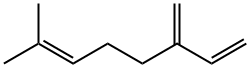
- 123-35-3
- C10H16
- 136.23
- All (30)
- China (17)
- (30)
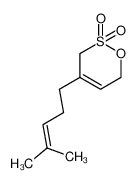
- 71320-36-0
- C10H16O3S
- 216.29700
- All (0)
- China (0)
- (0)
- 6874-41-5
- C10H18
- 138.25000
- All (0)
- China (0)
- (0)
- 1375952-47-8
- C12H16O6
- 256.25200
- All (0)
- China (0)
- (0)
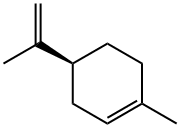
- 5989-54-8
- C10H16
- 136.23
- All (0)
- China (0)
- (0)
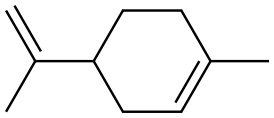
- 138-86-3
- C10H16
- 136.23
- All (0)
- China (0)
- (0)
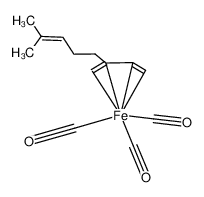
- 33434-20-7
- C13H11FeO3
- 271.07000
- All (0)
- China (0)
- (0)
- 75107-40-3
- C10H16Br2
- 296.04200
- All (0)
- China (0)
- (0)
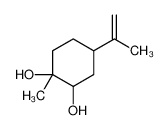
- 1946-00-5
- C10H18O2
- 170.24900
- All (0)
- China (0)
- (0)
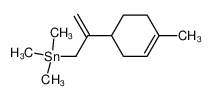
- 105631-50-3
- C13H24Sn
- 299.03100
- All (0)
- China (0)
- (0)
Related Products More >

- CNY Request For Quotation
- CNY Request For Quotation
- 96-08-2
- Request For Quotation
- 25kg drum
- 91770-81-9
- Request For Quotation
- 25kg/Drum
- 6909-30-4
- Request For Quotation
- 65996-99-8
- Request For Quotation
- 5989-54-8
- Request For Quotation
- Bottle,barrel,cargo,container,etc.
- 5989-27-5
- Request For Quotation
- 25kg/Drum


1. Conditions Enabling Live Resin Flow
Temperature Dependence:
Above 25°C, live resin (typically 5,000–50,000 cP) becomes pourable; at 40°C, viscosity drops by 50%.
Below 15°C, it stiffens into a non-flowing semisolid (100,000+ cP).
Terpene Content:
Higher terpene levels (e.g., limonene, myrcene) lower viscosity; 20% terpenes reduce flow resistance by 30%.
2. Controlling Live Resin 流动性 (Flowability)
Temperature Manipulation:
Use heated work surfaces (30–35°C) to maintain pourability for dabbing.
Chill to 5–10°C to thicken for syringe dispensing (viscosity increases 2–3x).
Additive Modifiers:
Mix with food-grade terpenes (5–10%) to thin consistency; avoid solvents like ethanol (risk residual toxicity).
3. Factors Influencing Live Resin Viscosity
Extraction Method:
CO₂ extraction yields lower viscosity (10,000–20,000 cP) vs butane extraction (30,000–50,000 cP).
Cannabinoid Concentration:
Higher THC/CBD content (70–90%) increases viscosity; each 10% rise adds ~15,000 cP.
Water Content:
Trapped moisture (>1%) causes viscosity spikes; proper curing reduces H₂O to <0.5% for stable flow.
Why Does Living Resin Flow?
Living resin flows when:
Temperature Rises – Heat softens the resin by breaking weak molecular bonds (e.g., pine sap becomes liquid in summer).
Freshly Harvested – Newly tapped resin is more fluid due to higher moisture and volatile content.
Mechanical Stress – Pressure (e.g., squeezing or cutting bark) forces resin to ooze out.
However, it solidifies when cooled or exposed to air as solvents evaporate and polymerization begins.
How to Control Living Resin’s Flow for Practical Use?
Temperature Management: Warm resin for application (e.g., using a water bath at 40–60°C), then cool to set.
Solvent Addition: Dilute with ethanol or citrus terpenes to reduce viscosity temporarily.
Shear Thinning: Stirring or brushing can temporarily lower viscosity for easier spreading.
What Factors Affect Living Resin’s Viscosity?
Water Content – Higher moisture = lower viscosity (e.g., fresh sap vs. aged resin).
Terpene Concentration – Monoterpenes (like pinene) act as natural thinners.
Oxidation State – Older resin polymerizes and thickens over time.
Once mixed, the reactive resin starts to thicken and eventually harden as the chemical reaction progresses. The transition from a liquid to a solid state is what makes these resins suitable for a wide range of applications. For instance, in industrial settings, reactive resins are used for potting electronics, ensuring components are sealed against environmental factors like moisture and dust. In construction, they're applied for crack injection to repair concrete structures, where their initial flowability allows them to penetrate deeply into cracks before curing into a durable, solid material.
In creative projects, artists use reactive resins to create custom jewelry or decorative pieces by pouring the liquid resin into molds and adding colors or inclusions. Once cured, these items exhibit high durability and a glossy finish. Understanding the flow properties of reactive resins before they cure is crucial for achieving desired results in both functional and aesthetic applications. Proper handling during the liquid phase ensures effective coverage, adhesion, and the overall quality of the finished product. By leveraging the initial fluidity of reactive resins, users can tailor their projects to meet specific requirements in terms of strength, appearance, and functionality.