


 Home
Home
When people talk about “spot gold,” it sounds like some special kind of gold or a specific market term. How is spot gold different from gold futures or physical gold? Why do traders and investors pay attention to spot gold prices, and how does this affect buying or selling decisions in real time? Can understanding spot gold help someone make smarter choices when investing or tracking the gold market?
What Does Spot Gold Mean and How Is It Used in Trading?
Related Encyclopedia
- 7440-57-5
- Au
- 196.97
- All (29)
- China (5)
- (29)

- 14951-50-9
- C7H13AuO2
- 326.14300
- All (0)
- China (0)
- (0)
- 69891-63-0
- C21H36N2O
- 332.52300
- All (0)
- China (0)
- (0)

- 90992-82-8
- AuPt
- 392.04500
- All (0)
- China (0)
- (0)

- 20091-45-6
- Au
- 199.97100
- All (0)
- China (0)
- (0)
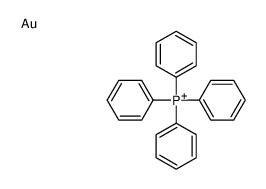
- 30142-19-9
- C24H20AuP+
- 536.35600
- All (0)
- China (0)
- (0)

- 53240-52-1
- AuCr
- 248.96300
- All (0)
- China (0)
- (0)

- 51434-62-9
- AuK
- 236.06500
- All (0)
- China (0)
- (0)
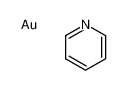
- 514789-98-1
- C5H5AuN
- 276.06600
- All (0)
- China (0)
- (0)
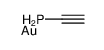
- 193358-81-5
- C2H3AuP
- 254.98600
- All (0)
- China (0)
- (0)
Related Products More >

- CNY Request For Quotation
- 1310-73-2
- CNY Request For Quotation
- CNY Request For Quotation
- CNY Request For Quotation
- CNY Request For Quotation
- CNY Request For Quotation
- CNY Request For Quotation
- CNY Request For Quotation


A crucial attribute of spot gold is its liquidity and transparency. Because it is traded continuously across international markets, the spot price serves as a reference point for pricing derivatives, ETFs, and other investment vehicles linked to gold. For instance, a jewelry manufacturer might monitor spot gold to determine when to purchase raw gold for production, ensuring cost efficiency. Similarly, currency traders may use spot gold as a hedge against inflation or currency devaluation, reflecting its interconnected role in broader financial strategies.
In practical terms, spot gold pricing is determined by supply and demand dynamics in major trading hubs such as London, New York, and Hong Kong. Electronic trading platforms provide instantaneous updates, enabling investors to act quickly on market movements. For example, if global unrest drives a sudden increase in demand for safe-haven assets, the spot price may spike within hours, signaling traders to adjust their positions. Understanding spot gold allows market participants to make informed decisions about entry, exit, and hedging strategies in both physical and financial gold markets.
Physically, spot gold transactions require metal meeting LBMA standards - minimum 995 fineness with precisely defined dimensions (250mm x 70mm x 35mm for standard bars) and serialized assay certification. This differs from futures contracts by eliminating temporal and leverage components, settling within T+2 days through accredited vault networks. The spot price serves as the baseline for jewelry premiums (typically +10-30%) and ETF NAV calculations, adjusted for localized factors like import duties and refining costs.
A common misconception conflates spot prices with retail coin prices; the latter include fabrication costs (5-8%) and dealer margins. The spot market's liquidity stems from central bank reserves and institutional trading, with daily volume exceeding 150,000 contracts. Gold's spot valuation responds to real interest rates (inverse correlation to 10-year TIPS yields), dollar strength (DXY index), and geopolitical risk premiums, behaving as a hybrid monetary commodity. Professional traders monitor the forward curve (contango/backwardation) relative to spot, as physical delivery arbitrage keeps derivatives aligned with bullion availability in vaults like those managed by JP Morgan or HSBC in London and New York.
The pricing of spot gold intersects with macroeconomics, as it often acts as a hedge against inflation or currency fluctuations. When fiat currencies lose purchasing power, investors turn to gold, driving up spot prices due to increased demand. This dynamic arises from gold’s limited supply—mining adds only a small percentage to global reserves annually—creating a scarcity that supports its value. In industrial contexts, spot gold is purchased by manufacturers for use in electronics, where its high conductivity and resistance to tarnish make it ideal for circuitry, or in dentistry, where its biocompatibility ensures safe use in fillings and crowns. These applications rely on gold’s physical properties, bridging its monetary role with practical utility.
Trading spot gold involves networks of refineries, vaults, and dealers who ensure authenticity through assays—tests that verify purity, often expressed in karats or fineness. This verification process, using techniques like X-ray fluorescence to analyze elemental composition, safeguards against counterfeiting, a critical step given gold’s high value. For individual investors, owning spot gold means navigating storage and insurance costs, while institutions may use it to diversify portfolios, balancing risk across asset classes. Beyond finance, spot gold’s enduring significance reflects humanity’s long-standing relationship with precious metals, where chemical stability and scarcity converge to create a commodity that transcends cultural and temporal boundaries, serving both as a medium of exchange and a symbol of enduring value.