


 Home
Home
Have you ever come across a chemical called Propylene Glycol Methyl Ether Acetate and wondered what it actually is? It seems to pop up in paints, cleaners, and other products, but it’s hard to understand what it does or why people use it. Is it safe to handle? What makes it different from other liquids we use at home or in industry? Could it affect the air around us or the surfaces it touches? Why is it chosen over other similar chemicals? How does it work in everyday products we might not even notice?
What Is Propylene Glycol Methyl Ether Acetate and How Is It Used?
Related Encyclopedia
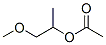
- 84540-57-8
- C6H12O3
- 132.16
- All (4)
- China (3)
- (4)
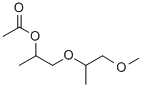
- 88917-22-0
- C9H18O4
- 190.24
- All (1)
- China (0)
- (1)
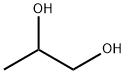
- 57-55-6
- C3H8O2
- 76.09
- All (326)
- China (55)
- (326)
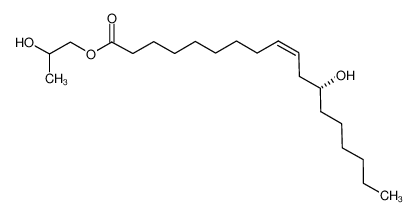
- 26402-31-3
- C21H40O4
- 356.54000
- All (0)
- China (0)
- (0)
- 118624-10-5
- C9H18O7
- 238.23500
- All (0)
- China (0)
- (0)

- 53824-77-4
- C23H44O4
- 384.59300
- All (0)
- China (0)
- (0)
- 112071-94-0
- C9H16O5
- 204.22000
- All (0)
- China (0)
- (0)
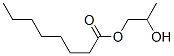
- 31565-12-5
- C11H22O3
- 202.29058
- All (0)
- China (0)
- (0)

- 41395-83-9
- C21H40O4
- 356.54000
- All (0)
- China (0)
- (0)
- 25791-96-2
- HO(C3H6O)nCH[CH2(OC3H6)nOH]2
- 0
- All (4)
- China (2)
- (4)
Related Products More >

- CNY Request For Quotation
- CNY Request For Quotation
- CNY Request For Quotation
- 110-98-5
- CNY Request For Quotation
- 110-98-5
- CNY Request For Quotation
- 25322-69-4
- Request For Quotation
- 25322-69-4
- Request For Quotation
- 93-46-9
- CNY 4500.0000
- 1ton


In the field of chemical engineering, PMA plays a crucial role as a high-performance solvent. Its ability to dissolve a wide range of polymers, resins, and coatings makes it invaluable in industries such as paints, inks, and adhesives. Unlike many traditional solvents, PMA exhibits a balance between solvency power and evaporation rate, allowing for controlled drying processes that enhance the quality of the final product. For instance, in automotive painting, it helps achieve a smooth, uniform finish by ensuring proper flow and leveling of the coating material before it cures.
When compared to similar compounds like propylene glycol methyl ether (PGME) or ethyl acetate, PMA stands out due to its higher boiling point and lower volatility, which reduces the risk of rapid evaporation during application. Additionally, its ester group provides better compatibility with certain resins than the ether group in PGME, while its ether segment imparts greater solubility in water than ethyl acetate. These differences make PMA a preferred choice in applications where both solvency and controlled drying are critical, such as in the production of high-gloss coatings and electronics cleaning solutions.
A common misconception is that PMA is interchangeable with other glycol ethers or esters in all applications. However, its unique combination of properties means that substituting it without careful consideration can lead to issues like poor adhesion, uneven drying, or reduced product stability. For example, in formulations requiring long-term storage, PMA’s lower volatility helps maintain the integrity of the mixture, whereas a more volatile solvent might cause separation or thickening over time. Understanding these nuances is essential for professionals working with solvent-based systems to ensure optimal performance and product reliability.
In practice, PGMEA is widely employed in the electronics industry as a photoresist solvent in semiconductor manufacturing. Its ability to dissolve photoresist materials without leaving residues ensures high-resolution patterning on silicon wafers. For instance, during lithography processes, PGMEA’s controlled evaporation rate prevents premature drying, enabling uniform coating and precise feature replication. This specificity underscores its irreplaceable role in producing microchips and printed circuit boards.
Beyond electronics, PGMEA finds use in paints, inks, and cleaning agents due to its low toxicity and mild odor compared to alternatives like toluene or acetone. In automotive coatings, it improves flow and leveling properties, reducing surface defects. Its compatibility with acrylics and epoxies also makes it a preferred choice for industrial degreasers, where it effectively removes contaminants without damaging substrates. The solvent’s stability under varying temperatures further enhances its utility in diverse environments.
The environmental profile of PGMEA is another notable aspect. While it is less volatile than many traditional solvents, proper handling remains essential to minimize workplace exposure. Regulatory agencies classify it as a relatively safe option when used with adequate ventilation, aligning with industry shifts toward greener chemistry. Its biodegradability and lower VOC emissions contribute to its adoption in eco-conscious manufacturing processes.
From a chemical mechanism perspective, PGMEA functions as a polar aprotic solvent, which means it has polarity to interact with other polar molecules, but lacks a hydrogen atom bonded to oxygen or nitrogen, making it less reactive in certain chemical reactions. This property makes it highly versatile, allowing it to stabilize mixtures and control viscosity without participating in unwanted side reactions. In industrial applications, it’s prized for its ability to provide uniform film formation in paints and coatings, ensuring consistent surface quality. It also finds roles in electronics manufacturing, especially in photolithography processes where precision and solvent control are critical.
In terms of broader impact, PGMEA’s presence extends beyond industrial settings into everyday life, though indirectly. Many consumer products, from household paints to specialty inks, rely on it or similar glycol ethers to perform effectively. Its physicochemical characteristics also influence environmental and occupational considerations, as it can evaporate and contribute to indoor air exposure if not managed properly. Handling guidelines, ventilation, and protective measures are important to minimize inhalation or skin contact. Across disciplines, the solvent’s behavior exemplifies how molecular structure dictates practical functionality, bridging chemistry with material science, manufacturing, and even aspects of environmental health.
Its role in advanced manufacturing, combined with relatively manageable handling compared with more volatile or toxic solvents, underscores why PGMEA is chosen repeatedly for processes demanding both efficiency and reliability. The compound exemplifies the balance between chemical properties and industrial utility, serving as a bridge between theoretical molecular understanding and tangible applications in multiple domains.