


 Home
Home
Have you ever come across the formula "H2 O2" and wondered what it means? Is it similar to water, which is H2O? What does the extra oxygen mean in this formula? Where can you find H2 O2 in everyday life, and what is it used for? Is it safe to handle, or should you be careful? Why do people often confuse it with water, and what are the main differences between them? How is H2 O2 important in daily activities or health? What makes it special compared to other simple molecules?
What Is H2 O2? Understanding This Common Chemical Formula
Related Encyclopedia
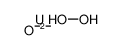
- 12026-26-5
- H2O3U
- 288.04300
- All (0)
- China (0)
- (0)
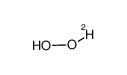
- 34322-11-7
- DHO2
- 35.02080
- All (27)
- China (27)
- (27)
- 71426-84-1
- O2T2
- 38.03090
- All (27)
- China (27)
- (27)
- 13813-07-5
- H2O2
- 36.01000
- All (27)
- China (27)
- (27)

- 7722-84-1
- H2O2
- 34.01
- All (27)
- China (27)
- (27)
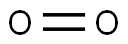
- 7782-44-7
- O2
- 32
- All (1)
- China (1)
- (1)

- 80937-33-3
- O2
- 31.99880
- All (1)
- China (1)
- (1)

- 17410-58-1
- O2
- 33.99860
- All (1)
- China (1)
- (1)
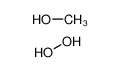
- 1000623-92-6
- CH6O3
- 66.05650
- All (0)
- China (0)
- (0)
- 12289-44-0
- CdH2O2
- 146.42600
- All (0)
- China (0)
- (0)
Related Products More >

- 9059-23-8
- Request For Quotation
- 9002-10-2
- Request For Quotation
- Bottle,barrel,cargo,container,etc.
- 82419-35-0
- Request For Quotation
- 82419-35-0
- Request For Quotation
- 82419-35-0
- Request For Quotation
- 7782-44-7
- Request For Quotation
- 40L/Cylinder, ISO tank
- 7727-43-7
- Request For Quotation
- 54029-12-8
- Request For Quotation


Unlike water, hydrogen peroxide can break down and release oxygen, which is why it bubbles when it touches skin or wounds. This bubbling means it’s working to clean. People also use it to bleach hair or whiten teeth, but it should be handled carefully because it can irritate the skin or eyes if too strong.
So, while it’s a simple chemical, H2 O2 is quite handy around the house and in health care for keeping things clean and safe. It’s not something to drink or use carelessly, but it’s a common, useful product many people have at home.
Hydrogen peroxide serves as a powerful oxidizing agent, enabling it to disrupt cellular components in microorganisms, which explains its widespread use as a disinfectant and antiseptic in medical settings. It effectively kills bacteria, viruses, and fungi by producing reactive oxygen species that damage essential biomolecules. Its role in wound cleaning and sterilization reflects the intersection of chemistry and biology, as it both interacts with biological tissues and influences physiological healing processes. Additionally, hydrogen peroxide is employed in dentistry for tooth whitening and as a mild antiseptic due to these oxidative effects.
Beyond healthcare, hydrogen peroxide has significant industrial uses. It acts as a bleaching agent in the paper and textile industries, leveraging its ability to break down colored organic compounds without introducing harmful residues. In environmental science, it is used for water treatment and pollution control by promoting the breakdown of contaminants through advanced oxidation processes. The molecule’s decomposition into water and oxygen makes it an environmentally friendly option compared to chlorine-based disinfectants.
Physically, hydrogen peroxide appears as a pale blue liquid in pure form but is commonly encountered as an aqueous solution with varying concentrations. Its chemical instability requires careful handling and storage, often in dark containers to prevent light-induced breakdown. The balance between its reactive oxidizing power and relative safety in diluted solutions is crucial for its practical use. In recent years, research into hydrogen peroxide’s role in cellular signaling and oxidative stress has expanded, demonstrating its complex involvement beyond simple disinfection.
Hydrogen peroxide exemplifies a compound whose chemical structure and reactivity translate directly into diverse applications in medicine, industry, and environmental management. Its capacity to generate reactive oxygen species bridges disciplines from chemistry and biology to materials science, making it an essential tool with both practical and theoretical significance.
In biological systems, hydrogen peroxide is a byproduct of various metabolic processes, particularly those involving oxygen. Cells produce enzymes such as catalase and peroxidase to break down H₂O₂, as its accumulation can damage cellular components through oxidative stress; unlike molecular oxygen (O₂), which is generally benign in controlled environments, H₂O₂ acts as a mild oxidizing agent, capable of reacting with organic molecules.
Within industrial contexts, H₂O₂ finds use as a bleaching agent in paper and textile production, where its oxidizing properties break down colored compounds without leaving harmful residues, differing from chlorine-based bleaches that can produce toxic byproducts. It also serves as a disinfectant, especially in medical settings, where it kills microorganisms by disrupting their cellular structures, though its effectiveness is limited compared to stronger agents like alcohol in some scenarios.
A common misconception is that hydrogen peroxide is identical to water with an extra oxygen atom, but this oversimplifies its chemical behavior. While both H₂O and H₂O₂ contain hydrogen and oxygen, the presence of the peroxide linkage (-O-O-) in H₂O₂ gives it distinct properties, such as its ability to act as both an oxidizing and, in some cases, a reducing agent, depending on the reactants involved.
In environmental applications, diluted hydrogen peroxide is sometimes used to treat water by oxidizing contaminants, a process that avoids the introduction of heavy metals or persistent chemicals. Its decomposition into natural substances makes it environmentally preferable to some alternatives, though its stability in storage requires careful handling to prevent premature breakdown.
One of the defining characteristics of H2O2 is its role as a powerful oxidizing agent. It can donate oxygen to other substances, making it useful in disinfection and bleaching. For example, in healthcare, 3% hydrogen peroxide solutions are commonly used to clean wounds, where it breaks down into water and oxygen, killing anaerobic bacteria. Similarly, in the paper industry, it bleaches pulp without producing harmful byproducts like chlorine-based alternatives. The decomposition of H2O2 is catalyzed by enzymes such as catalase, which is found in human tissues—this explains the fizzing when applied to a wound.
Beyond disinfection, H2O2 is employed in environmental applications, such as wastewater treatment, where it breaks down organic pollutants. It also serves as a propellant in rocketry due to its ability to decompose exothermically. In daily life, it’s found in hair bleach and teeth-whitening products. The versatility of H2O2 arises from its dual nature: it can act as an oxidizer or a reducing agent depending on the reaction conditions. This adaptability ensures its relevance across diverse fields, from medicine to industrial chemistry.